It was the time of year again to head over to the Photography Show, this year in Birmingham at the NEC. Last year was a little disappointing in London’s Excel centre and I used that opportunity to try out the Elizabeth Line on the London Underground for the first time.
This year I was headed to Hall 5 of the NEC with a sense of purpose, in my rucksack I had a box containing my Canon 5D Mk IV, a 24-105mm L Lens and the Battery Grip. All these were to be sacrificed for the greater good. I had taken no other cameras with me to the show as I wanted to go and look around without trying to take pictures of the models who were on show on a couple of the stands etc. The trip would continue up to Leeds once finished at the show, so I began the plan.
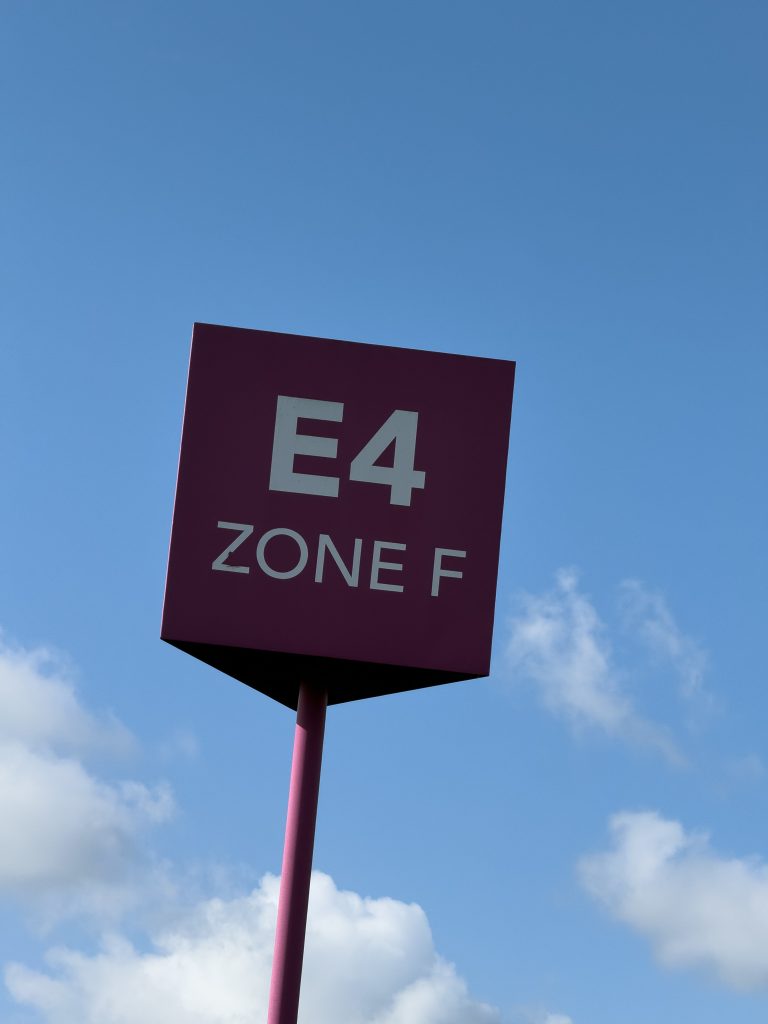
The car took me to the NEC and I parked in East 4 Car Park, carefully photographing with my mobile phone the nearest signpost, so as not to forget where I’d left the car. A short ride on a shuttle bus ended with a drop off at the Hall 5 Entrance and away I went. My Trade Entrance Ticket was scanned and I entered the huge hall that seemed to hold so much promise for photographers and videographers alike.
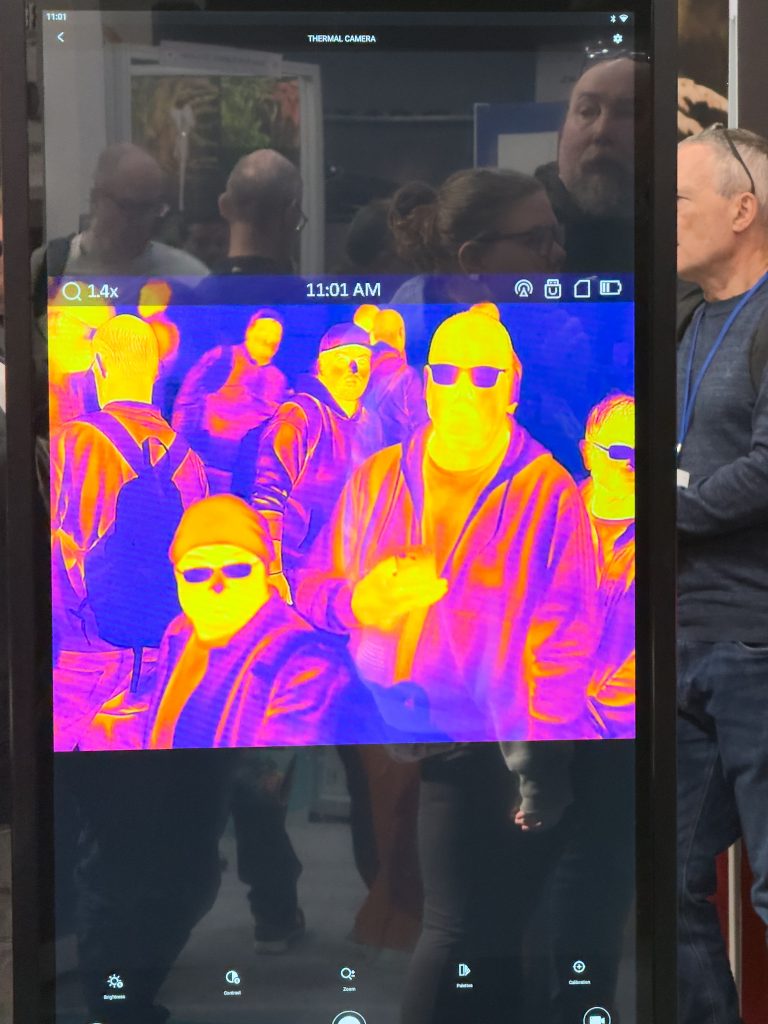
With the 5D in my bag I wanted to shift it as soon as possible so I went to London Camera Exchange’s trade in counter to find a queue of about 10 people in front of me. No bother waiting in the queues, I don’t mind it that much. There was a HIKVISION thermal camera pointing towards us so I messed around with that a brief while until I got to the front of the queue and met the guy who would take a look at the camera to assess its worth.
He took a look at the almost spotless camera body, then the 24-105mm lens that had a small mark on the glass near the edge, then the battery grip. It had a shutter count of around 80000 activations, whereas its recommended life is 150000. He offered me £750 for the lot against an upgrade.
An upgrade you say? It was time to upgrade from the 5D to an R5 Mark ii or an R6 Mark iii, but I decided that I wanted the higher megapixel sensor a 45 megapixel versus the 32.5 which the R6iii held. The promise of better auto focus, improvements in low light/higher ISO images, quieter camera, and the flip out screen as well as all manner of other benefits were what really swung me into the new camera.
The lens I wanted with it was a choice of two; a RF 24-105 f/4 lens or an RF 24-70 f/2.8 lens and I plumped for the 24-70mm due to the extra stop of light in the f/2.8 owing to the fact that I do a lot of shooting in lower light environments. The 105 would have been a good stretch too and my 24-105 I’d traded in was excellent for all the previous shoots I’d used it for. But let’s mix it up a bit.
I chose the R5 Mark II with the RF24-70mm f/2.8 L lens, and also an RF-EF lens adapter so I could still use my existing lenses. A 24mm Tilt Shift, a 16-35 f/2.8, a nifty fifty 50mm 1.7 and a 70-300 Cheapo zoom lens. It made sense to buy an adapter rather than having to replace the EF lenses with the RF equivalents at the same time. I also picked up another LP6 battery so that I’d have a couple to use, as I find I do need more than one when out and about.
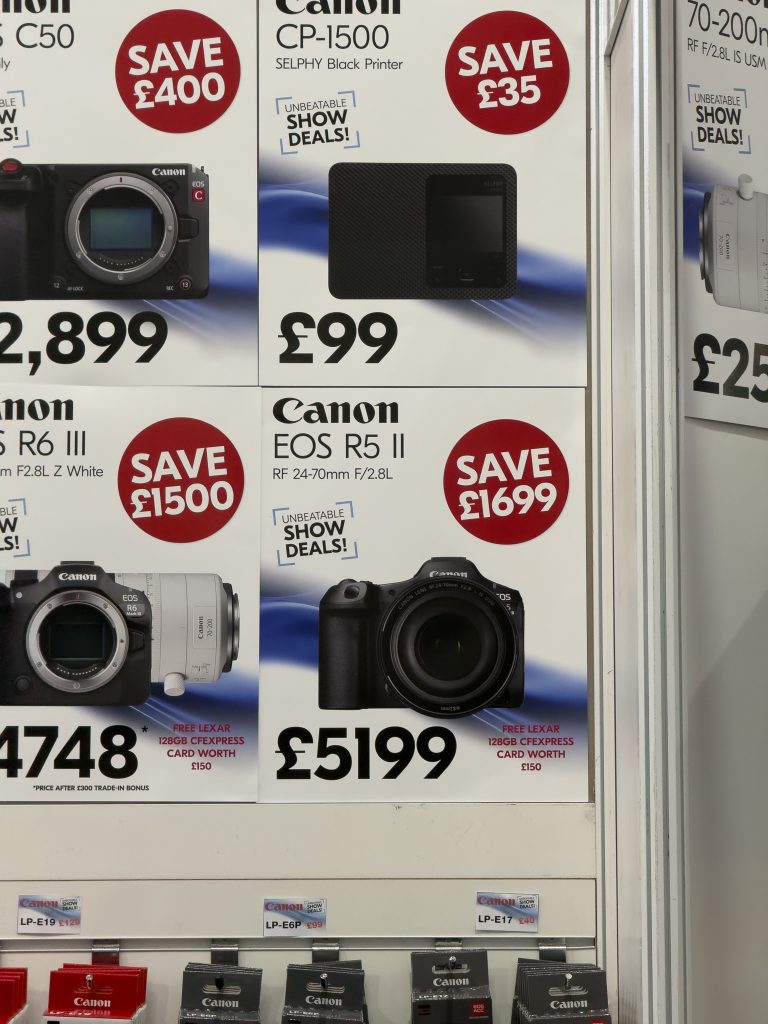
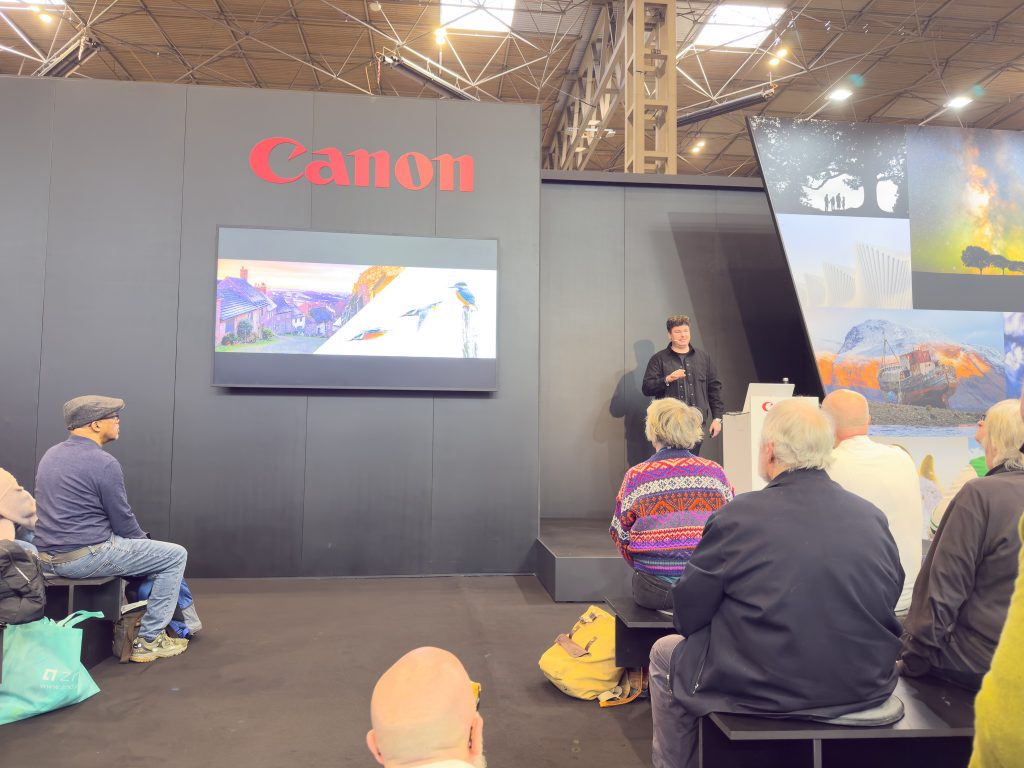
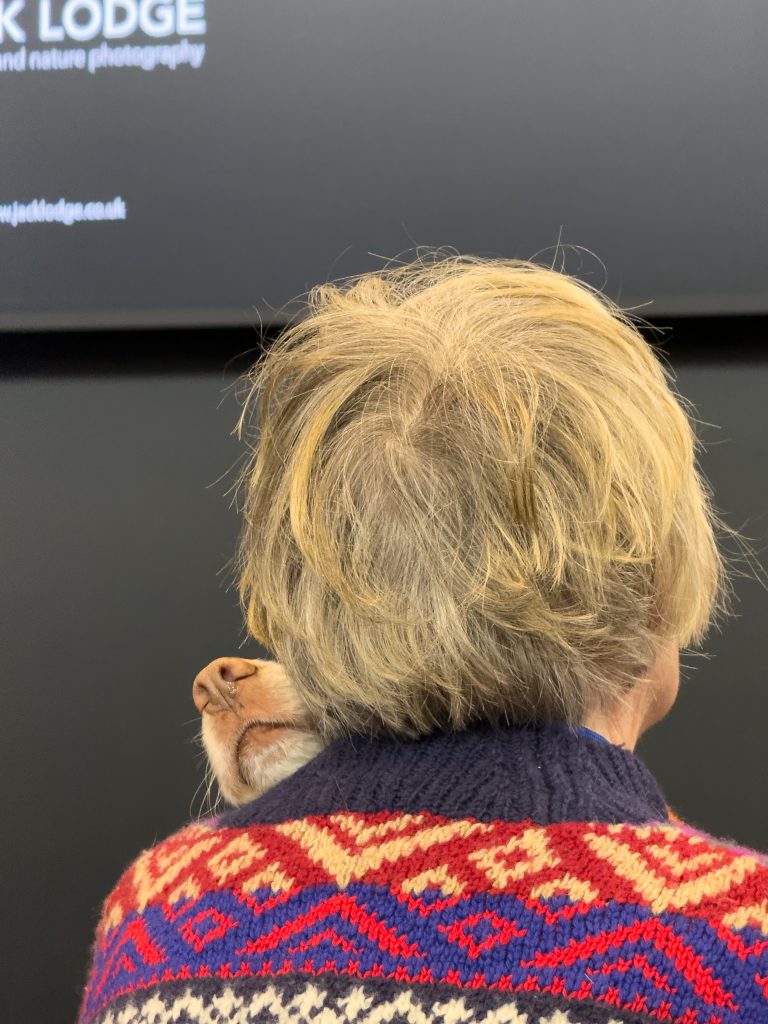
With the deal made I offered up my card and with that my work annual bonus went across to the LCE bank account. The boxes went in my bag for a look through later when I arrived at my next destination. I wandered over to the food trailers in the one end of the hall, had something to eat and drink and then went into the Canon theatre to watch a presentation by Jack Lodge showing some nature and landscape photography using the Canon R5 mk ii and the R6 mk iii. He went through the benefits of each camera, even suggesting that the R6iii with the lower resolution sensor was better for astro-photography and low light situations. His work was outstanding and he also talked about the excellent benefit of the pre-capture function whereby you can have the camera await your shutter press and then it saves the last half a second’s worth of photos onto the card too. He explained it by showing a photo of a bird taking flight from a tree branch, and that if he’d not had precapture, his first shot would have been a photo of the bird nearly out of the frame. With this function though he can wait for the bird to move and then look back through the shots at the different times and choose the shot he wants to keep. Impressive stuff.
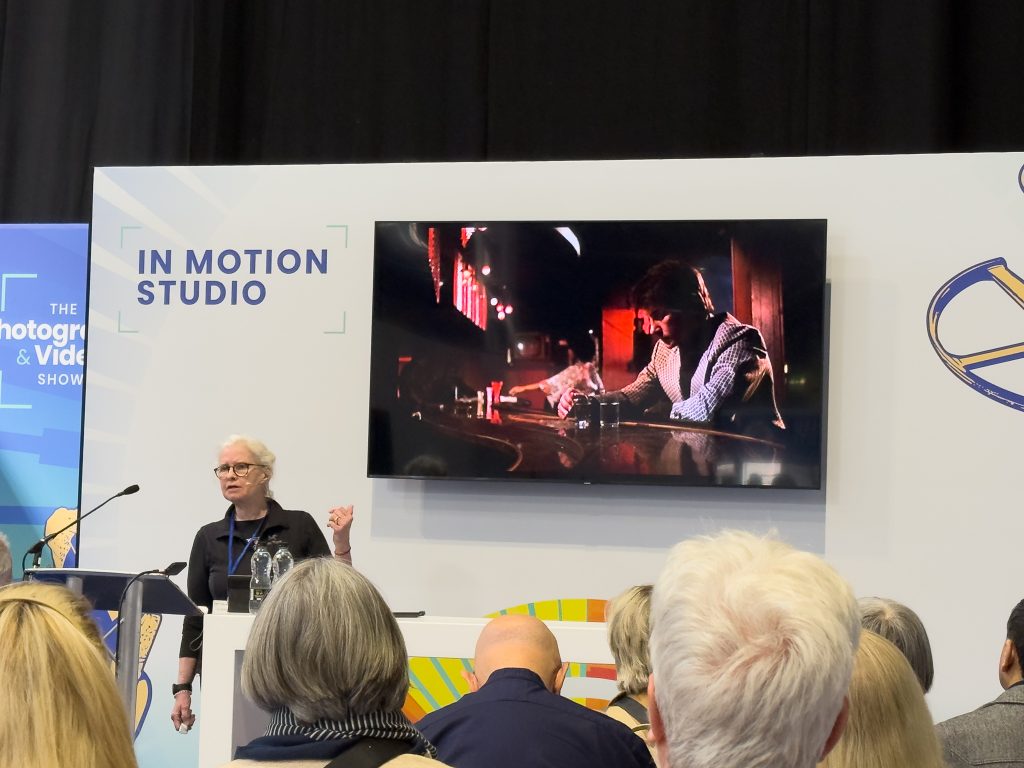
Next up, after a saunter around, on the In Motion stage, was a presentation by a woman from London Photographic who was talking about the Chiaroscuro effects used mainly by Caravaggio and how they compared to movies over the years, then how to use this new-found knowledge to get out and about using the single light source to capture some images. There were some good comparisons of shots from films and how they might be captured. There were a number of people there who were about to leave to go out on a photo walk to put into action this new information. I don’t know where they were heading off to, but I was happy to stay within the show.
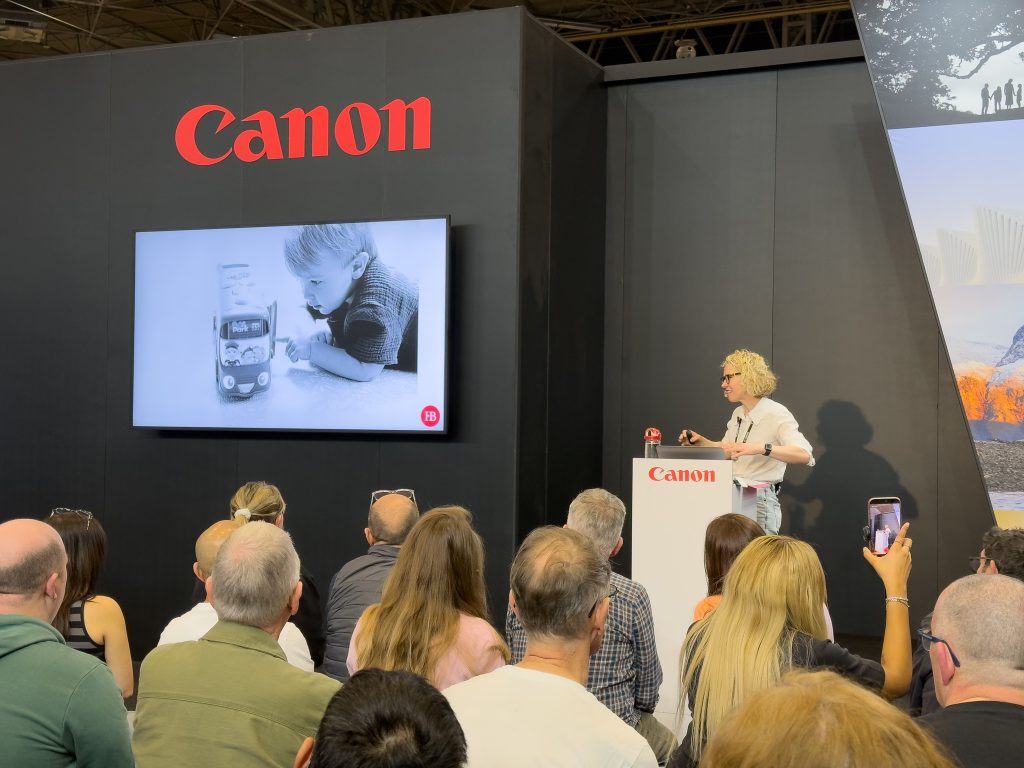
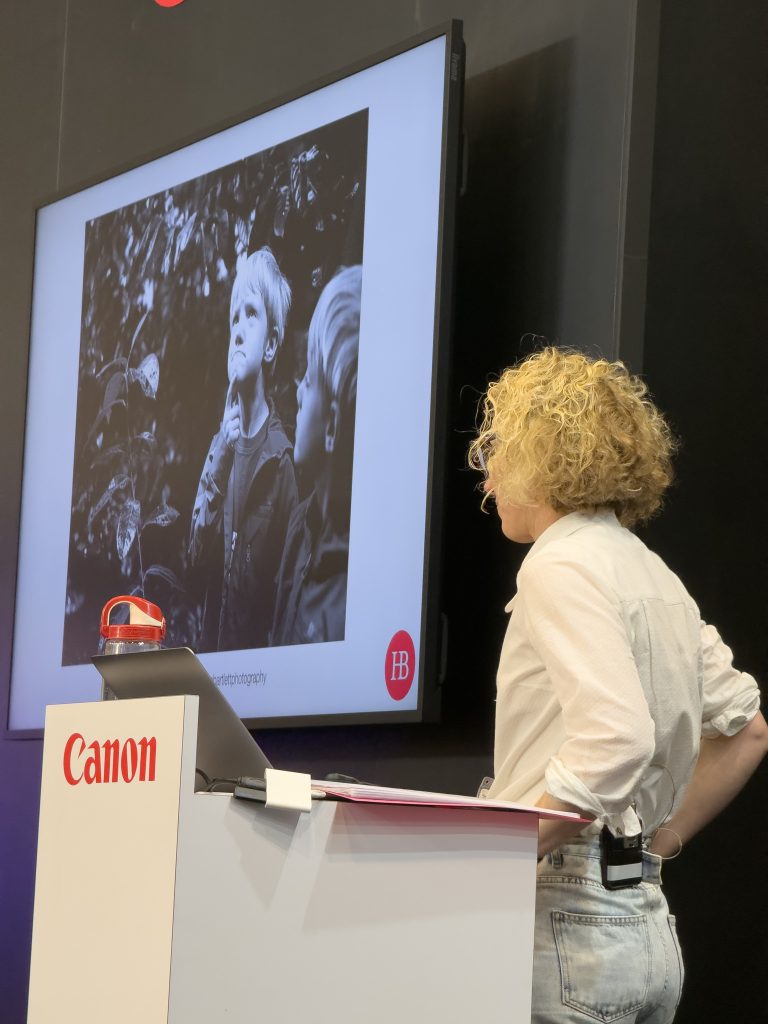
Helen Bartlett was the next person I saw as she did a talk about photography of families and kids in the Canon theatre. Her presentation showed some excellent photographs that she has made over the years and as she showed us some of them she went through tips and tricks that she used at the time. She talked about family shoots where the group shots are always captured first before the members of the family are hungry, tired or distracted. She says that you should have some gaps in the day for the family to relax and providing sugary snacks to keep people’s energy up whilst the shoot takes place.
I walked around a bit more and found a few analogue stalls that concentrated on film and vintage cameras, there were some like Analogue Wonderland and AG Photographic. Some had deals on some film but they were still expensive for the Kodak and Fuji films, but I did buy a few rolls of Noir film and would have bought some expired rolls for £3 each but the guy on the stall was talking to a customer and I waited long enough before leaving the table.
After a couple of walks up and down the hall to see if there wa anything I was missing I figured out that it was time to make a move. A short time in the queue for the bus and then a quick ride to the car park and I was back in the vehicle, with the new camera and lens safely ensconced in the boot.
Off To Leeds
It was now time to type in the details for the car park in Leeds where the car would be stored for the next day and a bit, then a two hour drive up the M1 and I was pulling into the multi-storey for the next leg of the adventure. Carrying the bags from the boot I headed to the Park Plaza hotel in Leeds and checked into the room which was on the 18th floor with a great view over the city.
First things first was to unpack the new camera and get the batteries on charge as they were completely flat when I tried them in the camera. I started them charging using the battery charger and also the USB power bank that I carry too and then continued to set up the room ahead of my sleep. I headed off down to the bar for a bottle of alcohol free beer while the new batteries were having their fill. A quick catch up with my phone of the craziness in the news at the moment and a bit of people watching out of the window with my fake beer and I was up to get my coat on ready for a stroll.
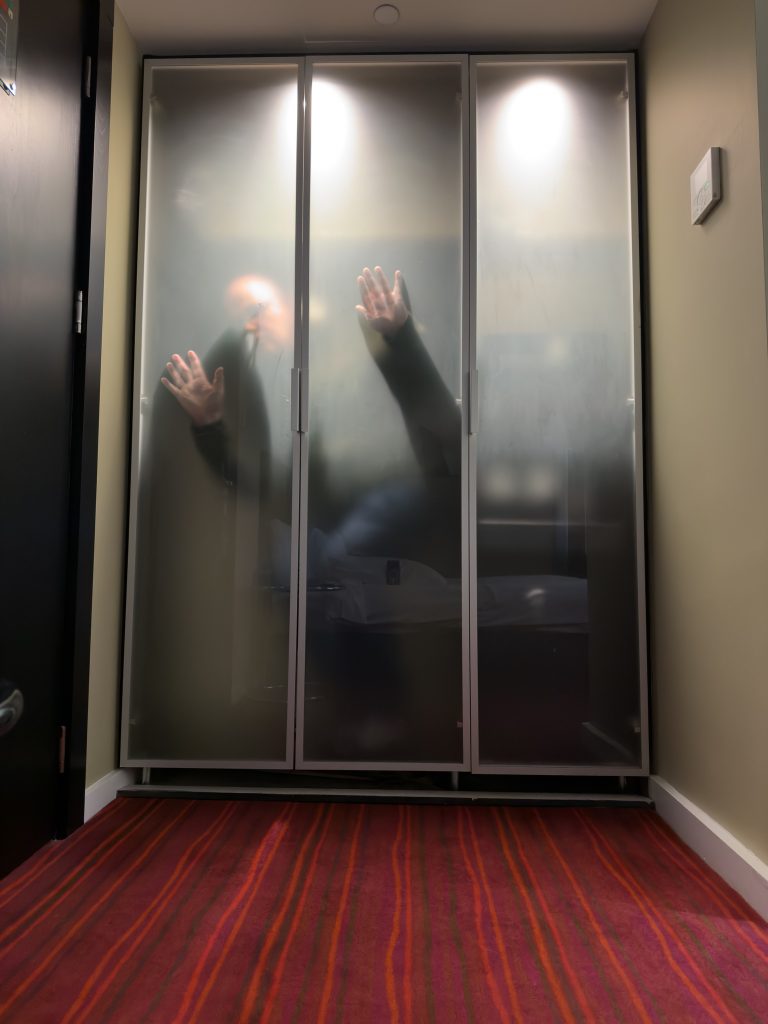
Watching the news on the TV back in the room I noticed that the wardrobe doors were frosted glass so I did what every 52 year old professional man does, take a self portrait using a timer on my phone whilst hiding behind the glass to portray a spooky scene.. Obviously.
Then with the batteries on their way to being full I unplugged and loaded the camera with one and another in my pocket. Then it was down in the lift (elevator) and off out towards the University Of Leeds campus. My idea was to take the new Canon camera, the RF24-70 f/2.8 lens, a shutter release cable and a tripod over to the amazing concrete and glass architecture of the University buildings designed by Chamberlain, Powell and Bon, which includes the impressive Roger Stevens building. Stevens was the vice chancellor of the University of Leeds as well as being an academic and diplomat.
I was on the way to the campus and took a wrong turn but ended up underneath the Irene Manton building which leads up to “Big Rodge” I was happy that there were many lights on around the campus but there were few lights on inside any of the buildings. The Red Route was also shut and locked up with no access so I was limited to the exteriors, it was also 20:30 at night in the dark so I’m not surprised it’s all secured.
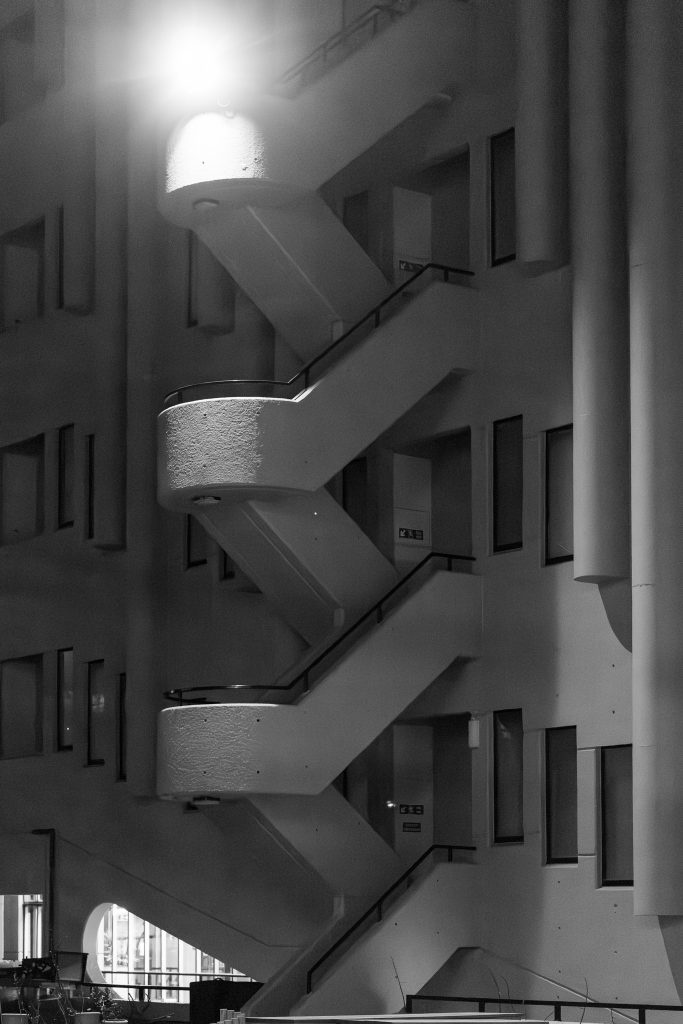
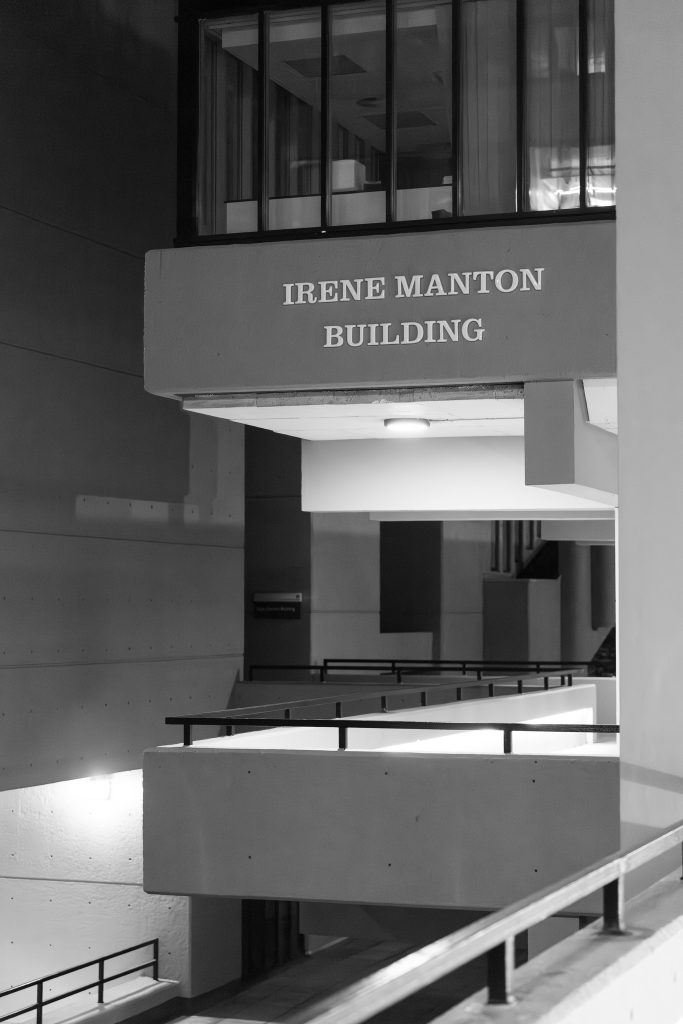
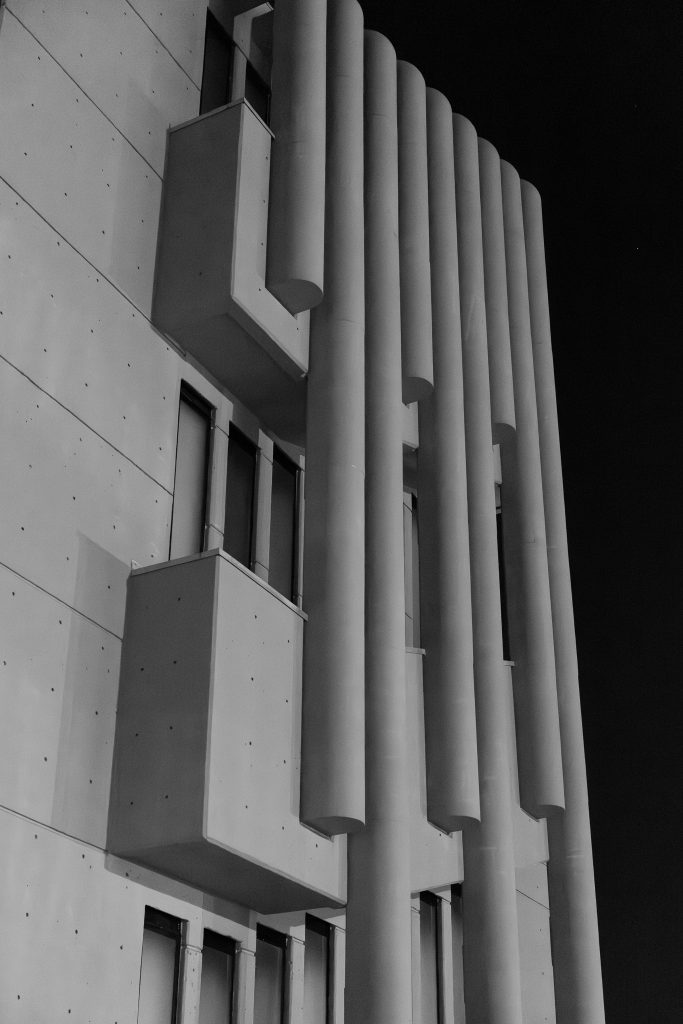
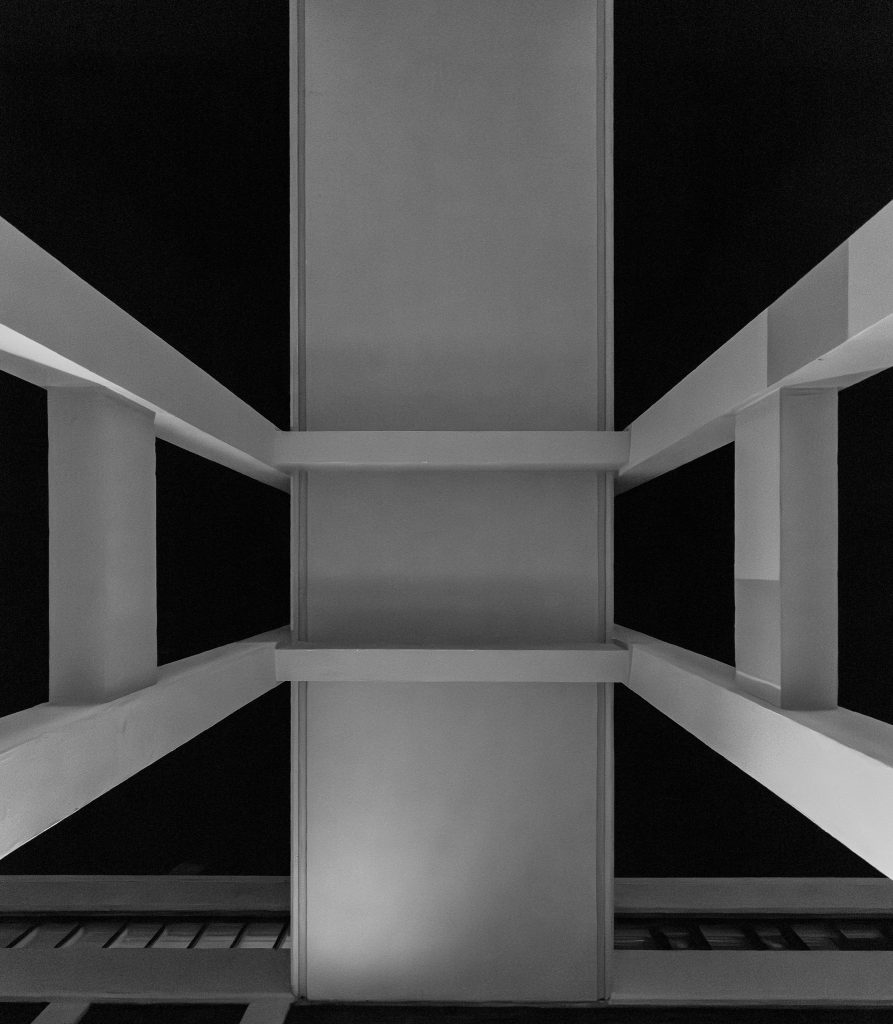
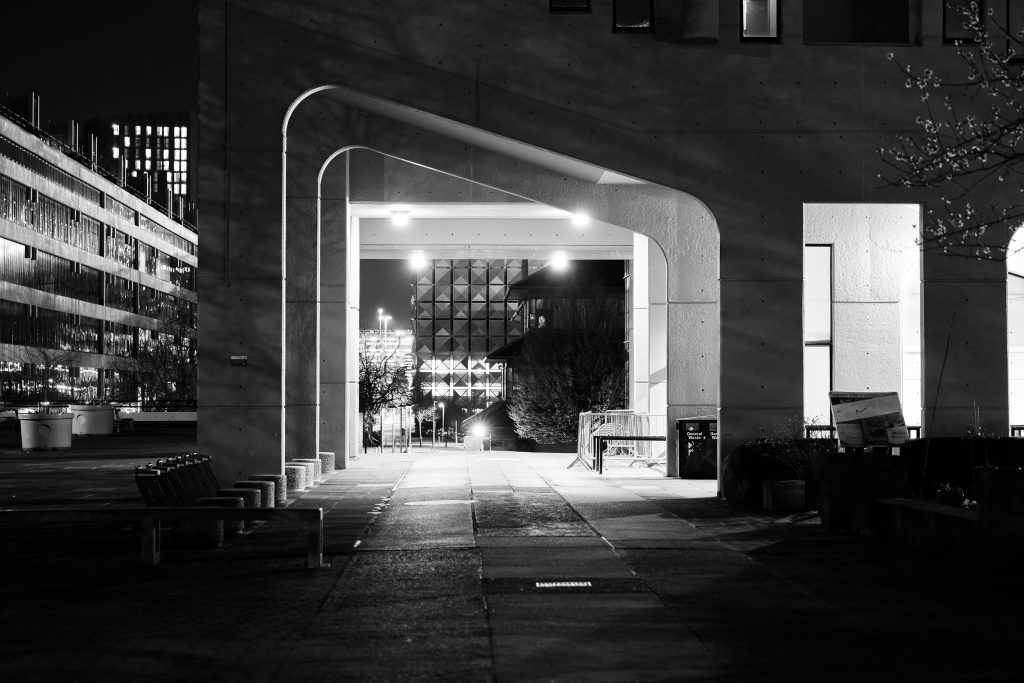
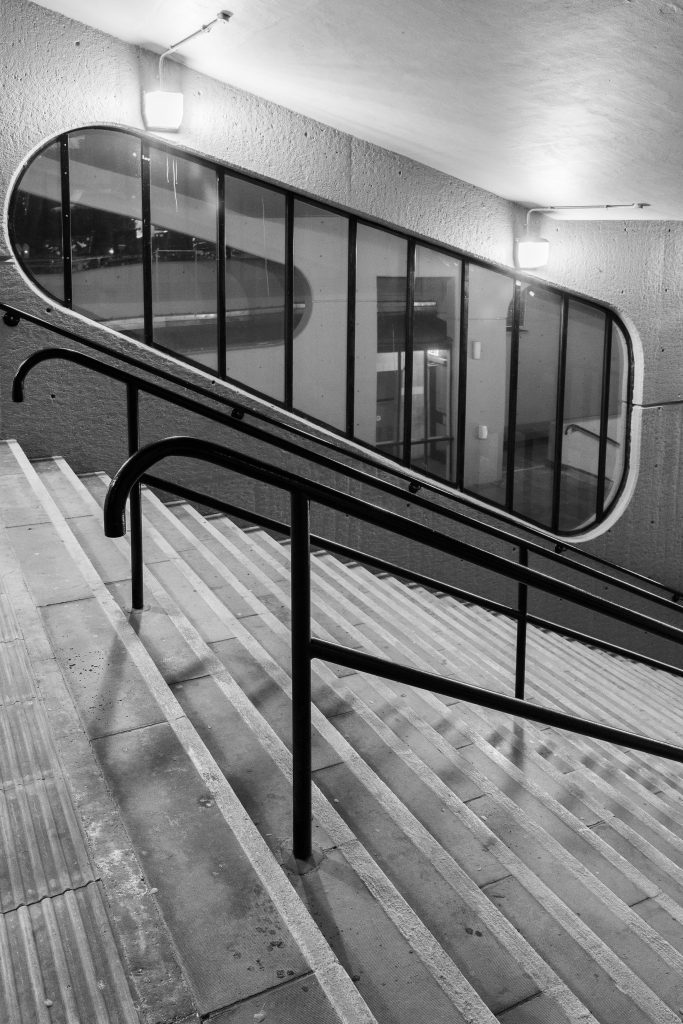
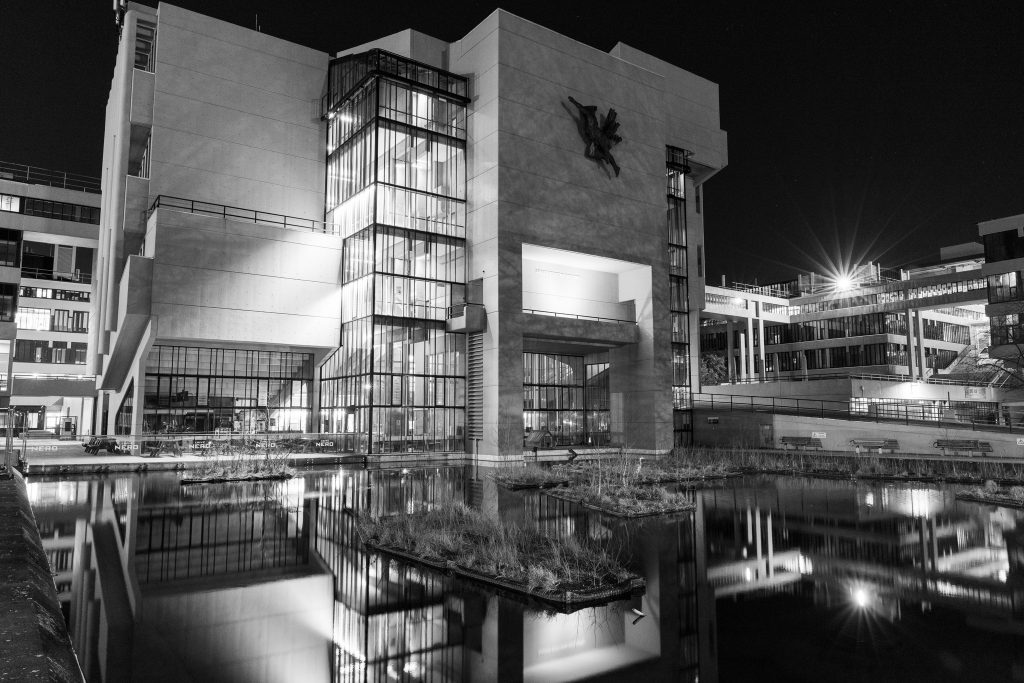
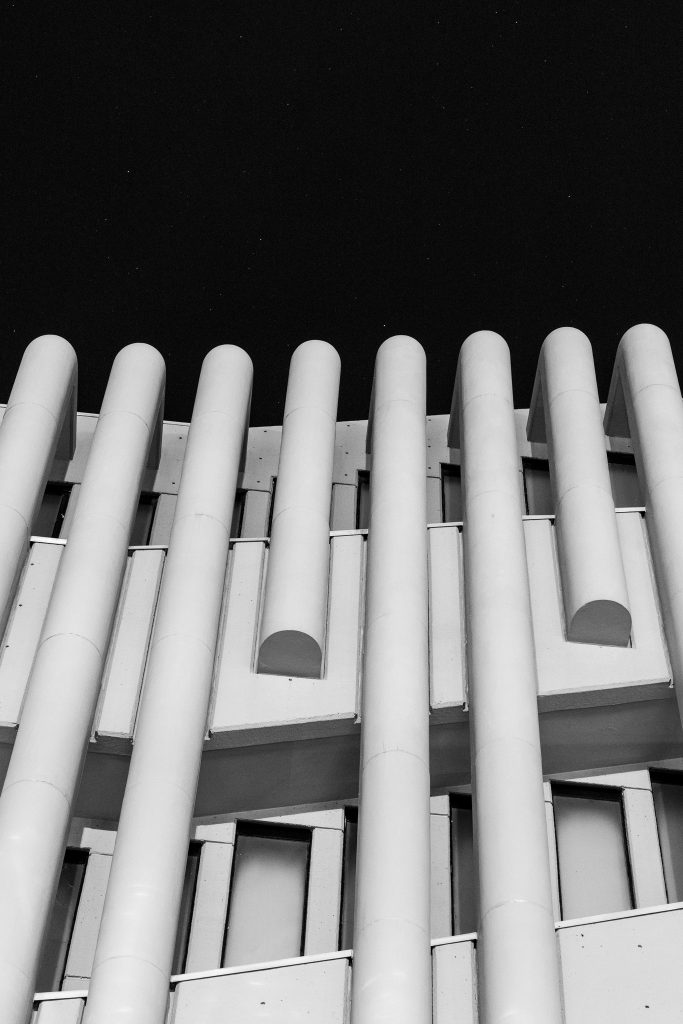
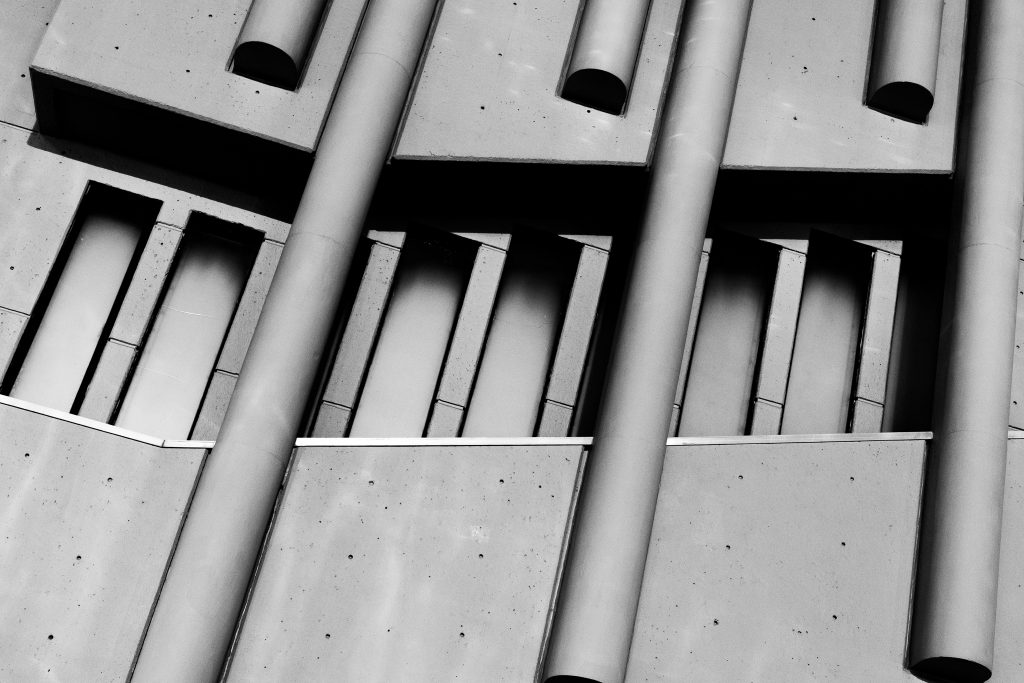
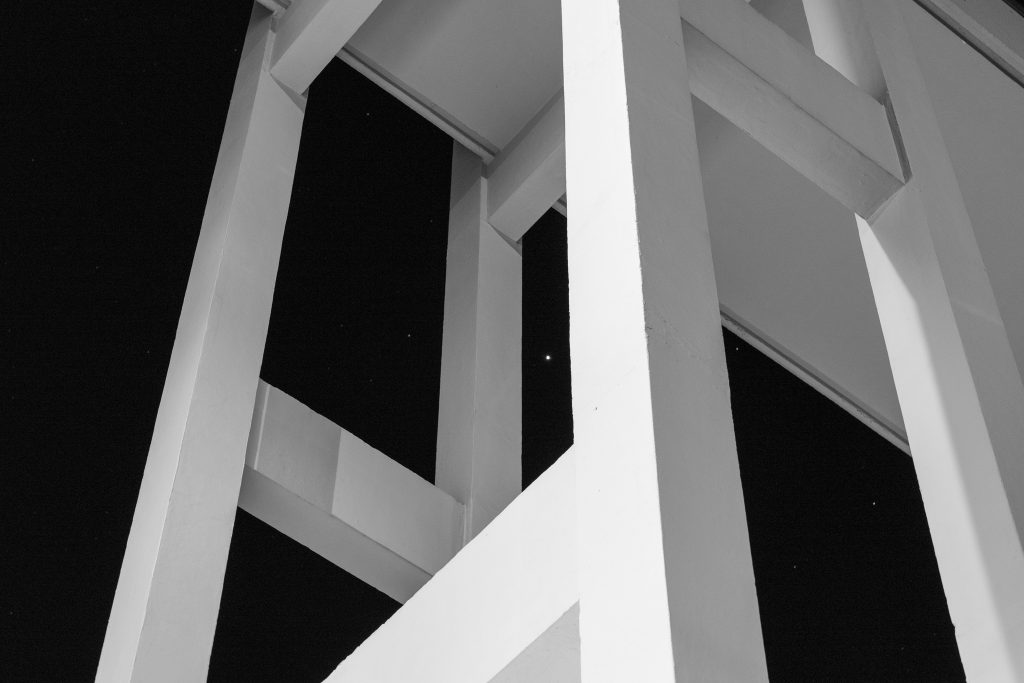
I started photographing after mounting the camera to the tripod using the Peak Design plate which also has an anchor through a corner and I use to attach to my PD Slide strap when not mounted atop the three legged stand. I attached my new shutter release that I bought for my 5D at Kitamura camera shop in Osaka, Japan and it fits the same socket on my new beast.
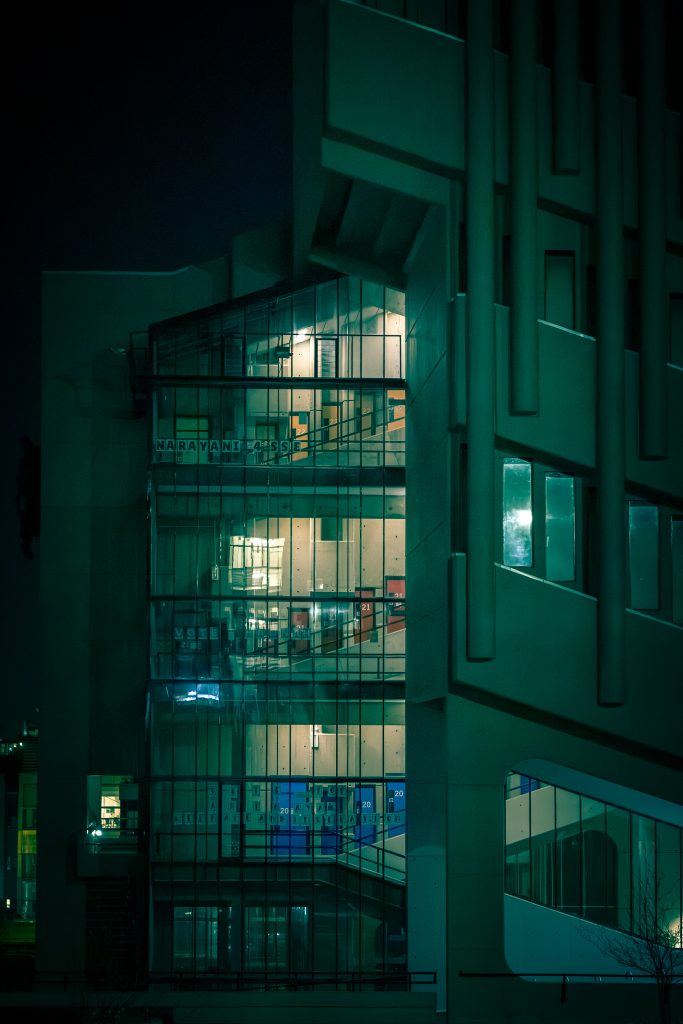
It was very dark already so the shots I was making were happening at a high ISO and a wide open aperture with the shutter speed of around 1/100th sec which fits the reciprocal rule where you shoot 1/focal length to reduce the risk of blur in handheld shots. It was on a tripod so I could afford to start making longer exposures using extended shutter speeds and also drop the ISO to remove as much digital noise as possible.
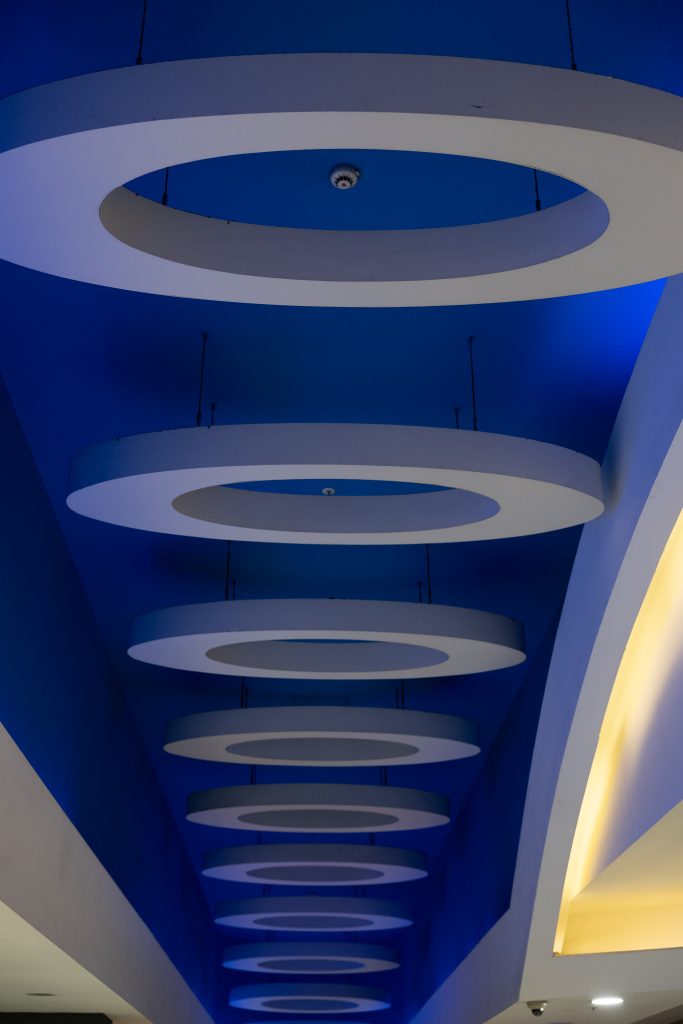
I altered the aperture also to around f/7.1 or f/8 to get a greater depth of field and this meant that the shutter speed was over 1/4 sec all the way up to around 2 seconds. I was shooting the ISO at around 100, 160 or up to about 400. I was shooting the different scenes around the buildings, pointing up at some details and some concrete shapes. At around 22:00 I decided that I’d wrap up and head off back to my hotel so that I would be up and about early enough in the morning.
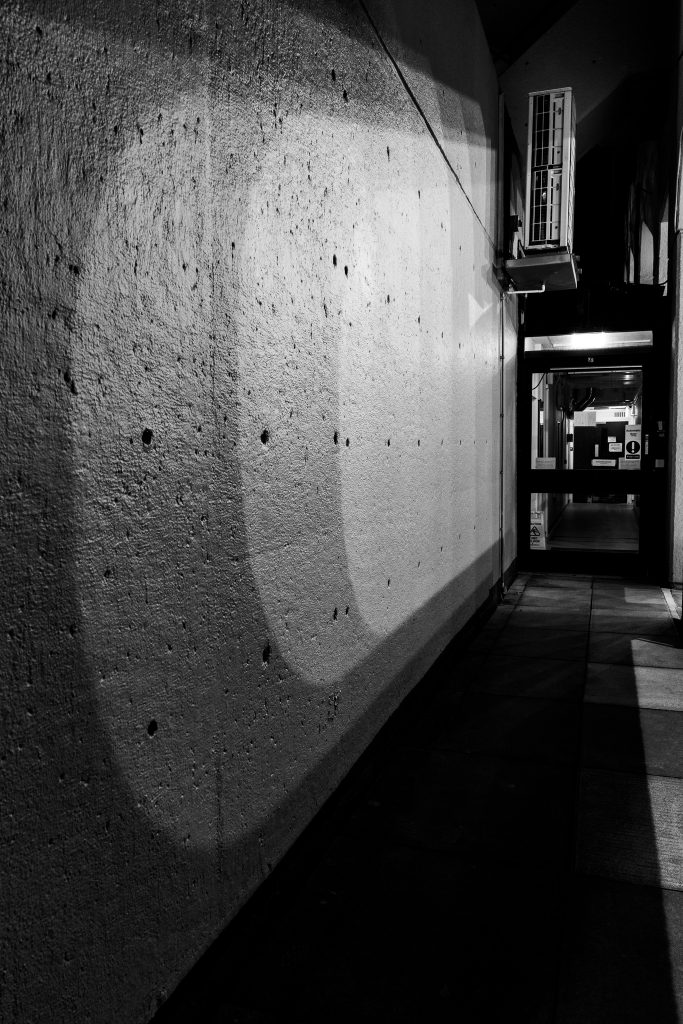
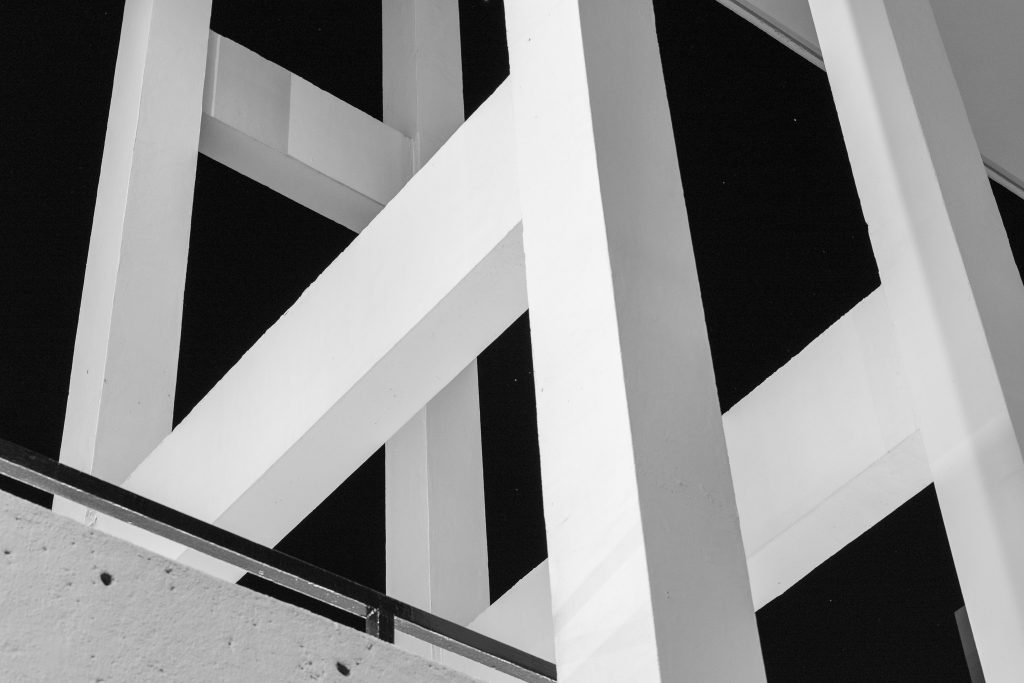
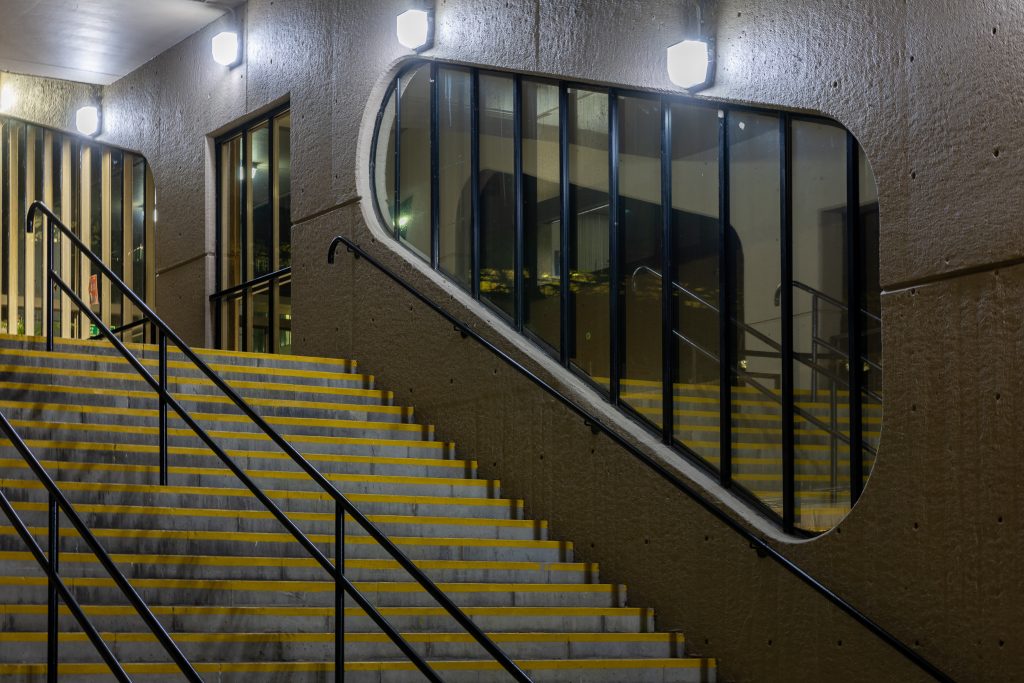
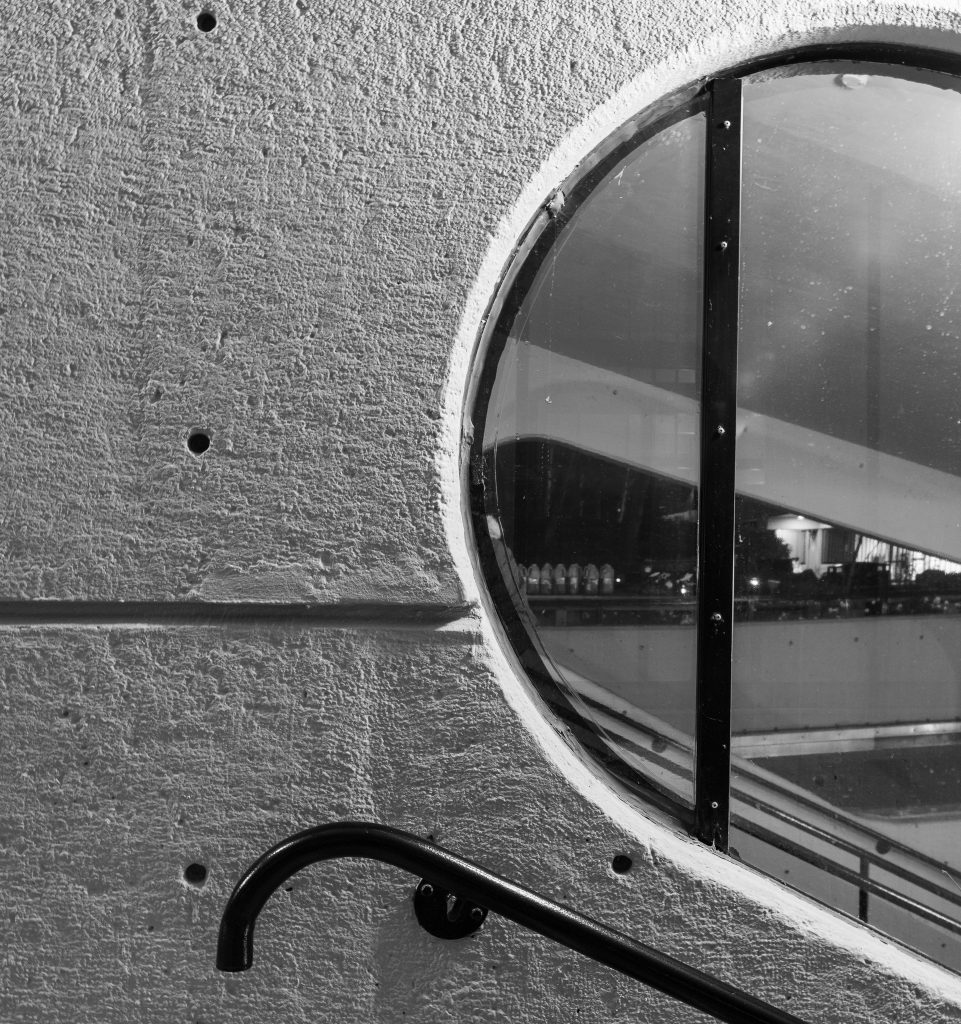
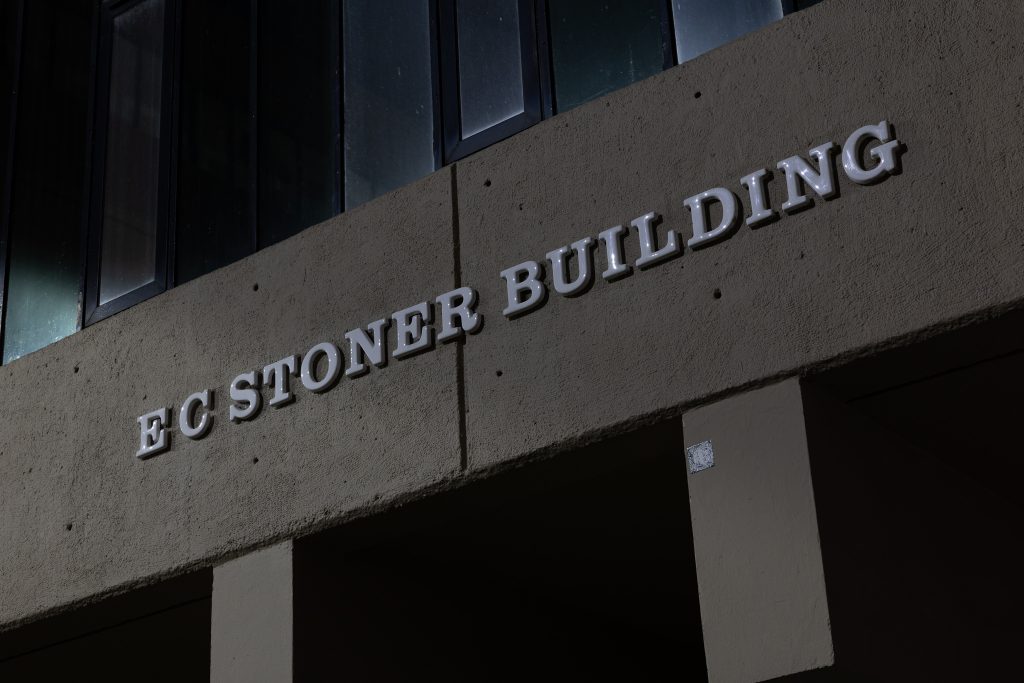
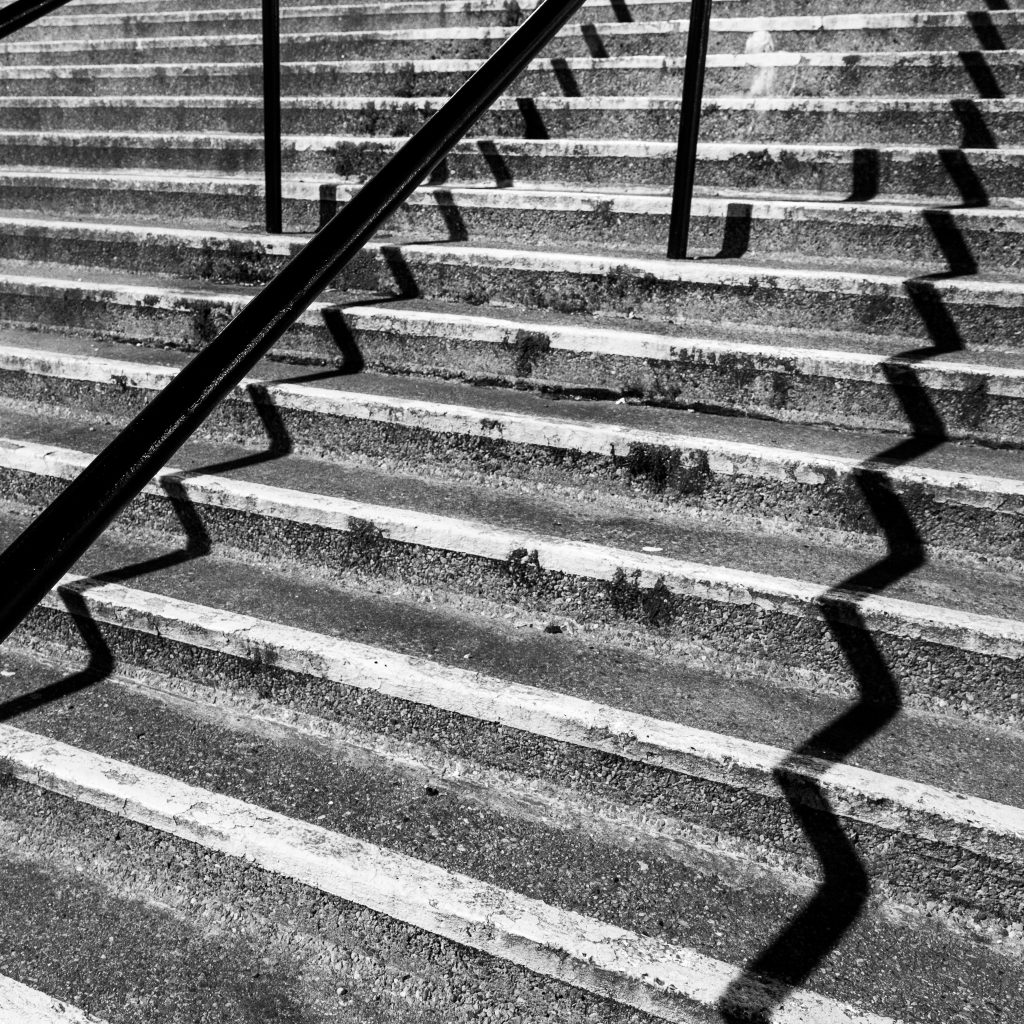
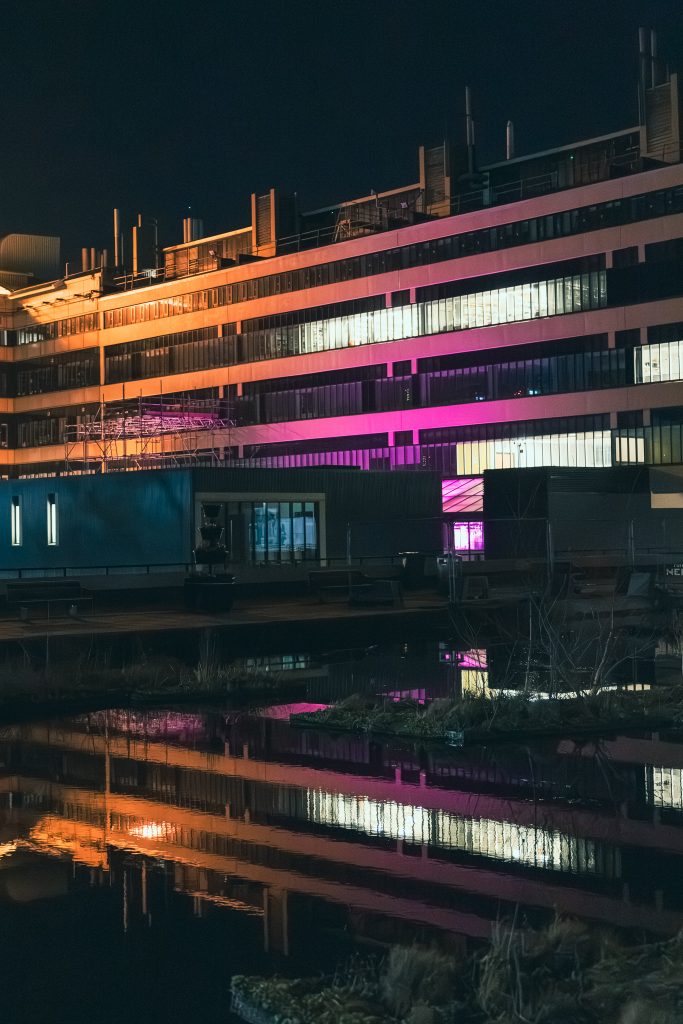
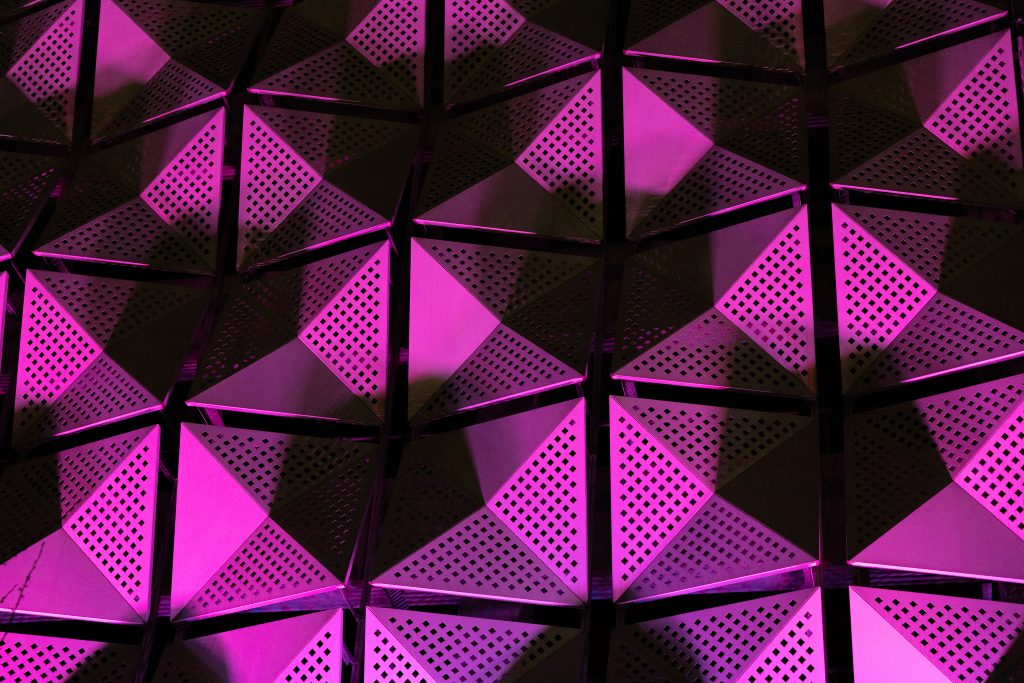
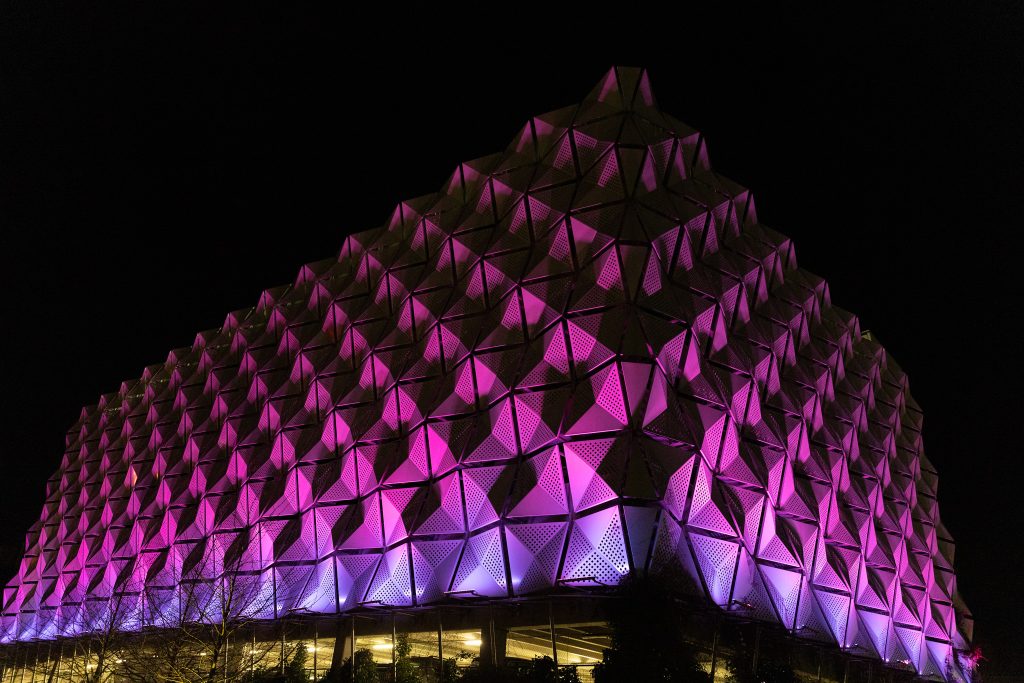
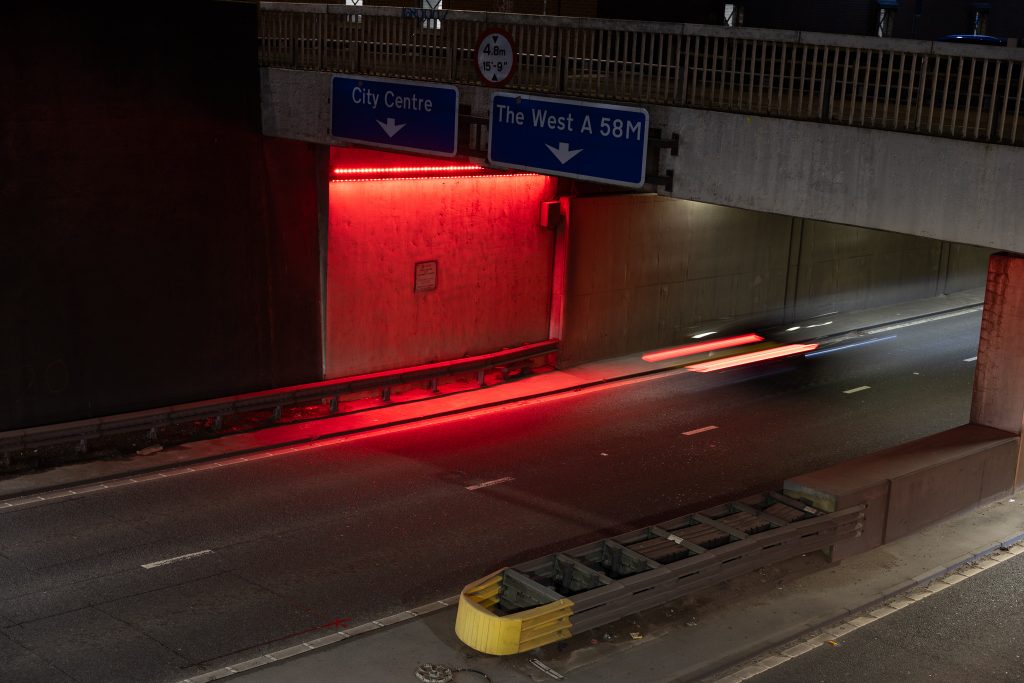
Walking back I spotted the big geometric car park lit up with blue and pink lighting, they produced a lovely image. Then I found an overpass, or bridge over the main dual carriageway so I played around a bit with some longer shutter speeds to try and capture some light trails etc. I even tried some zoom pulling on the traffic but it was less than acceptable.
As I was walking past The Light, entertainment centre, I noticed they had a VUE cinema and as I was interested in seeing the new film, Project Hail Mary, I wandered in to see if I was too late to catch a screening but to my joy I was there 10 minutes before it started. I bought my ticket and entered the screen to sit through what was a wonderful film based on the book by Andy Weir. I was a big fan of the Martian, book and movie so I had read the PHM book ahead of coming to see the movie.
At a quarter to one in the morning I exited the cinema and headed back towards my hotel, there wasn’t a great deal happening in the area where I was so there were no photos taken on this walk. Back in the hotel I took the batteries from their current locations and got them back on the chargers again so that they would be ready for tomorrow.
The Next Day
Next morning I packed up all my gear and then got ready for the day, it was to consist of dropping my new camera and overnight bag at the car before walking up to the Carriageworks Theatre in the Electric Press where there was PhotoNorth Fest taking place over the weekend. The plan was originally to be there on the Sunday morning to view the screening of a short film by Jamie McDonald and Matt Finn about Finn’s book “Mother” which featured photographs from a long form project of photos of his Mum over the years. There were also some exhibitions and other talks by speakers as well as some book sales etc.
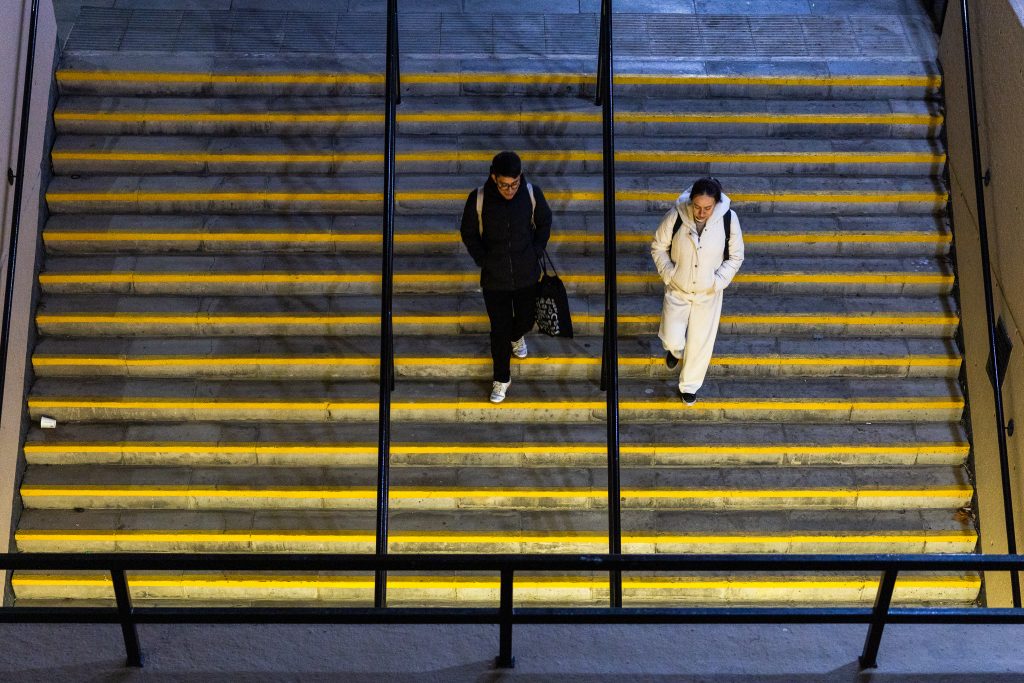
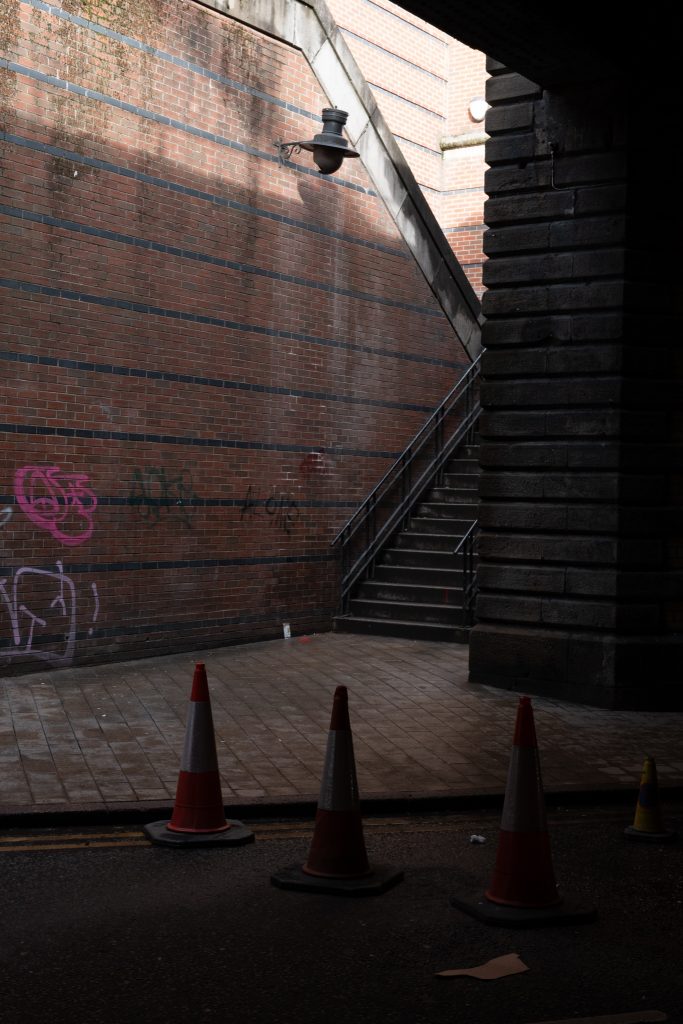
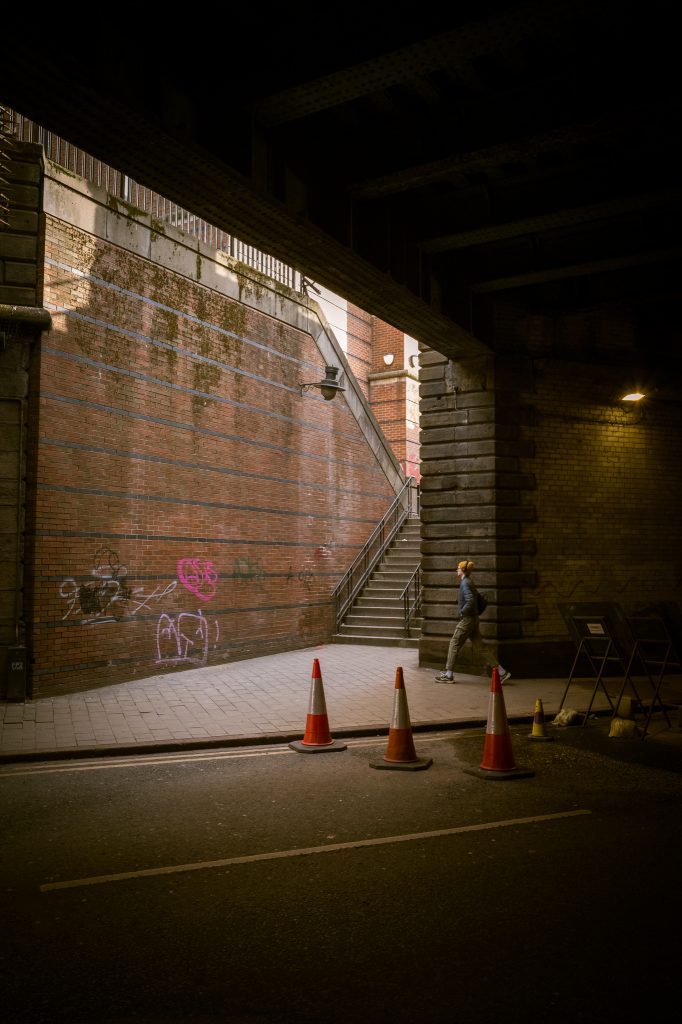
After dumping my bags in the car in the car park and helping a woman who couldn’t unplug the electric charging cable from her VW I took off towards the centre of the city carrying my Leica Q3 on my wrist strap. I came across a lovely little stairway that went up between two railway bridges over the road. The light differences between the natural light from the stairway and the artificial light under the grubby, pigeon fouled bridge were pleasing to my eye so I stopped here and made some images of the scene and then with some people walking through. The pictures with people moving through the scene seemed to work better for me.
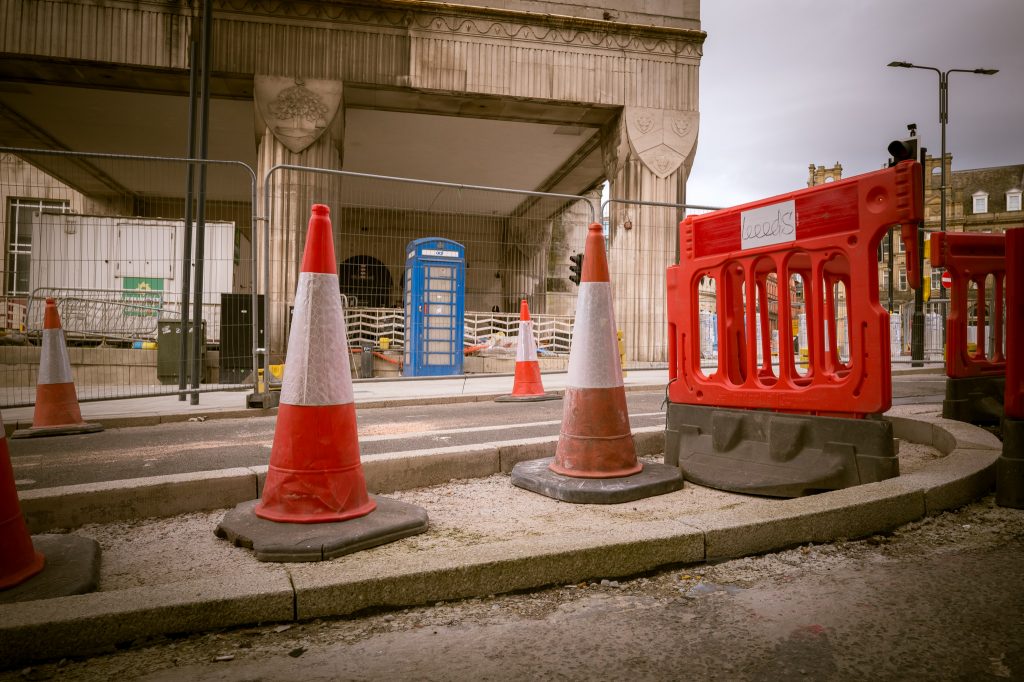
Walking up to the location of the festival I found an old building being demolished so stopped to capture a few photos over the steel security fence when another photographer was also interested in the unfolding destruction. Arriving at the location there was what looked to be another festival setting up in the square outside, I’d come and take some pictures later if it was still in the swing.
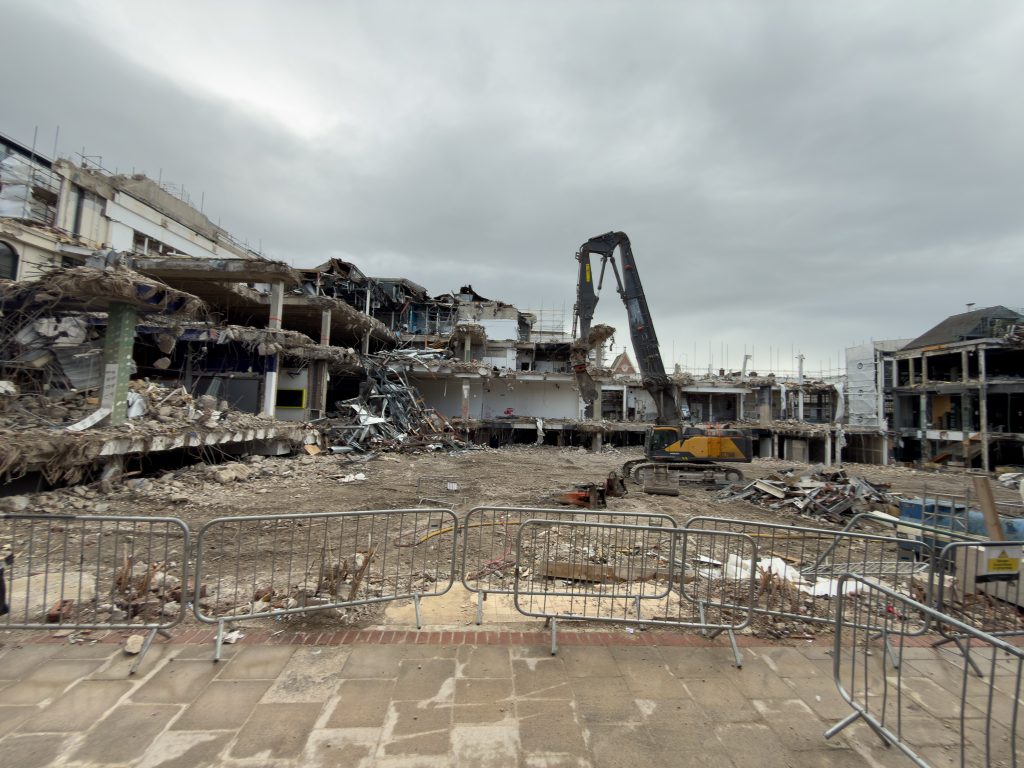
Photo North Fest
Arriving at the Electric Press and chatting to another couple of togs we entered the place and showed our tickets before having a quick chat and introduction to the day, a wander around the exhibitions on the 1st floor and then it was time to head up to the first talk.
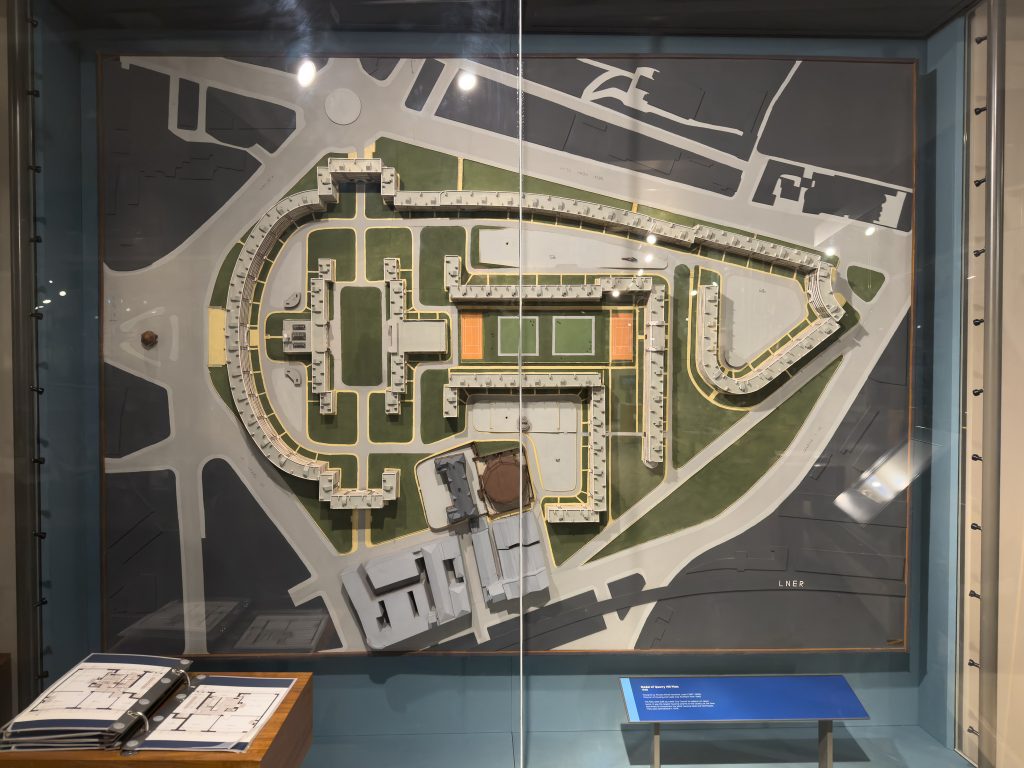
Not Matt Finn’s film though, he and Jamie McDonald had had to cancel due to some copyright issues so it was into the other room, “The Studio” to hear a talk from Peter Mitchell. He is a photographer who I became aware of after seeing his exhibition in the Photographers Gallery in March last year. His work on the destruction of the Quarry Hill Flats in Leeds is amazing and looking back through my journal I now see that Matt Finn recommended I look at Mitchell’s work in 2021. It’s a full circle. Peter stood at the front of the room and talked about his photography, his locations and even strange found objects that he’d picked up along the way. He seemed to be a bit confused and was largely guided by his assistant, who is from the publisher RRB who publish some of his work in books. He was quite a funny presenter but often was unable to get out his words and I felt a bit uncomfortable that he was struggling a little.
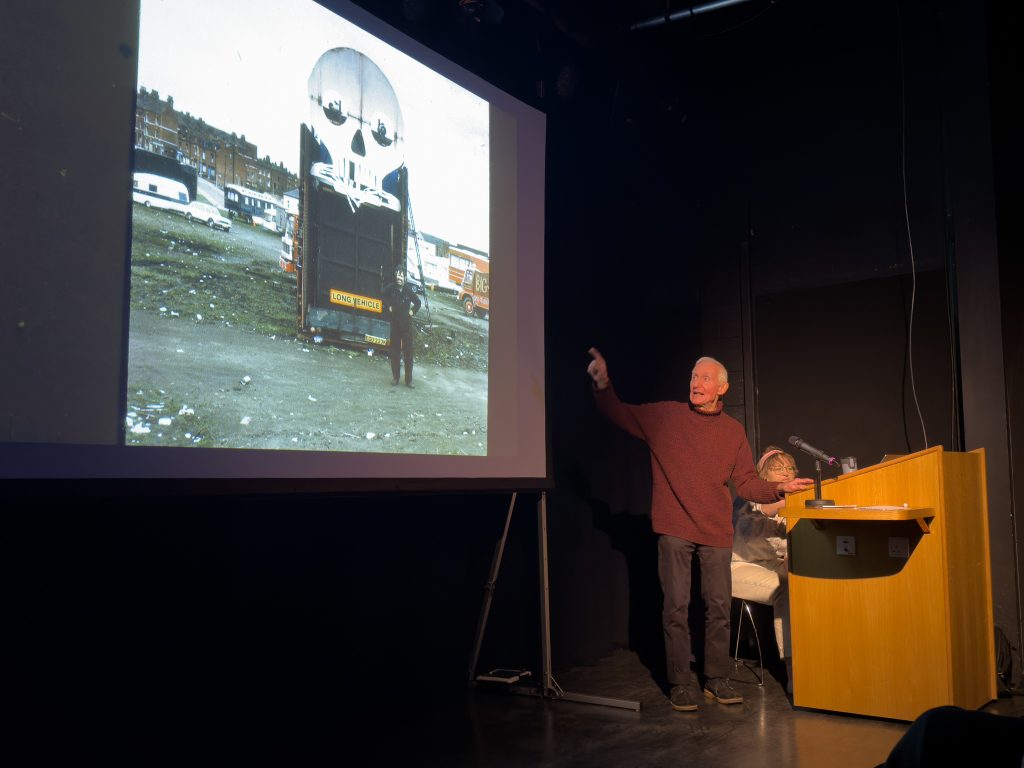
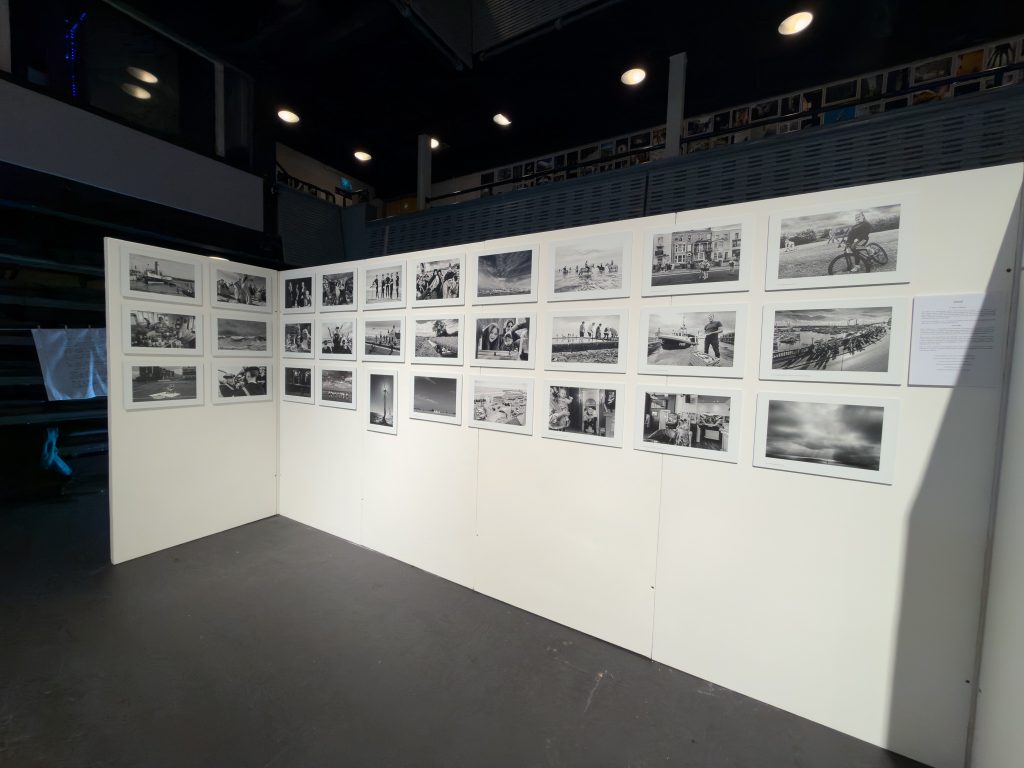
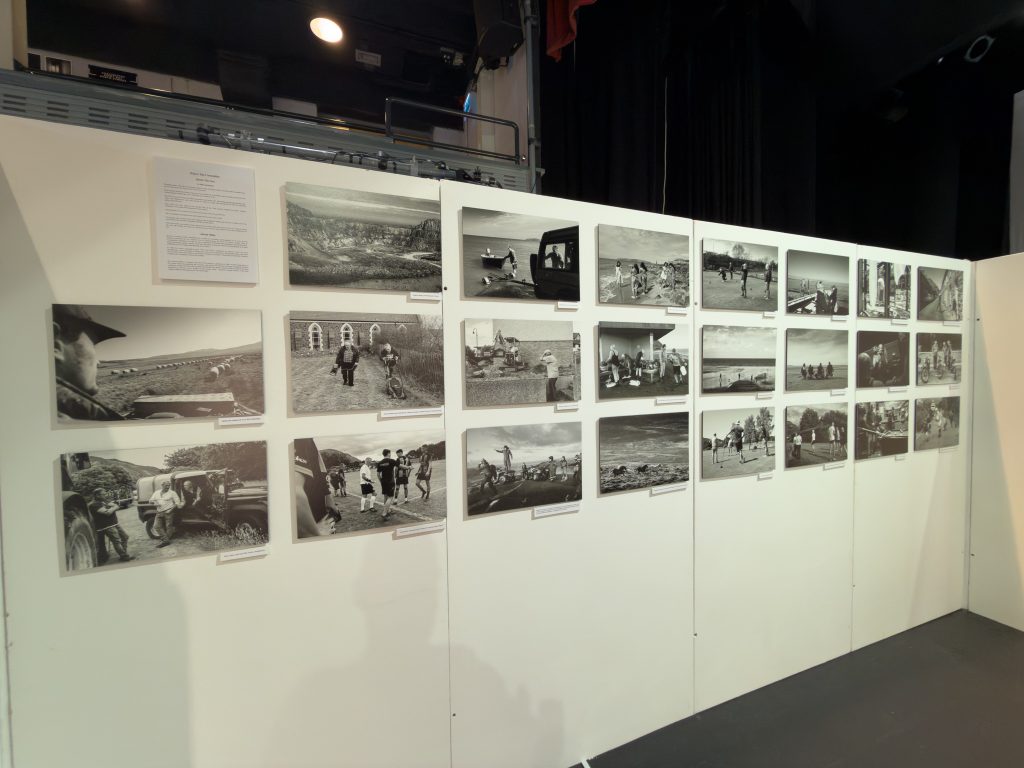
After he showed us his work and mementos from his time photographing around the North of England he had a couple of questions and then went downstairs to sit behind the RRB Publishinng table ready to sign books bought from the stall.
Next in the same room was a presentation from another photographer, this time someone I’d not heard of before. Janine Weidel is a US born photographer who did some inspirational work at government protests and anti-racism marches with the Black Panthers etc capturing some of the 60s most memorable movements on film. She decided then to move to the UK and came across carrying on her photography by focussing on the Irish Traveller community for five years as well as other projects in Iran and Dover as well as Greenham Common protest camp, but the one that I was most interested in was her book Vulcan’s Forge which I have since purchased. In this work she travelled around the West Midlands and the Black Country visiting the industries that made up the lifeblood of the area. Mining, chain making, foundries, pottery and many traditional industries are captured with wonderful environmental portraits and she discussed how she had put on a show in the Photographers Gallery that featured some construction to make it appear like a mine head for the portraits of the miners etc in an unusual move for photographic exhibitions at the time.
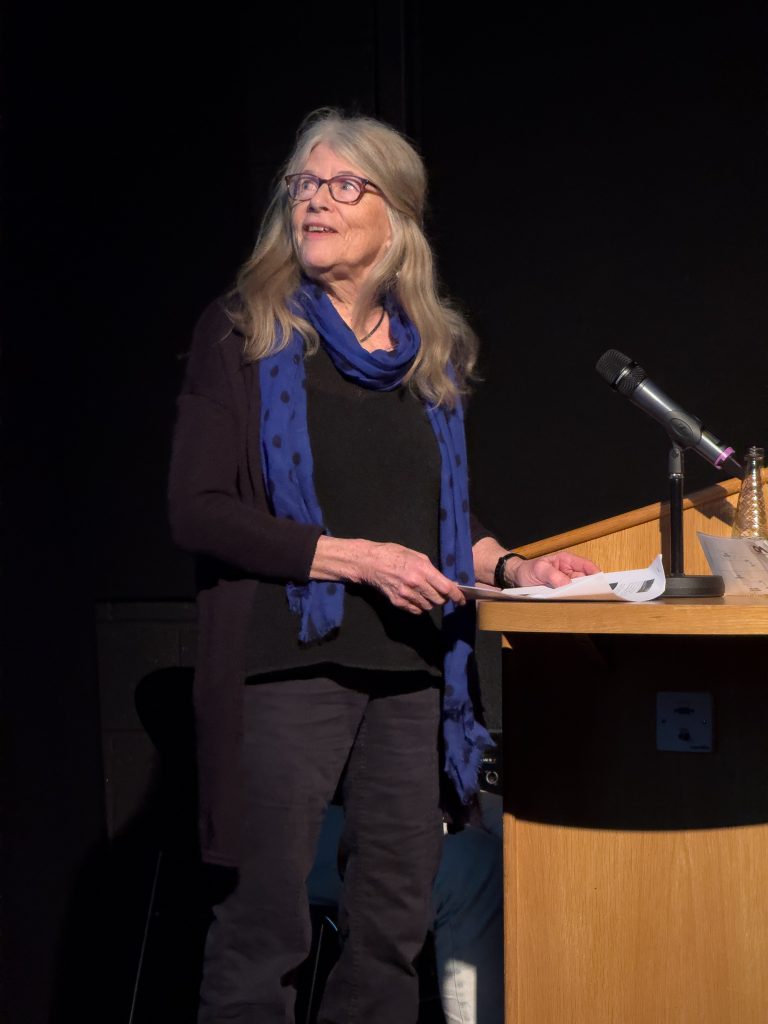
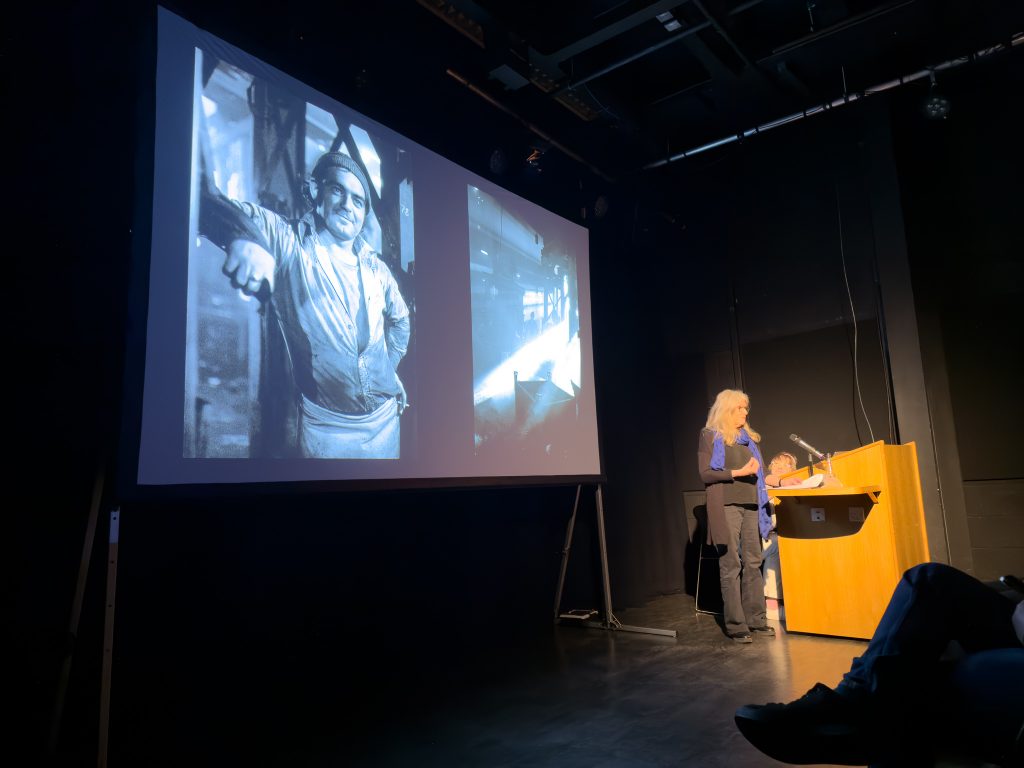
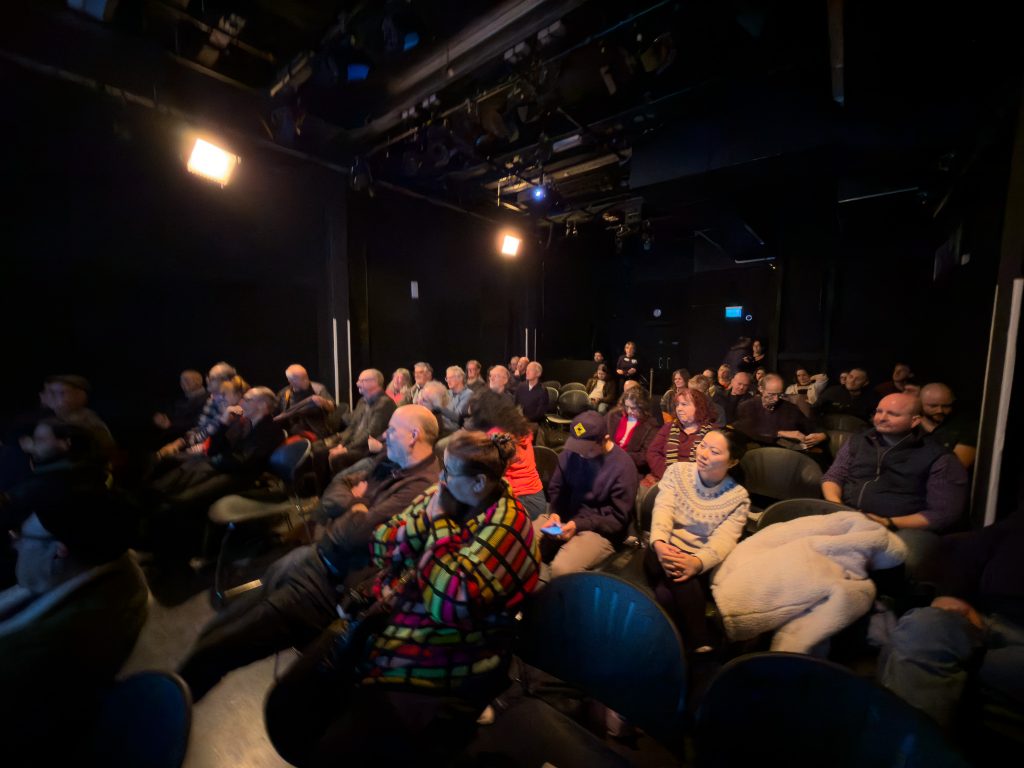
She talked about her life embedding with the travellers and even Inuit communities in the polar region, the relationships with the Black Panther members and how that helped her with credibility and a reduction of suspicion when she came to work in a London street, St. Agnes Place, documenting the lives of the people who were squatting in the houses. They would ultimately be evicted and the buildings demolished meaning that her images will be a lasting history of this time and place.
There was no time for questions as she’d run over a little, but her talk was more controlled and composed than the previous example of the brilliant photographer Peter Mitchell. After this it was time to have a look at the other areas of the fest, the exhibitions, stalls and other attractions. Outside a St Patrick’s Day parade was well underway in Millennium Square creating a hubbub of Irish music and dancing and it had been leaking into the Studio theatre whilst Janine was presenting and I figured I would leave this place soon and go for a wander.
No More Talking
First though it was time to go for a look at the book stalls, I love photo books and it was great to see the book Memento Mori from Peter Mitchell and as he was there he was signing books so I waited in the short queue for a signature in my new book. Again he appeared to be a bit confused and was asking the people in front of me in the queue what year it was, even asking if it was 2065. He ended up writing 2026 on a packet of sugar and leaving it next to him. He signed my book and I had a quick chat about the exhibition in March last year including his work that featured aeroplanes and the like. It was amazing to see how down to earth he is and such a nice bloke too.
After the book signing I was looking for a copy of Weidel’s Vulcan’s Forge but there were none here, as it is a separate publisher. I chose to buy one of this book online once I’d got home from the road trip. It holds some lovely photographs of industry and people involved in the industries. Amazingly it shows how Health & Safety has come on leaps and bounds in the intervening years. Big bruiser blokes with industrial grime covered hands tucking into a doorstop sarnie whilst sat next to a furnace producing white/red hot metal chains. Coal miners forced to work deep underground with few precautions to protect their wellbeing and when they arrive at the surface they are painted black apart from their eyes and their teeth. We’ll never see the likes of these conditions again the UK with the reduction of the heavy industries and then being forced, for the correct reasons, to adhere to ever stricter H&S guidelines and laws.
A quick chat with someone from Senegal selling artworks and gifts that had been made in her homeland but not really anything I would buy, it fitted in well with the IAAF African Arts Foundation that was also exhibiting some of their artists’ works. A short chat with a young photographer who had been to Singapore and was selling prints and all manner of other gift items with the prints on, she had some amazing work and she was looking forward to travelling around some more.
St Patrick’s Day
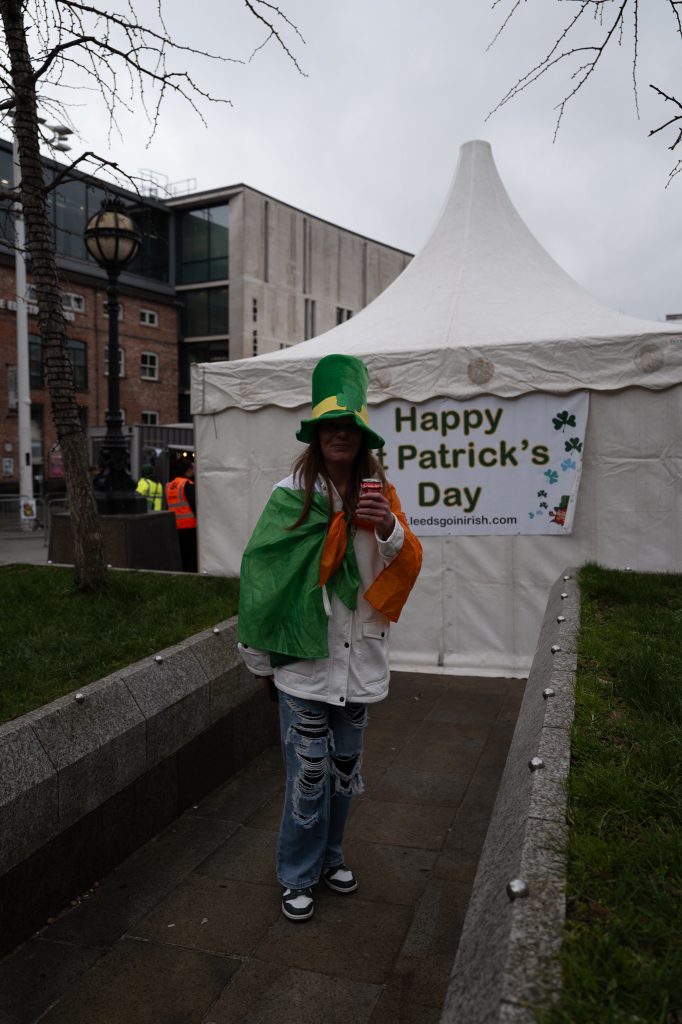
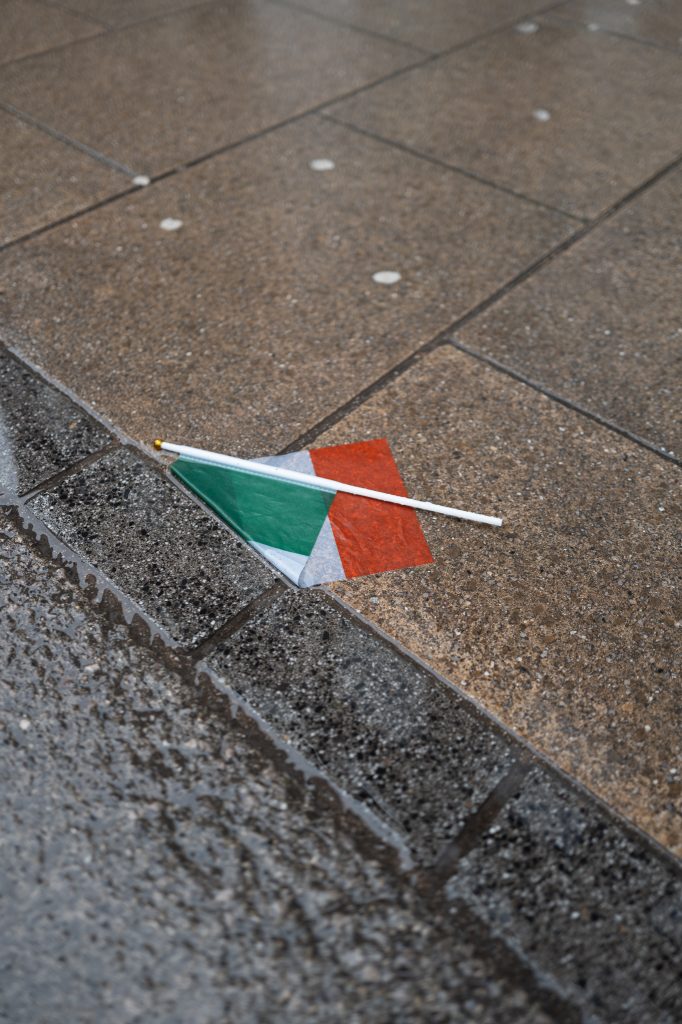
Once I’d looked at the exhibitions and seen the wide variety of works featured there, I took leave and headed off to the square outside, where a stage was set up and there was currently some Irish dancing going on with many of the crowd wearing green, funny hats, costumes and even dogs with green clothes on. It was teeming down with rain and completely soaking everyone who was there to celebrate. It didn’t stop everyone and they made the best of the situation.
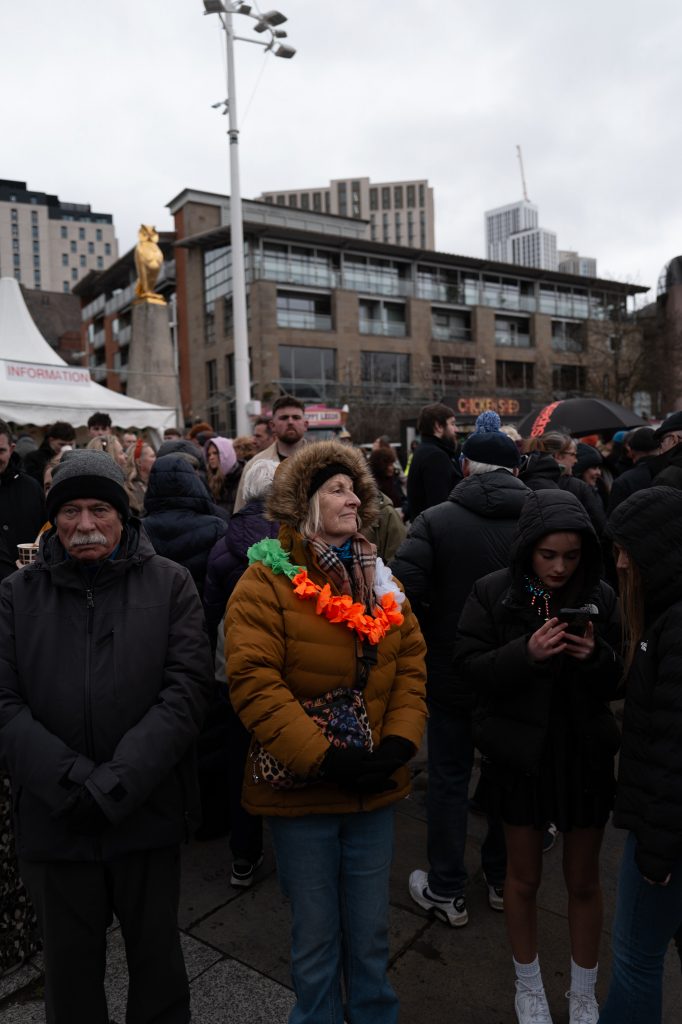
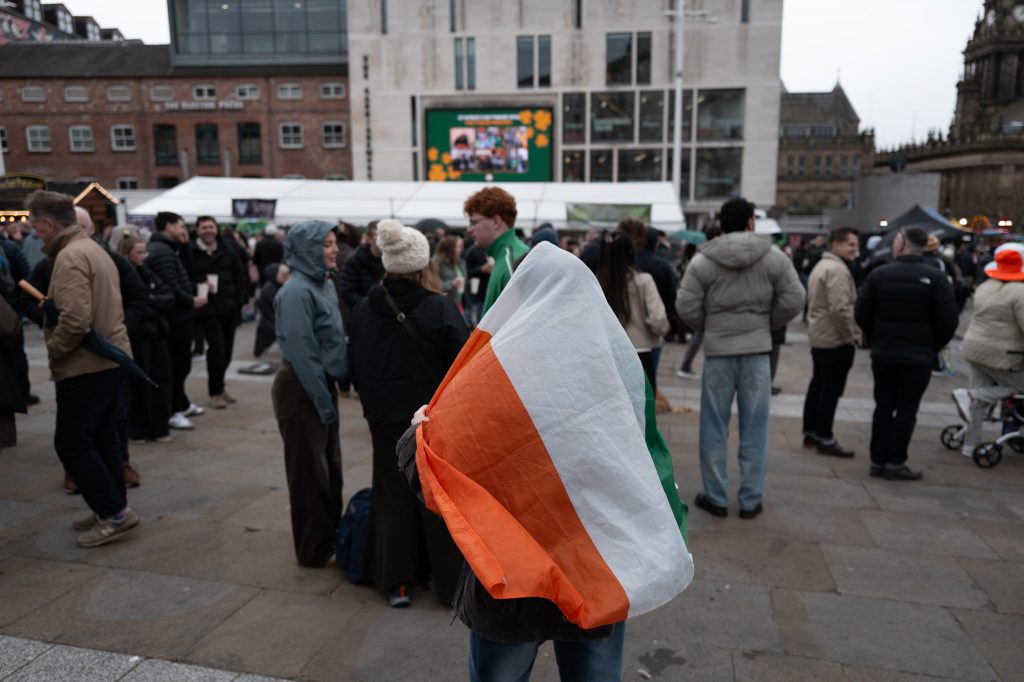

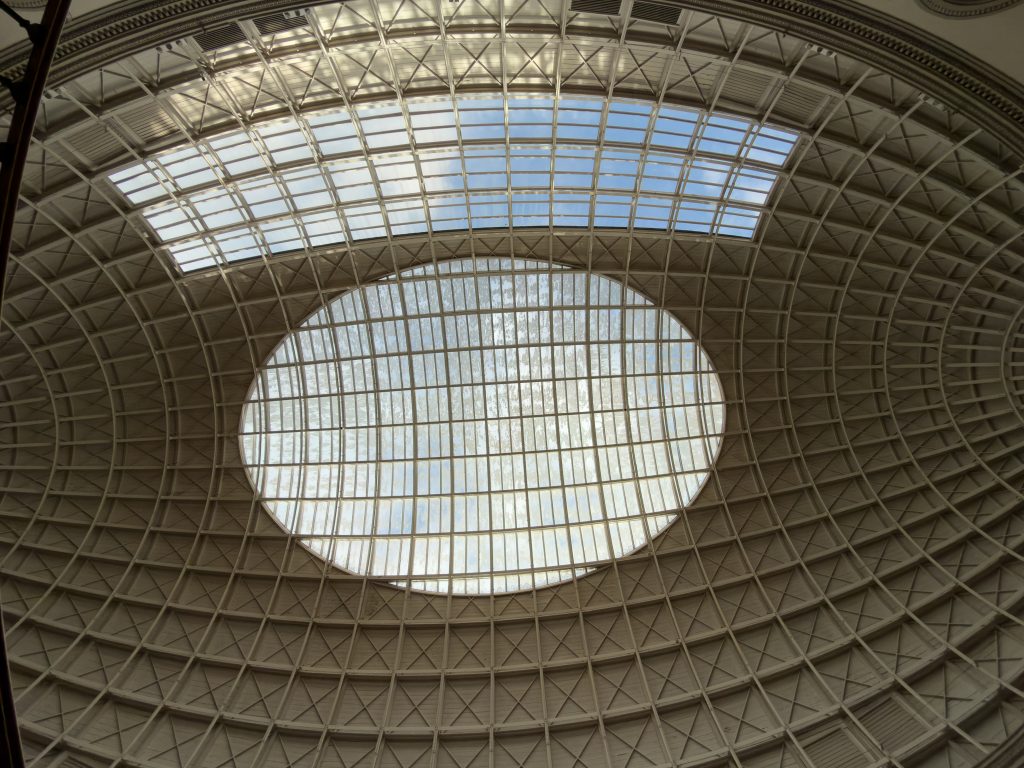
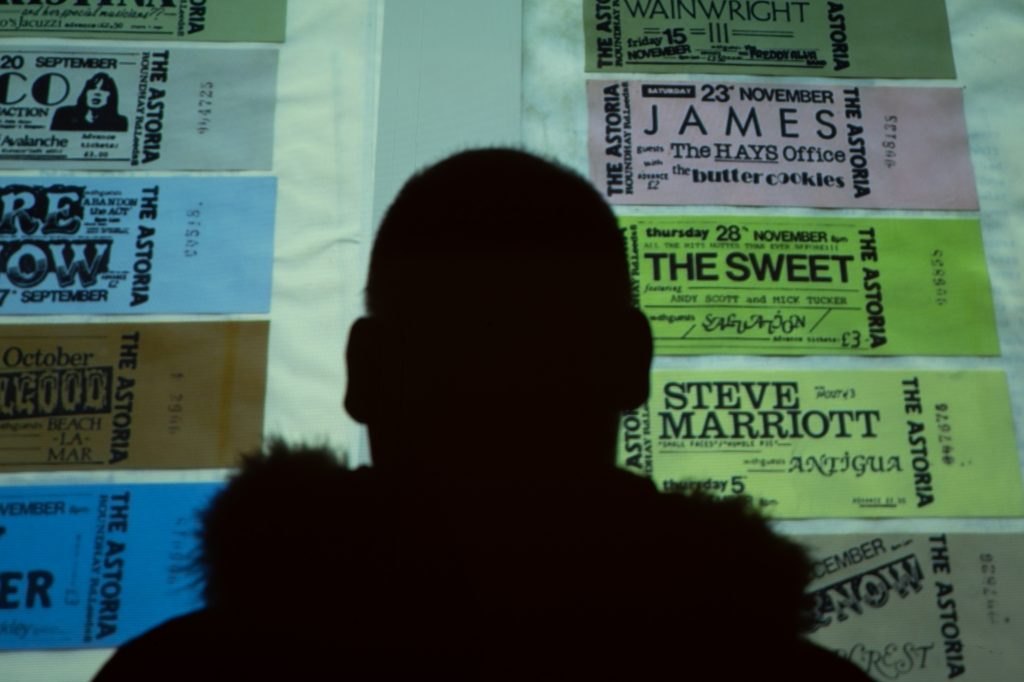
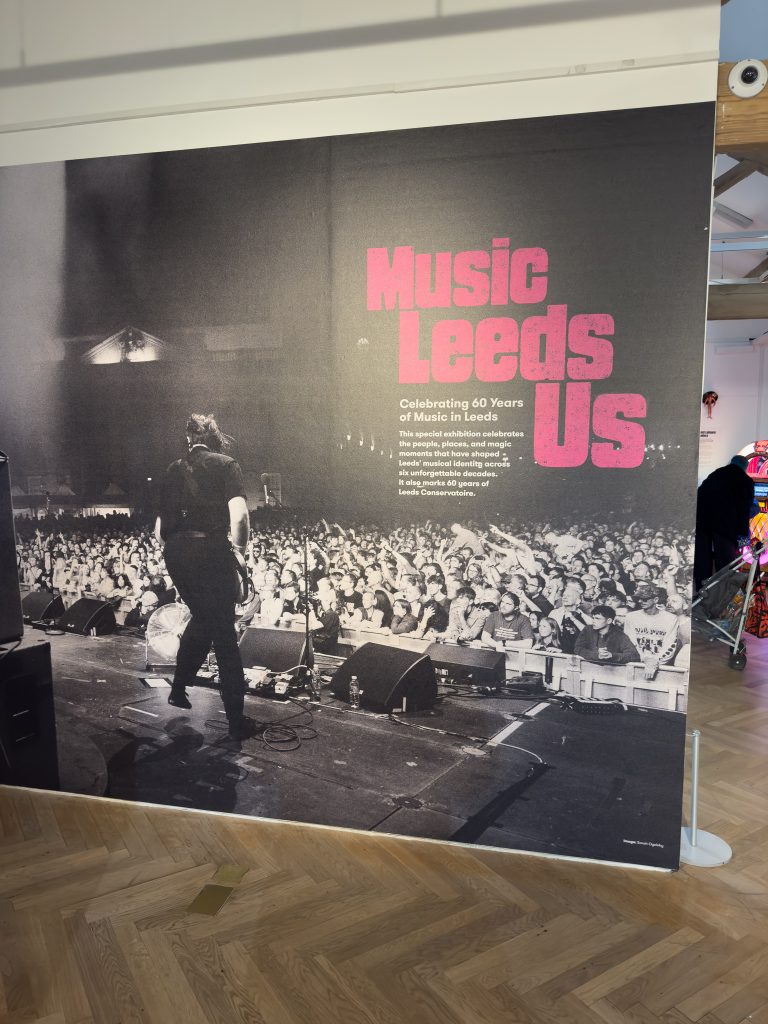
To get some respite from the rain I chose to go into the Leeds Museum where there was some wonderful historical information about the city and the people who’d developed it to what it has become. There was sections about the famous people who originated in Leeds, the inventions, the innovations and even the music. There was a special exhibition too, featuring the music history of Leeds and it featured mementos and artefacts from many local bands and important bands who’d played in Leeds over the years. There wasn’t much to photograph here for me but plenty to look at.
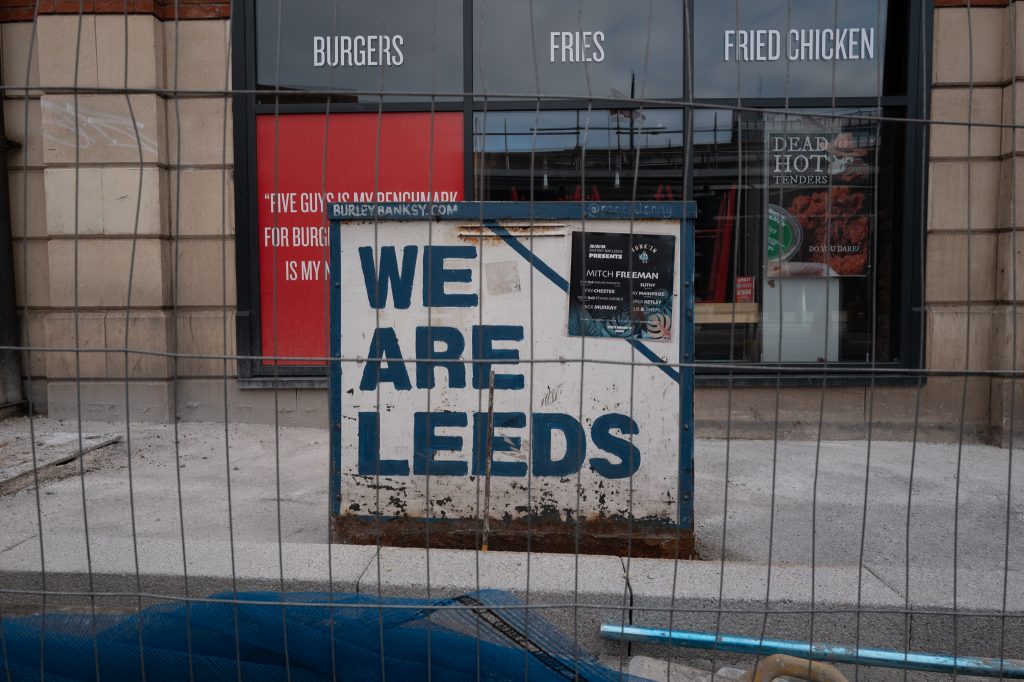
After a walk around the museum I thought that I would walk towards the city and see if there was any good street photography to be had. There was less opportunity than I thought for capturing some photos and after a few hours I figured that I may as well take to the car and head off home.
Back at home nice and early and ready to download the photos and recharge the batteries it was time to prep for work the next day and also go through the photos for some rationalising of good vs poor images.
Summary
Reflecting on the weekend, it was a successful one, I had bought a new camera, one that should stay with me for a long time and be super useful in by practice of low light and nighttime photography. It was relatively easy to pick up and I have since watched many instructional videos and read the manual to work out how to better configure the camera for my method of shooting.
The PhotoNorth Fest was also good but I don’t think that I would attend normally, if it hadn’t been for the promise of Matt’s book video being screened. There was plenty to see and do but it was a long way away for the programme of talks that they had planned, even with the talk for the video screening being cancelled. It was one of the two talks cancelled and did make it feel a little less impressive.
The people and organisation were generally great and the facilities in the spaces were also awesome. I would recommend the event for other photographers and whilst it is only three hours away for me it still felt a bit extravagant for time spent to go there.
Luckily, I am able to wander around at night time and use the time to take photos of the University buildings and the rest of the city centre. If I was frightened to go out with my camera, it would have made the whole trip a little less worthwhile. I am pleased that I did go and I did came out with some good photographs that I can use.
Be First to Comment