Once I’d finished at the Trafalgar Square protest I ambled my way up towards Leicester Square Station then realised I had more time than I thought so went for a walk up Oxford Street and Regent Street for some street photography. I’d last visited Oxford Street for some photography around December 2024 with Matt Stuart for a street photography workshop and it was busy now too. There were some stragglers from the protest making their way around here too but not much of a police presence. There was a protest outside of the Apple Store by an organisation concerned about Uyghur Muslims being exploited for slave labour in the production of the iPhone range.
With not a great deal else occurring I headed to Oxford Circus for a 20 minute trip to Millbank, the location of Tate Britain. A museum devoted to British art, it was hosting an exhibition of works by Lee Miller and featuring Lee Miller. Miller was primarily a model and after a successful career in modelling began a career in photography as well as working for Vogue magazine. She is an American who travelled extensively and this exhibition details early photos of her modelling and then through a surreal art experimental period where she worked with other artists, through a period as a World War II correspondent, some near the front line and then some works after the war.
Fashion
It starts in the gallery at the beginning of the 230 strong collection, with early photos of Miller as a young woman and the captions detail some of the reasons why she made such a good model, she had an androgynous appearance that lent itself well to many of the subjects that were being shot. There are some nudes as well as many fashion images and the room is laid out well with the framed images all being mounted at the same height. Pictures by famous photographers such as Cecil Beaton line the walls indicating that she was a well known and respected subject.
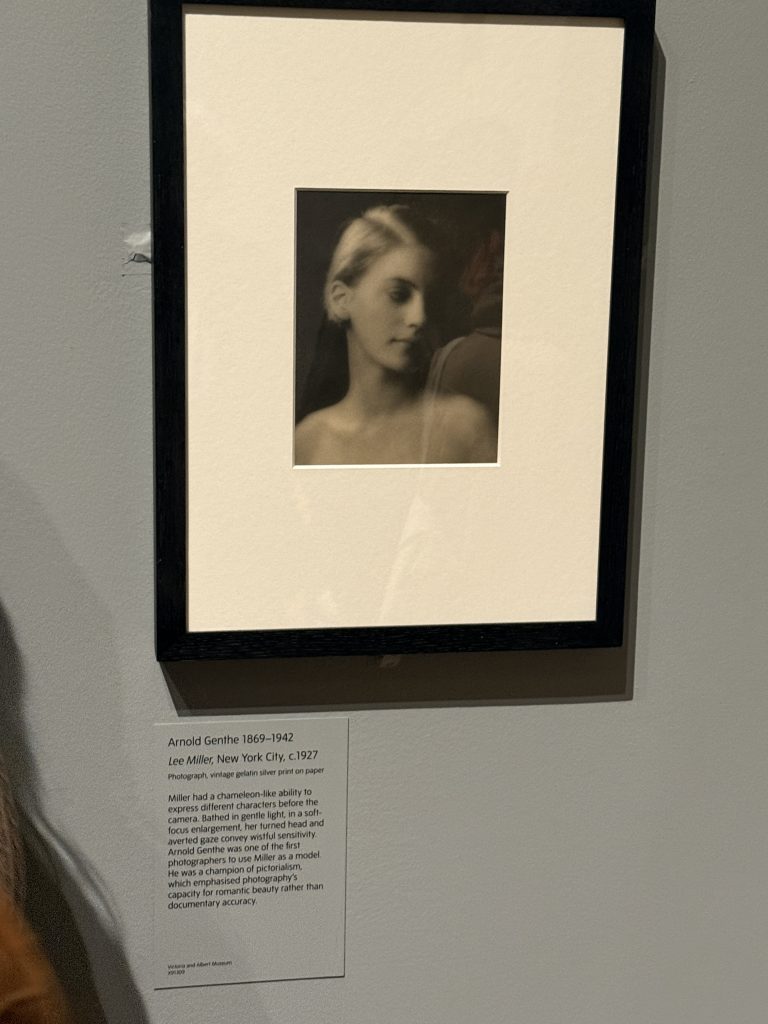
There are also a couple of glass topped cases or vitrines that hold publications featuring Miller as a model. This is a repeated feature of the rooms throughout the exhibition showing the works related to the overall theme of the room.
Surrealism
There was then a room of some of Miller’s early photography moving into her relationship working with some surrealists such as Man Ray. There were many pieces of work shot by Man Ray of Miller and shots by Miller of Man Ray, as well as self portraits too. Much of it is experimental and shows their close relationship growing through the surrealism that they explored together.
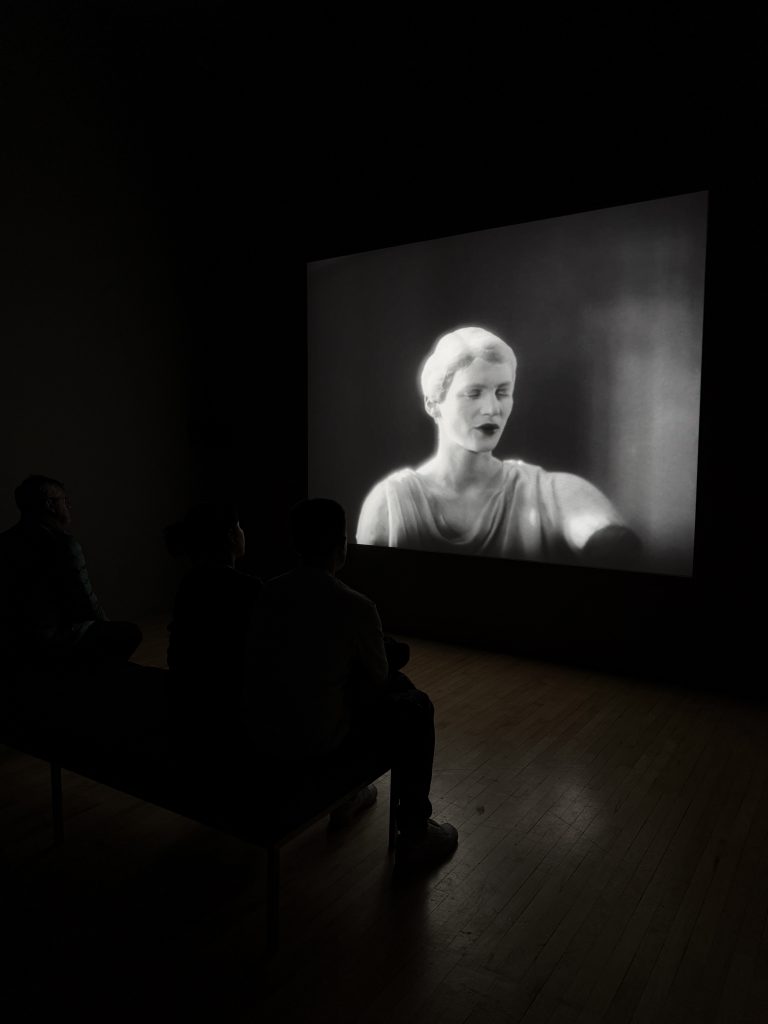
There is also a separate room of Miller appearing in a French surrealist short film, Jean Cocteau’s The Blood Of A Poet, 1930, in which she plays a marble statue that comes to life, along with the artist disappearing into a mirror. It’s a strange watch but entrancing at the same time. Some of these surrealist works were not just photographs in a surrealist fashion but there was also examples of Miller making a photo and cropping in to a detail of the negative, or even turning the whole canvas through 180º or 90º to make the image appear more striking.
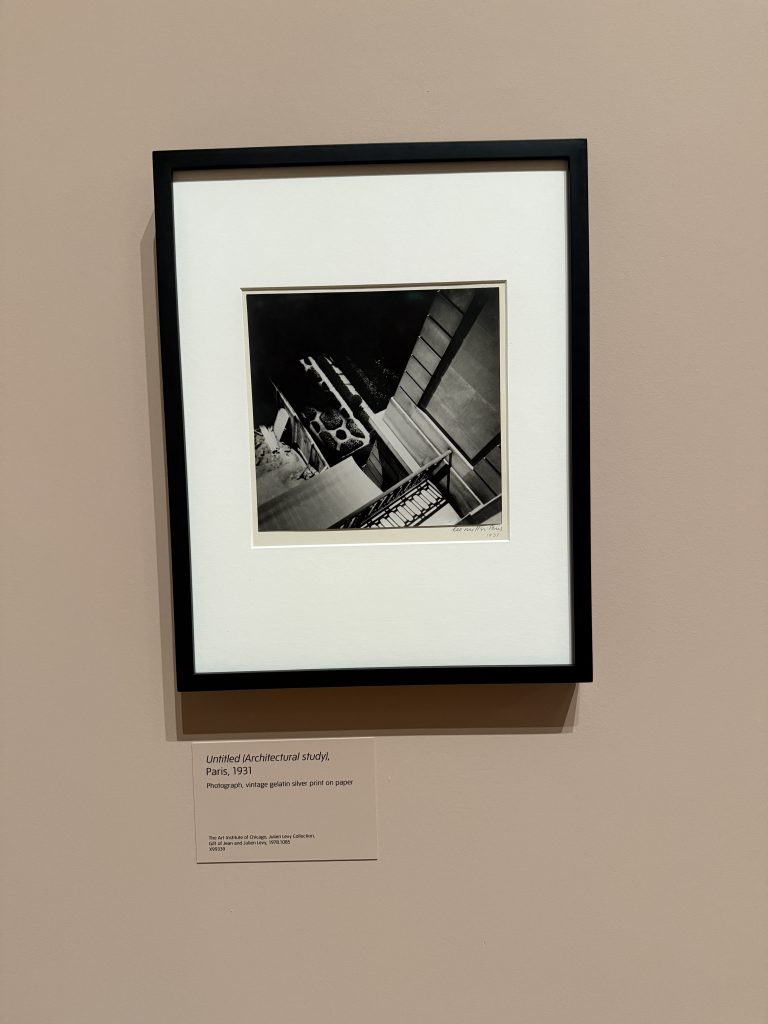

She and Man Ray also played with the experimental art of what they coined “Solarisation” in which the darkroom process is interrupted by exposing the paper to an external light part way through the development. The effect on the final print is very clear and alters some of the exposed paper giving it a strange and bizarre appearance. It shows that they were experimenting a lot with different ways of making photographs and not sitting still.
Travel and War
Through into the next part of the gallery and we see Miller’s work as she travels through Egypt from the early 1930’s and some of the images here are captivating too. There are many examples of her ability to see beyond the normal photograph and possibly using some of her surrealist experience was able to make some powerful work here. This was in the period before the rise of the Nazis in Germany and the beginning of the Second World War, so the photographs tell a story of increasing tensions although this may not have been evident in the work at the time. Miller then chose to become a photographer focussed on the war, and with some early work in Britain, still shooting for Vogue too, there was an opportunity to capture the results of the blitz, and the devastation caused to London and other areas of the UK.
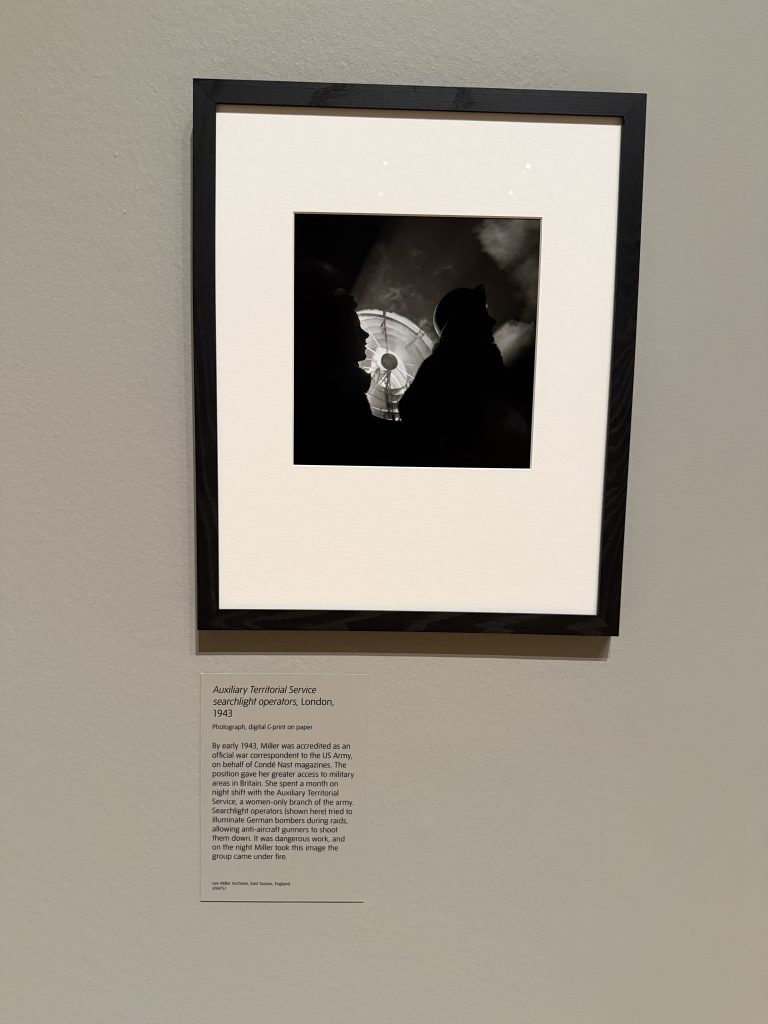
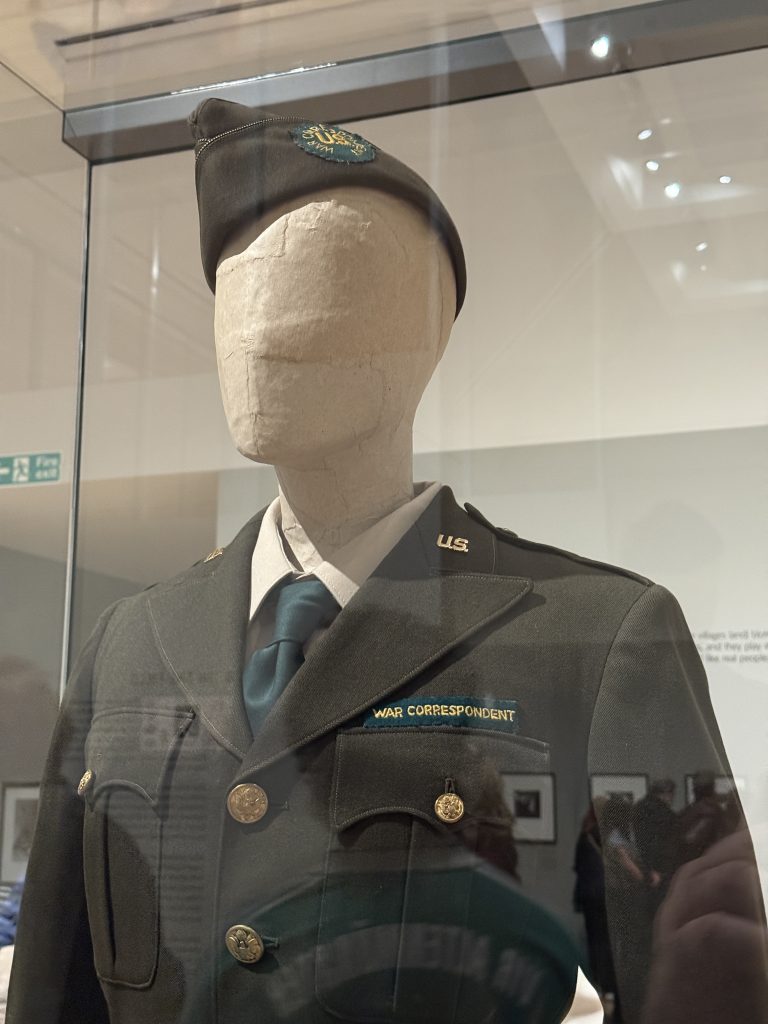
She desperately wanted to travel into the war zone and make images at the front line and after much wrangling, and working in the rear of the advancing forces she managed to persuade the Army superiors to make her a War Correspondent and allow her to travel to Europe and document the action that was taking place over there.
In the centre of this room is a War Correspondent US Army uniform complete withe her skirt and hat. Alongside this is a Rollieflex Twin Lens Reflex (TLR) camera. I’m not 100% sure if this is Millers own camera or an example of the camera she would have used. It looks spotless so I suspect it’s not hers or has been restored in the past.
Some of the wartime photography was breathtaking and a book I purchased last year, Lee Miller’s War, has many of the same images in it but it is something else to see real original darkroom developed prints alongside the more recent digital scan to C-Type prints. The photos of the Nazi soldiers with their families in Berchestgaden, who had recently taken their own lives knowing that the overrunning of the area by allied troops was inevitable, were haunting. A young woman sits on the sofa, leaning over as the poison has taken its effect on her body, and a Nazi soldier in full uniform lies on the floor next to a painting of Adolf Hitler that has been defaced by the liberating armies. Each of these images made their way into Vogue magazine as important documents of the war and tell the story without the same feeling of propaganda that might surface in the work of more factual photographers.
The photos of Miller and her colleague Scherman taking it in turns in Hitler’s bathtub are striking too. I first saw this photo in an early part of the course in a lecture by Alice and we discussed that this was soon after Miller had witnessed the horrific scenes at a concentration and death camp. The boots are left on the floor beside the bath tub and she is in the water filled bath cleaning off the stench of the degradation that the Nazi regime perpetrated on society.
Portraiture
The next room is less of an assault on the emotions and more of a joyous celebration of Miller as a photographer and artist. She shows here some of the portraits of clients and mainly friends that allowed her to make images of them. Pablo Picasso and Henri Magritte showing that her surrealist art background has not entirely left her practice. Some of these images are full of love and affection and it really shows through. Maybe it is Millers way of purging the horrors of the conflict she saw and going back to portraiture helped her regain some natural balance.
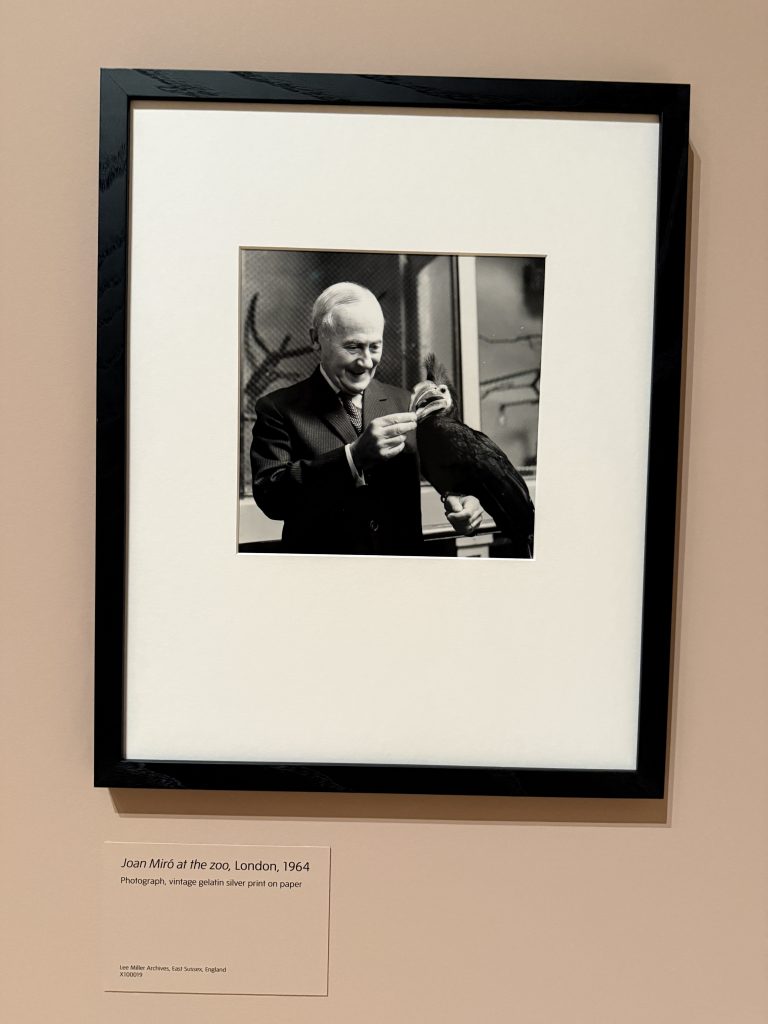
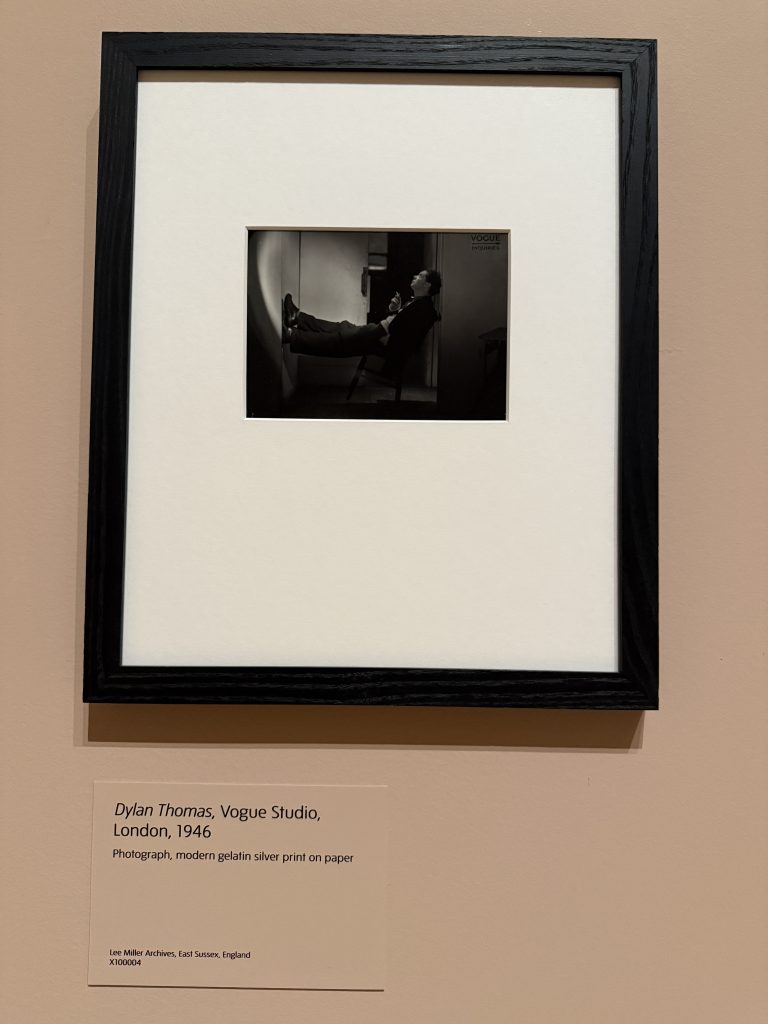
At the end of the show it explains that much of Miller’s work was hidden and unseen for many years, with her even telling some people she had burned it all. Her son found the works and has catalogued them and created the Lee Miller archive, in much the same way that Maloof has reinvigorated the art world around the works of Vivian Maier.
Looking back on the exhibition as I had traversed it, I noticed that in one of the rooms the photos were hung, not in an orderly line around the room but in a higgledy-piggledy zig-zag, one up, one down. I hadn’t noticed it whilst I had been viewing these photos but it was only after upon reflecting that I realised that this was in the surrealism focussed room. I don’t know if this disorderly order was designed to break from the norm of the remaining galleries or if it was done to cater for more images on the walls but it was definitely something unusual about the exhibition.
Reflection
The photos in the exhibition were all amazing, some originals and some more recent prints but it was great to see the progression of a photographer from being the subject interested in photography to being the photographer capturing some outstanding images, many of which tell stories that are very graphic even by today’s standards.
The exhibition was well put together and the themes of the rooms fit perfectly, there were no extraneous distractions and apart from it being very busy I really enjoyed experiencing the show. I would highly recommend this exhibition to any photographer, not just those who might be interested in surrealism, fashion, war or portrait photography, but absolutely every photographer.
In comparison to the Banksy: Limitless show this stands head and shoulders above it, showing just how an exhibition can be tastefully produced. The fact that this Lee Miller exhibition was so impressive, even made me feel that the Banksy was worse than I had first suspected.
Around The Gallery
After leaving the Miller exhibition I found myself with some time to kill as I didn’t want to drive back home too early. I had seen a poster earlier for the Frameless Immersive art experience that is based over at Marble Arch so I checked out how much the tickets were and whether there was availabilty then booked it. It would be something different to do and was booked at 7pm, allowing me to get away from London by about 9pm.
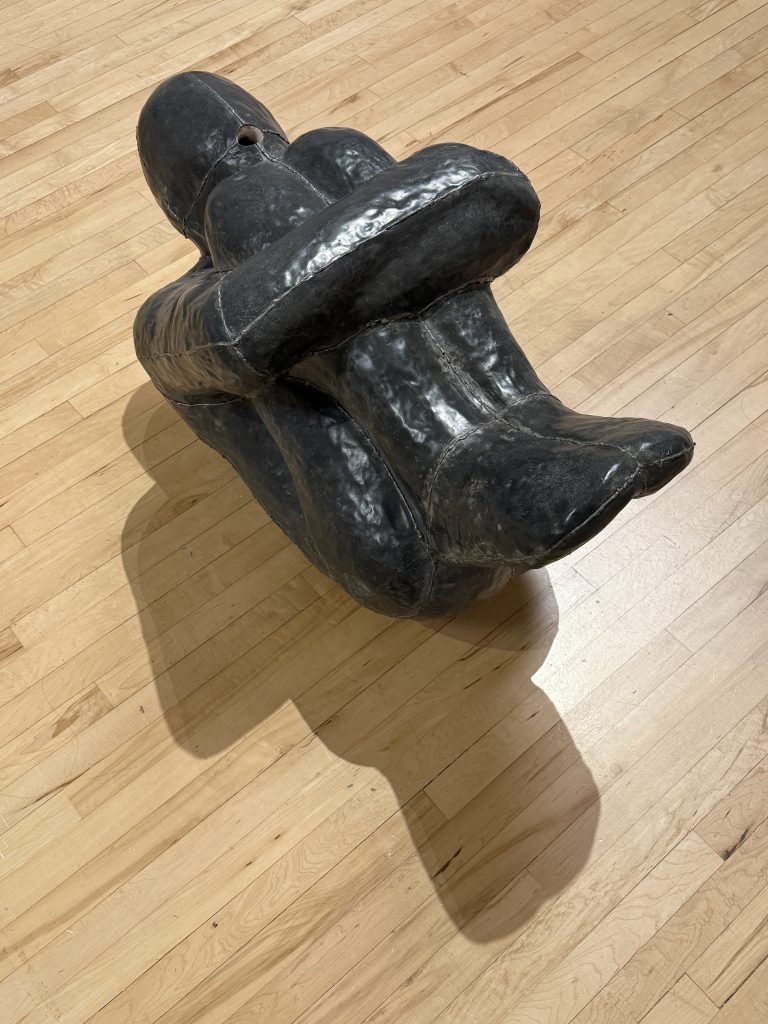
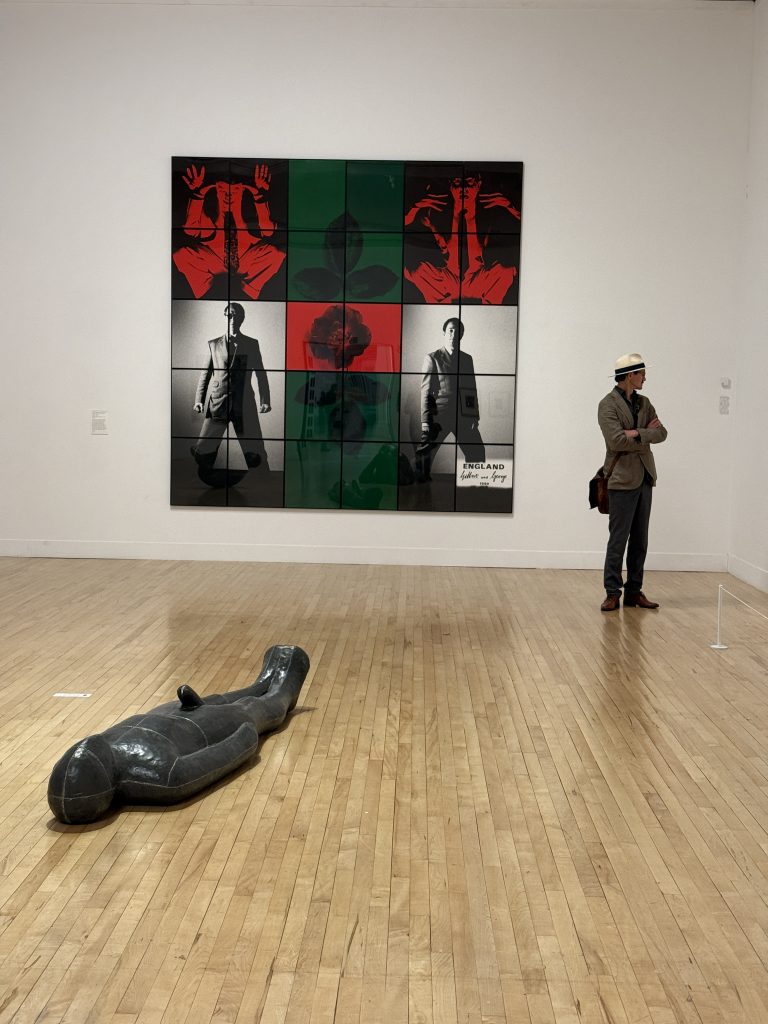
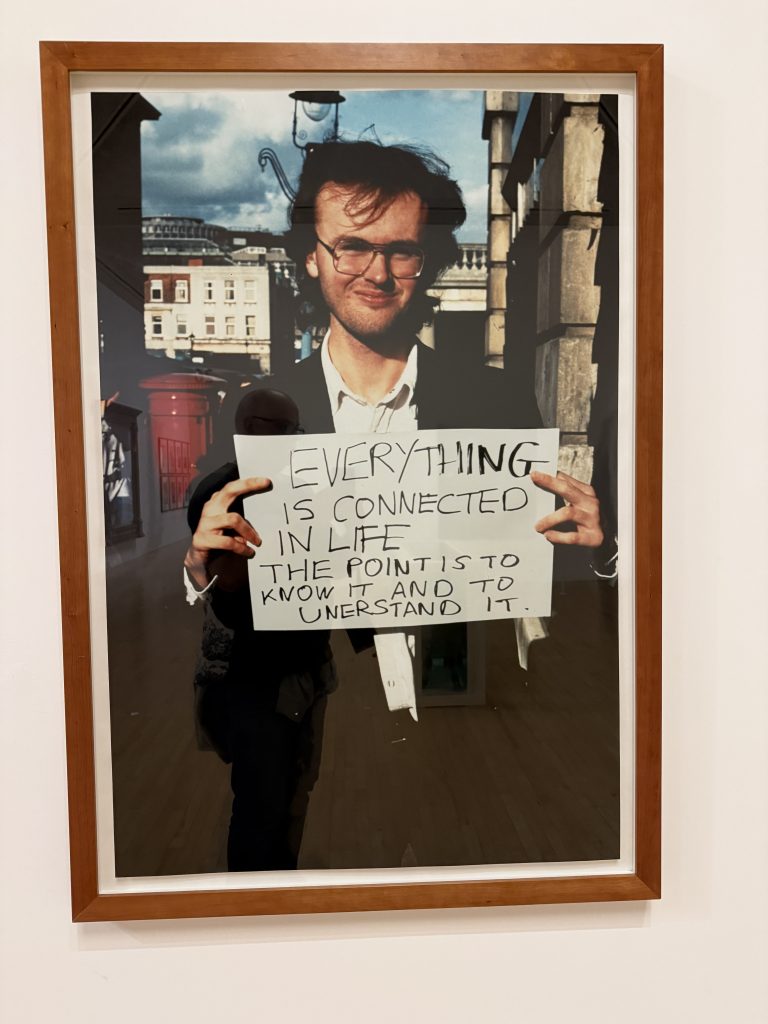
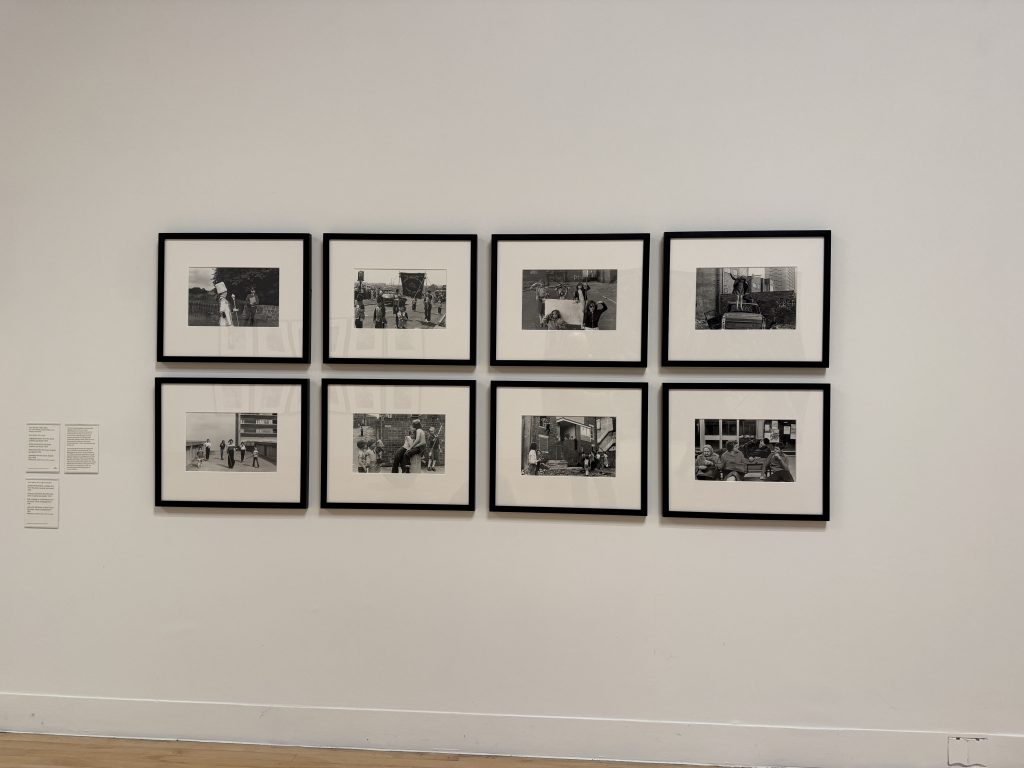
Before it was time to head to the tube though, I had a little opportunity to look around at some more of the works that were hosted in Tate Britain. There were many works by J.M.W. Turner and others by Tish Murtha, Anthony Gormley, Hepworth, Gillian Wearing and Damien Hurst.
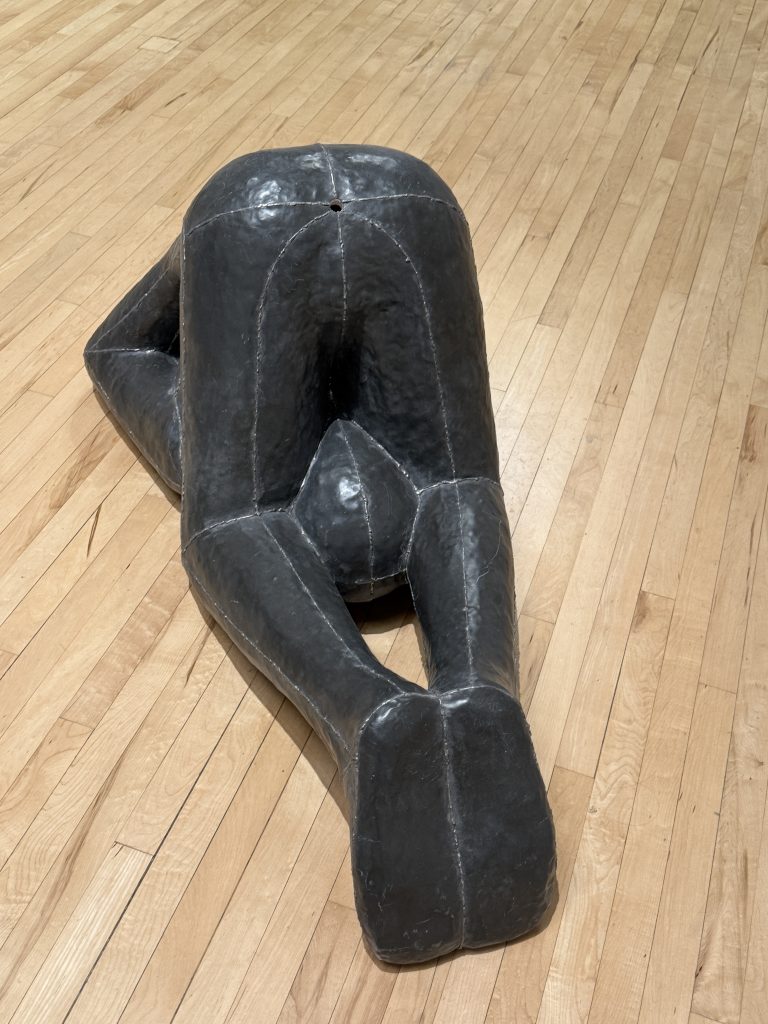
There was a room with three figures on the floor made of plaster and lead, by Gormley, all with a hole featuring in the works. There were some other works around the galleries too but before too long it was time for the gallery staff to walk around explaining that the gallery would soon be closing.
Wrapping up and finding my way out of the sprawling maze of the Tate, I headed out to the riverside before walking up to the tube station at Pimlico. From Pimlico I travelled over to Marble Arch and jumped out into the fading light of the day. The review of the Frameless exhibition will be available in the next post.
Be First to Comment