Trip to Shirehall on the 23rd January 2026 at the invitation of the Shrewsbury Civic Society and Dawn Husemann’s Task & Finish Group which was created to explore the options available to the people of Shropshire with regard to the former council headquarters. This set of buildings, designed by Ralph Crowe A.R.I.B.A in the beginnings of the 1960s would server the Shropshire Council and Shrewsbury and Atcham Borough Council for a good six decades before becoming “outdated” and too large for the new structure of the council, especially since the digital age and covid pandemic meant that working from home became not just something possible, but preferable.
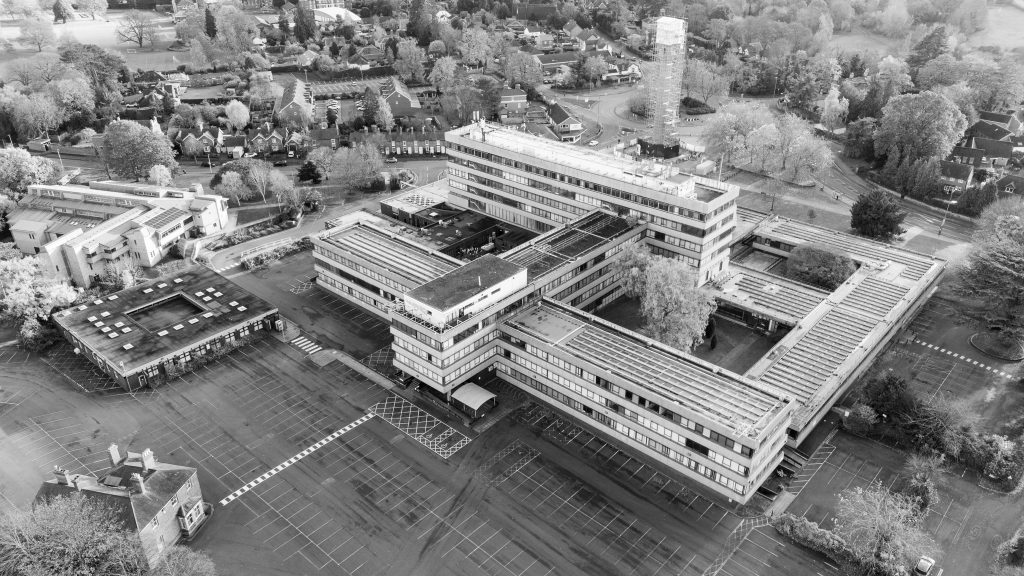
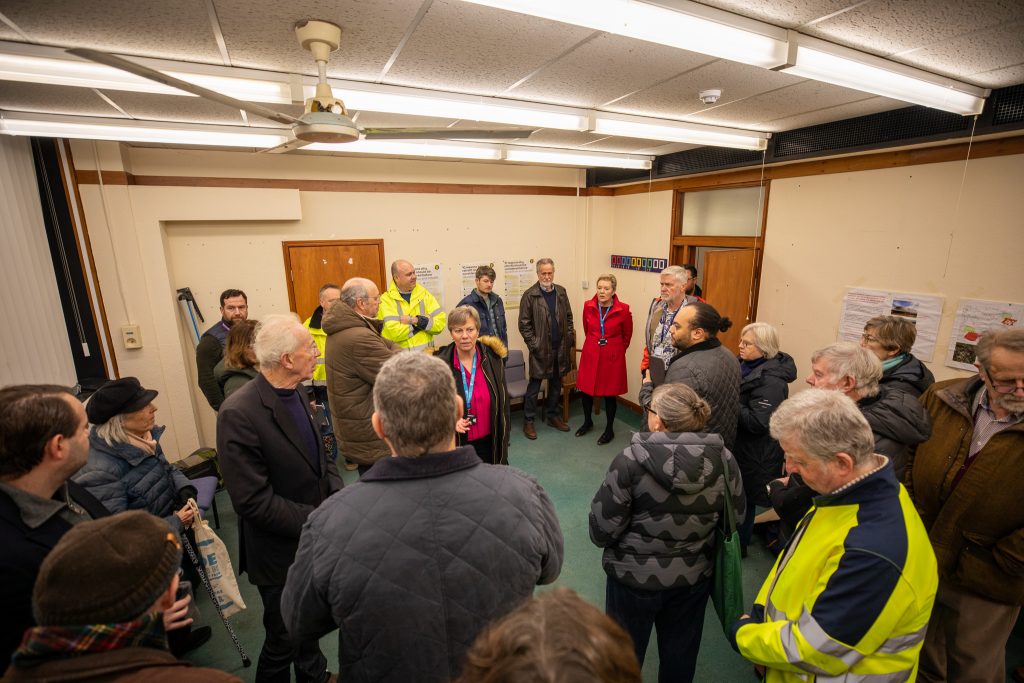
Arriving at 10am, on the morning off from work, I was directed into the North entrance where I was signed in and then shown into a room full of other invitees and organisers with also a few photographs and documents showing some ideas and concepts of what the future could look like if it isn’t completely flattened as per the decisions made by the council before Christmas.
Brief
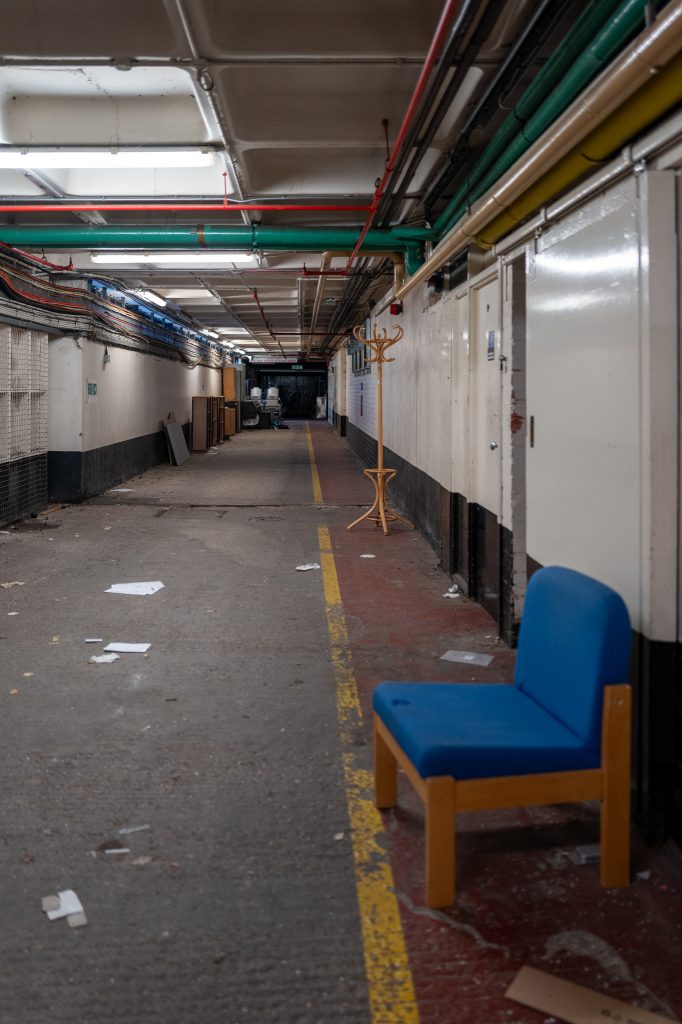
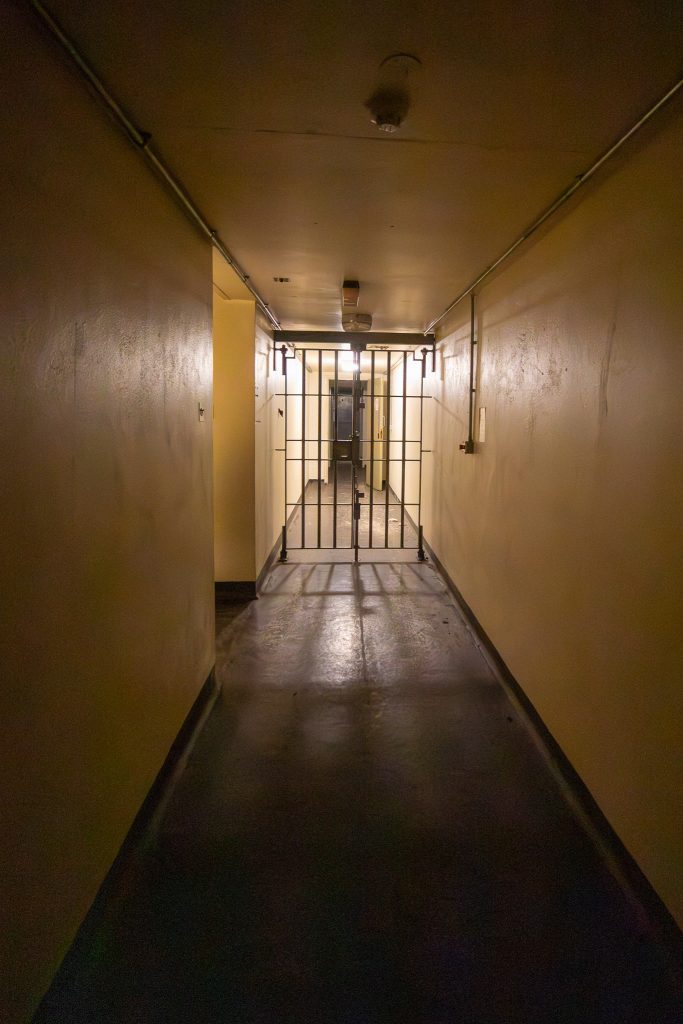
We were introduced to the agenda of the tour by the organisers and then the walking began. We exited the room and walked down one of the many corridors towards the underground area which acts as a store area and the car parking area. Patrick from the facilities team explained that the gate we were near was used by the police transport for the delivering of people to the law courts to face justice. He mentioned that the officers are often much shorter and escorting huge people that might easily overpower them if they wanted.
Boiler House
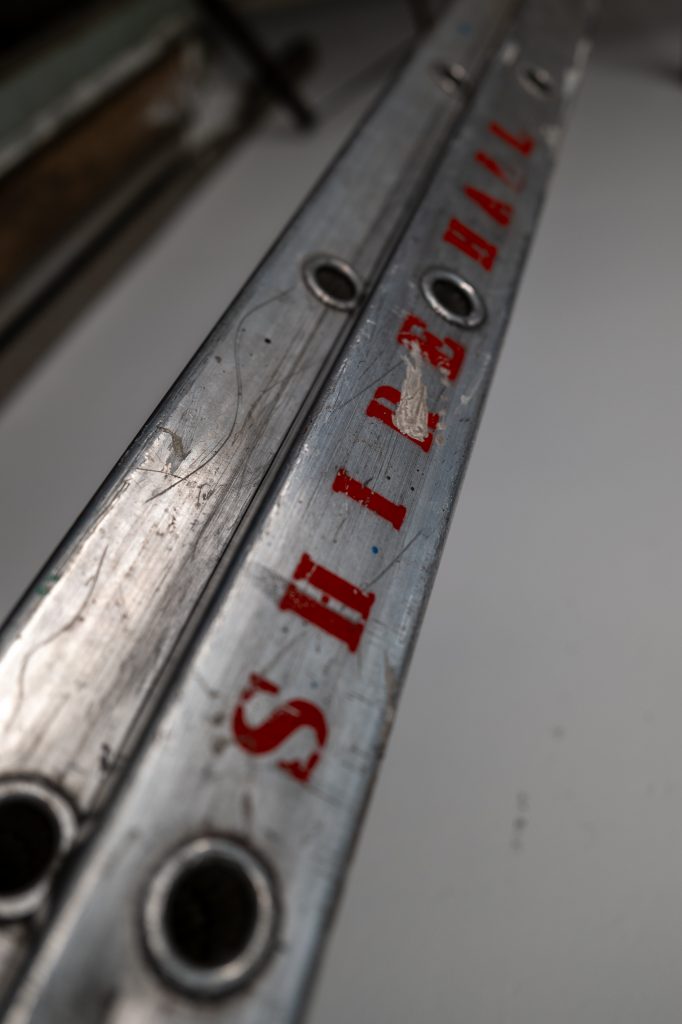
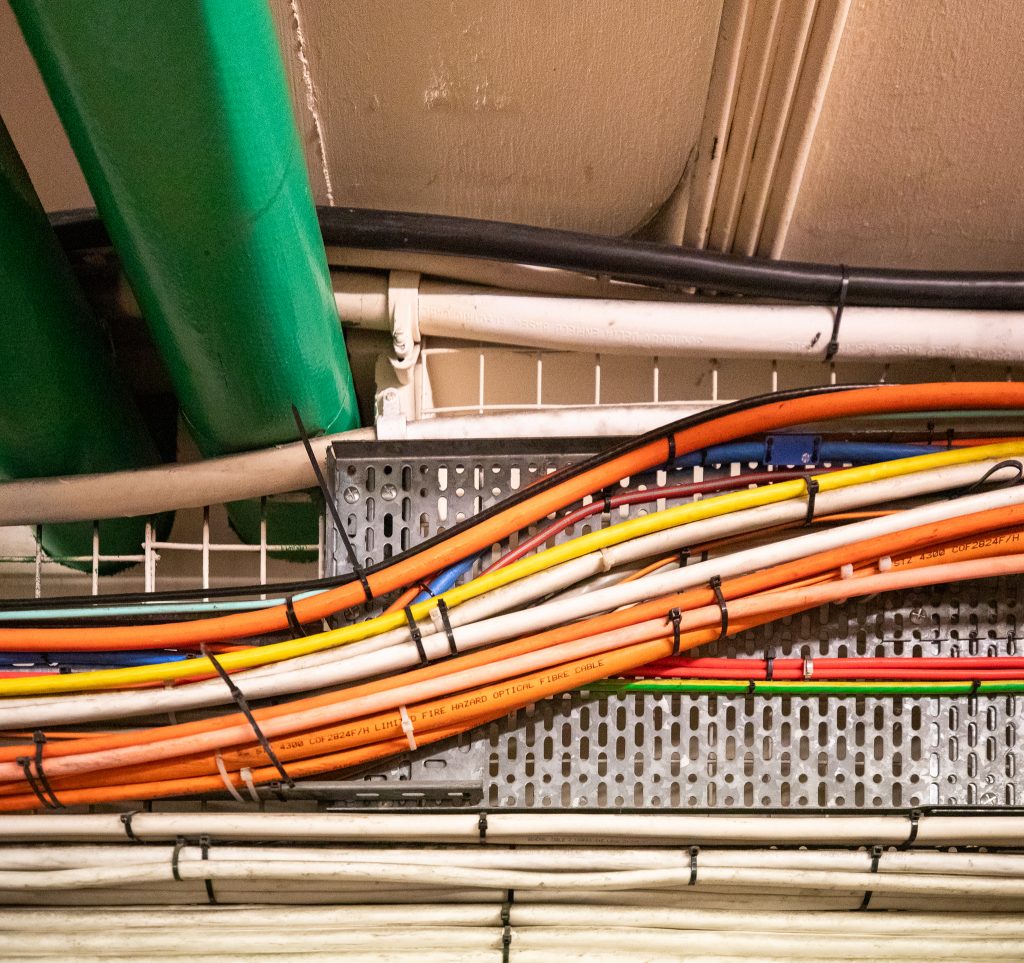
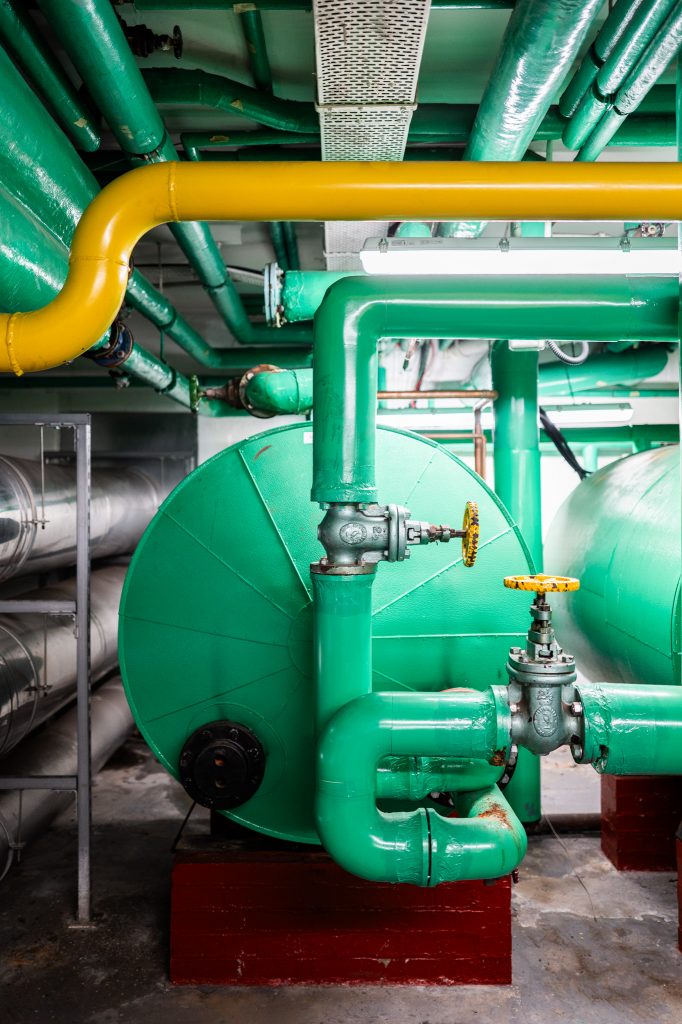
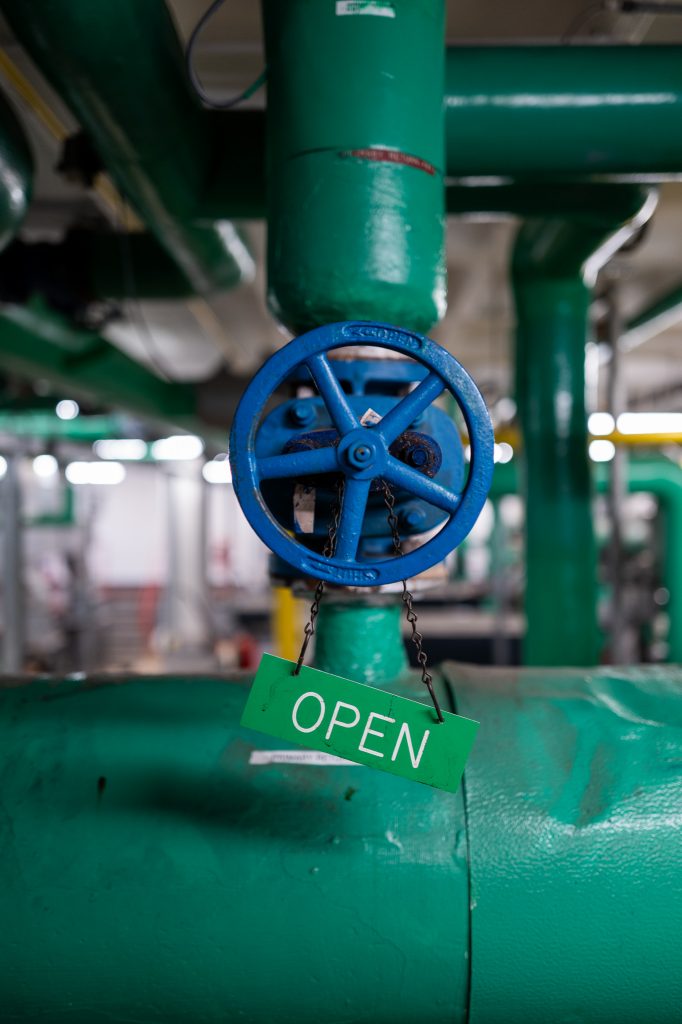
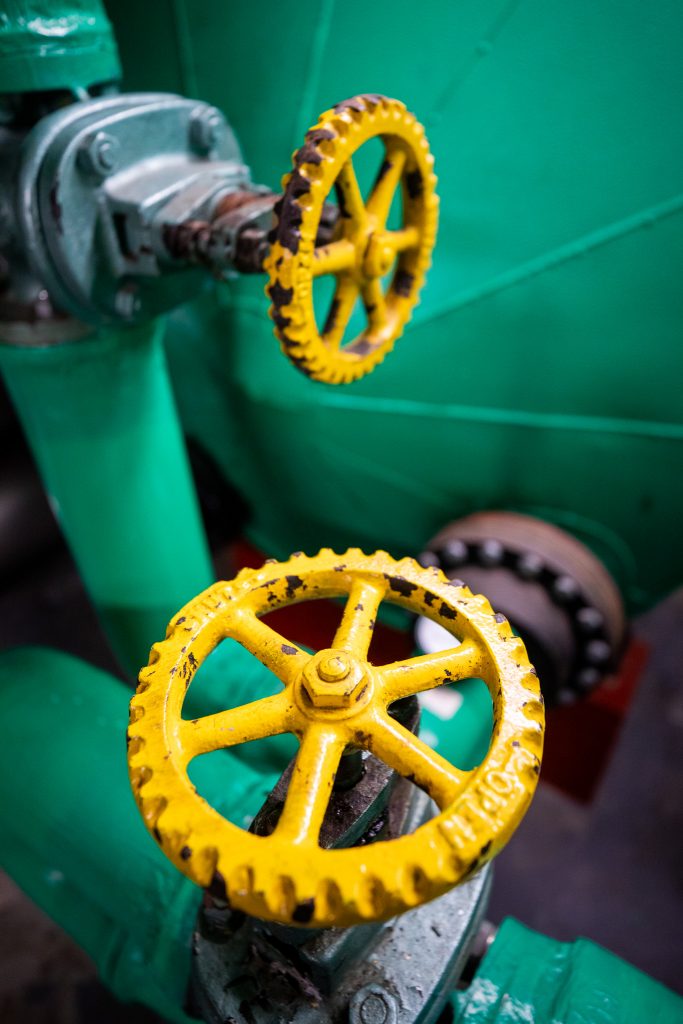
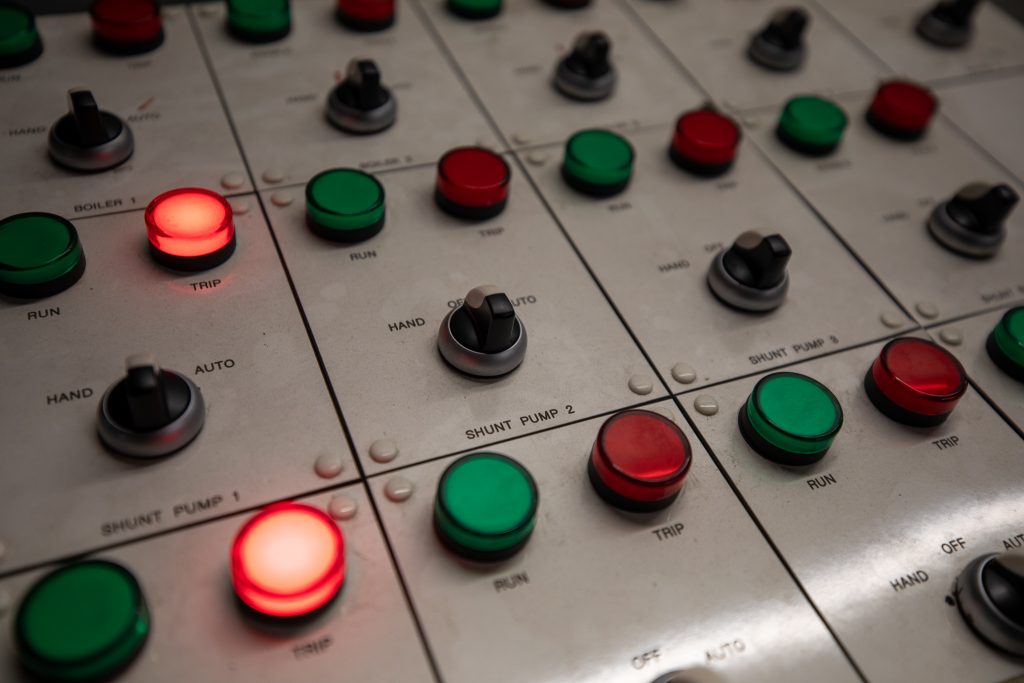
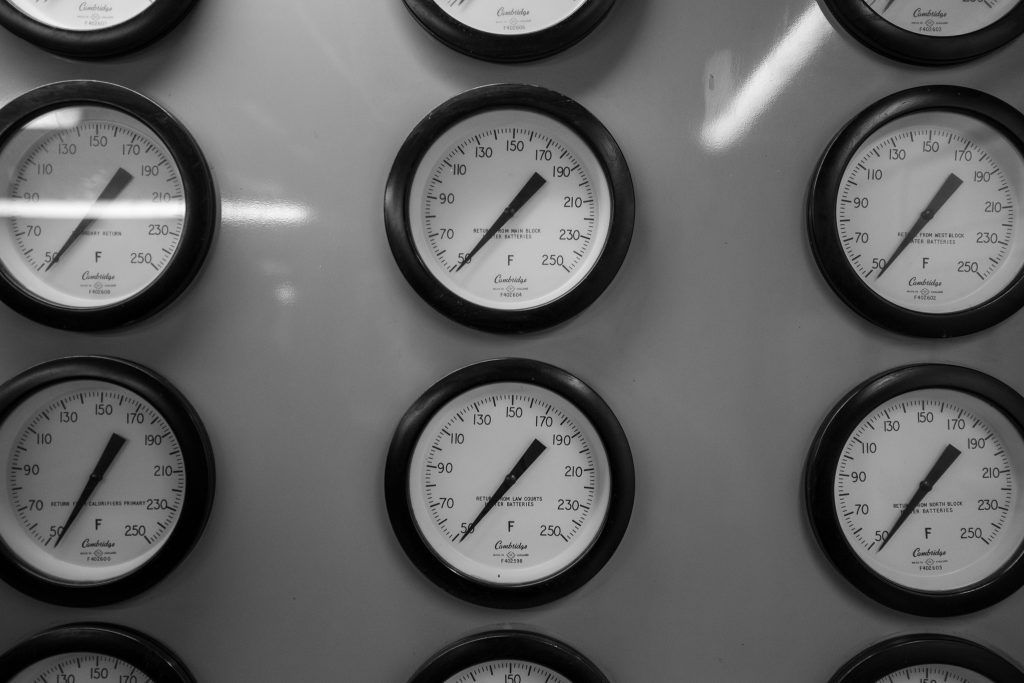
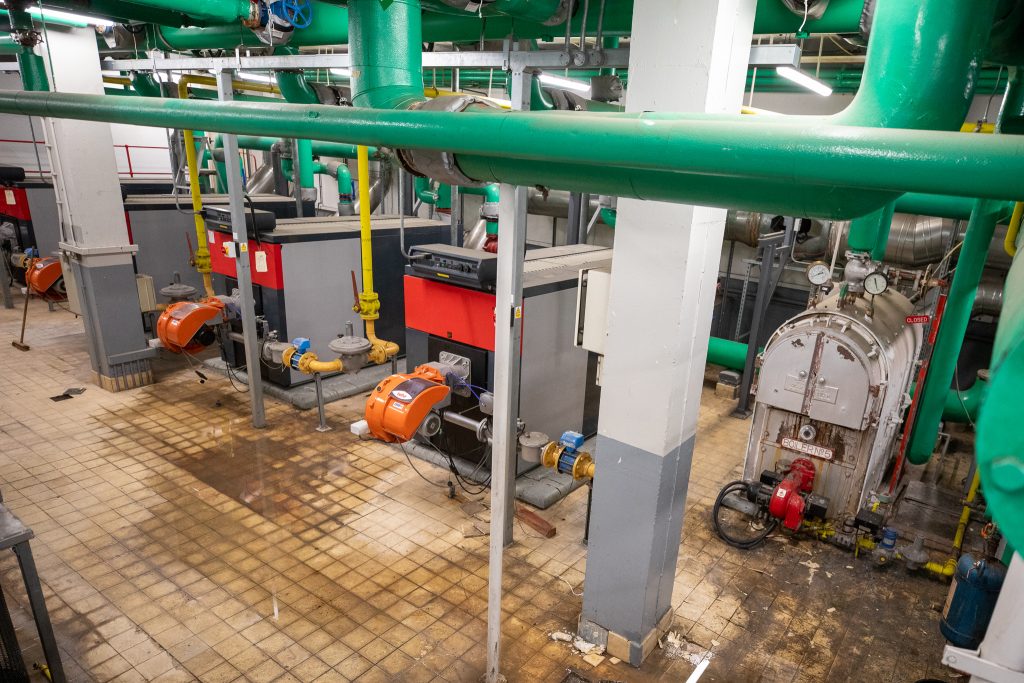
From here we were shown into the boiler rooms, where we could see the pressure tanks, the huge gas boilers and pumps as well as the control stations that help the hot water get around the heating systems of the buildings as well as the domestic water. I was carrying my cameras and changing between the two of them as the lighting conditions changed. I was holding a Canon 5D Mk IV with a 16-35mm f/2.8 lens mounted on the front of it which I tend to use for lower light situations. It has a 30.4 megapixel full frame sensor and performs really well at higher ISOs. For when I want better quality images in better lighting conditions I whip out my mirrorless Leica Q3 with its fixed Summilux 28mm f/1.7 and full frame 60 megapixel sensor. Another difference between the two is that the Q3 has. a fold out screen to allow me to take lower level photos or images of features above one’s head. To capture some views that I wanted, I needed also to pull out my iPhone for a good bit of zoomage.
Bunker Time
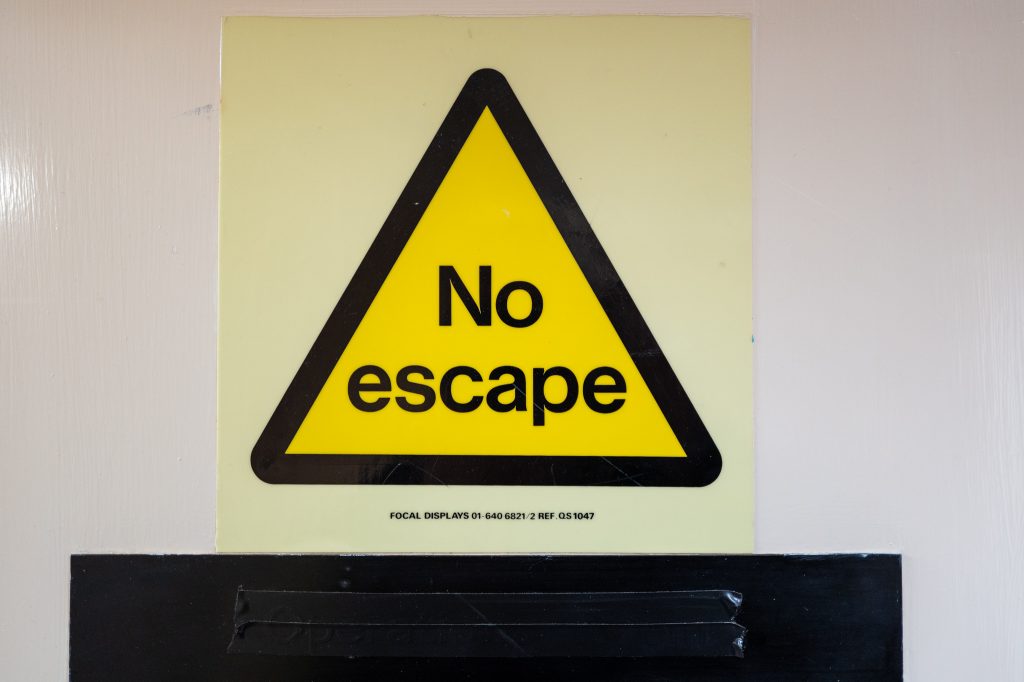
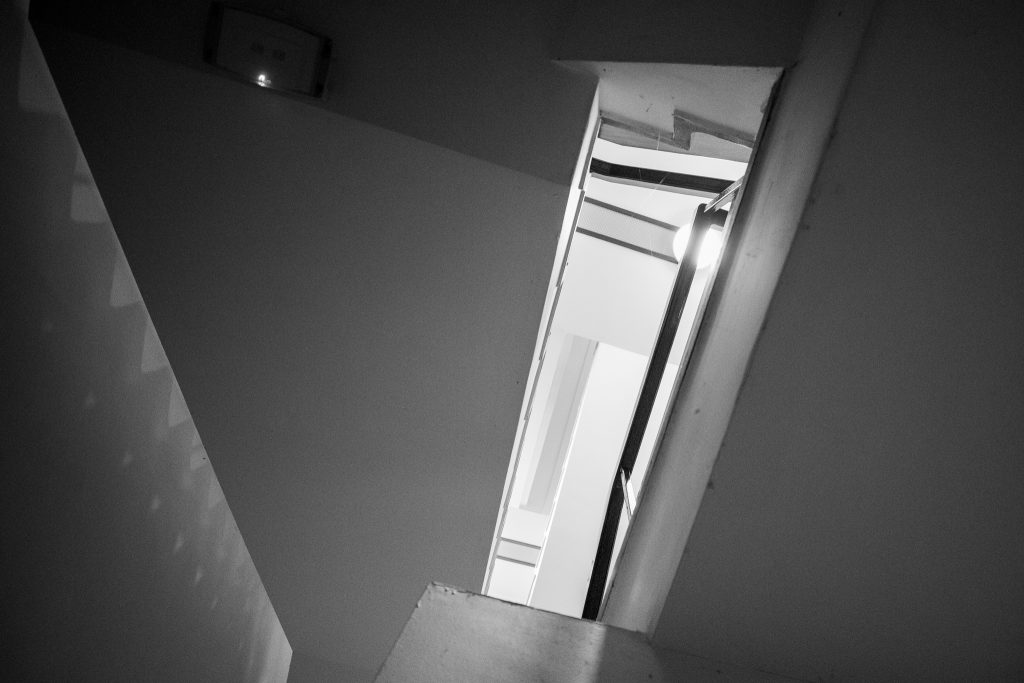
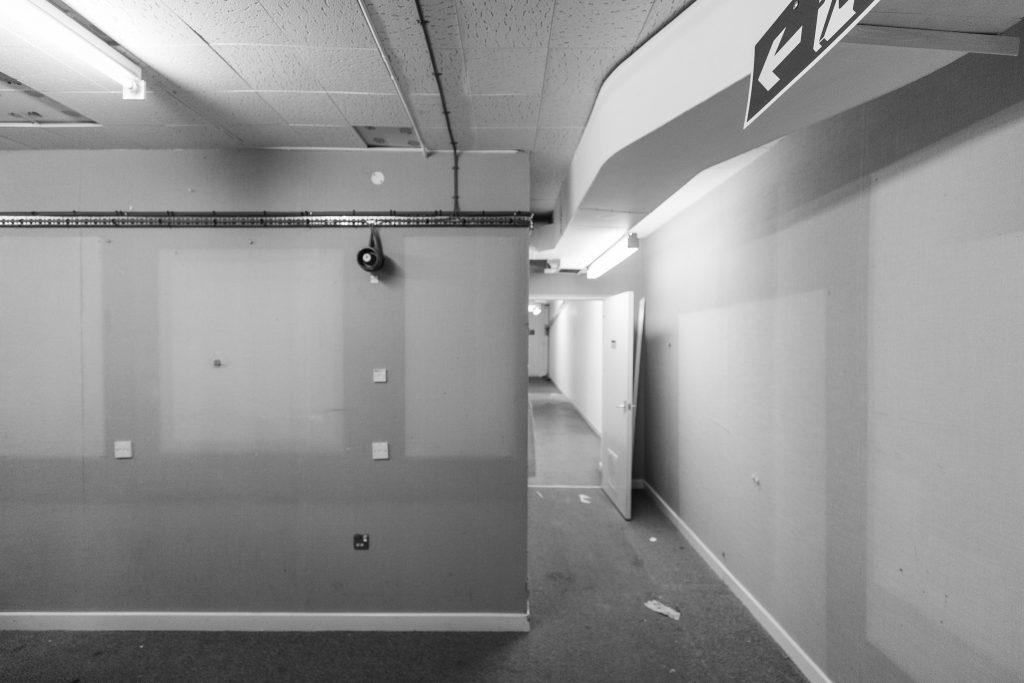
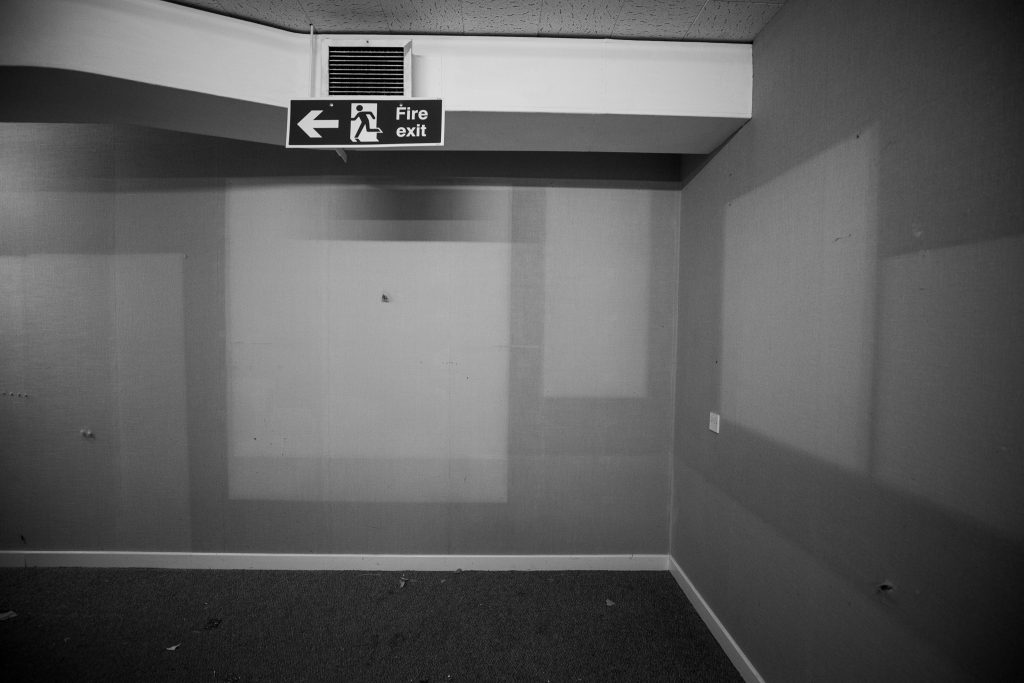
From here we went for a look in the underground emergency room or “bunker” as it is colloquially known. This is the location of a suite of rooms that are designed to be populated in the event of emergencies and whilst you may think it is for nuclear war, it is often used for the more regularly for flood management. I have been given some photographs of this room being used during the 2001 major flooding event in Shrewsbury, when Tony Blair was visiting the emergency rooms. It was interesting to see the walls of the room, now bare of maps and documents, discoloured by the fact that they were covered for such a long time. It did seem a bit smaller than I thought it would be and I don’t think that it designed for nuclear attacks as we didn’t descend very far and there were no large vault doors.
Justice
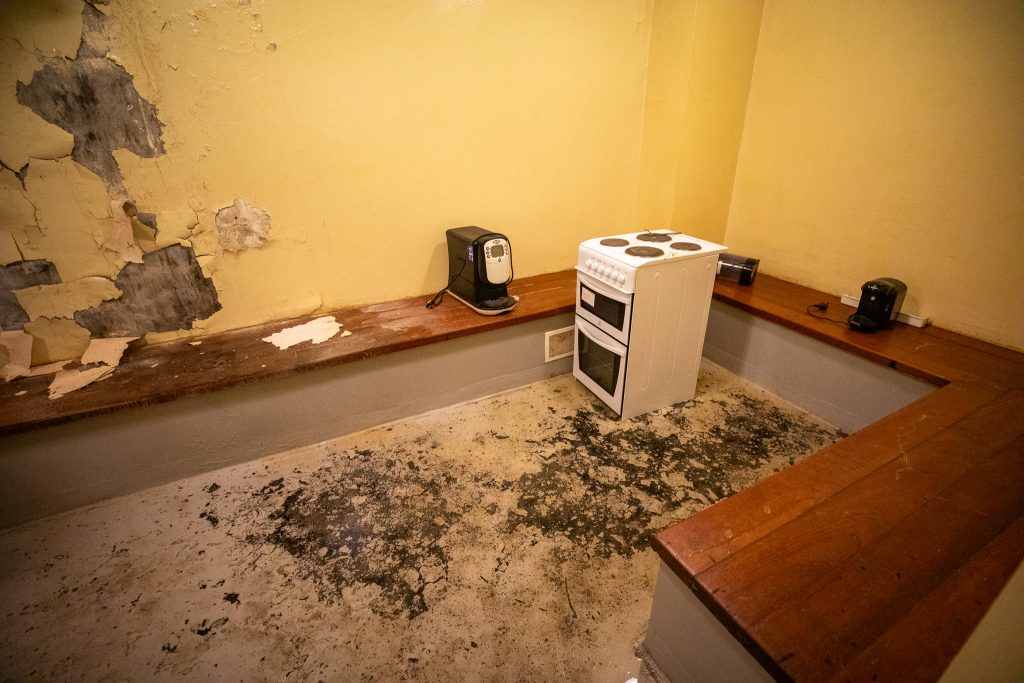
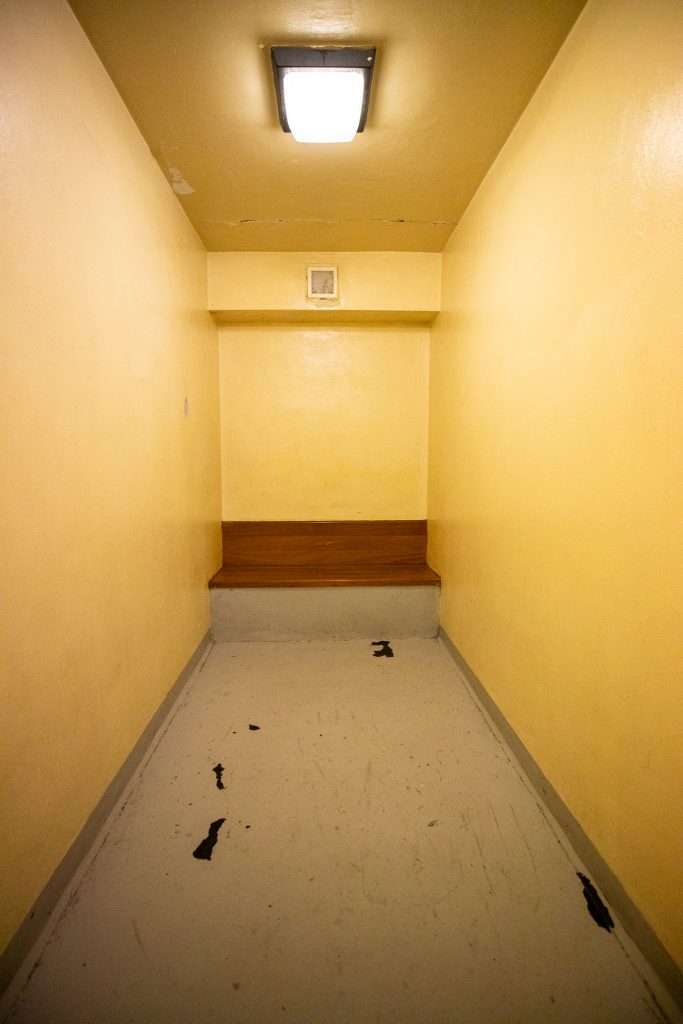
Next we headed towards the law courts with a quick stop in the holding cells first. It’s the location where people are held before heading up into the dock to face the judge and jury. The cells have very narrow doorways and a small wooden bench seat. A worker from Shirehall told us that her friend worked in the Old Bailey in London and that the stairs descending to the holding cells narrowed as you walked down them, this is intentional to make the prisoner feel even more restricted, probably making them more compliant. In the holding cell area it was apparent that the degradation was taking hold with water on so,e floors, and paint peeling off the walls in some of the rooms. These courts and cells are no longer used as there is a new Justice Centre built just two minutes away.
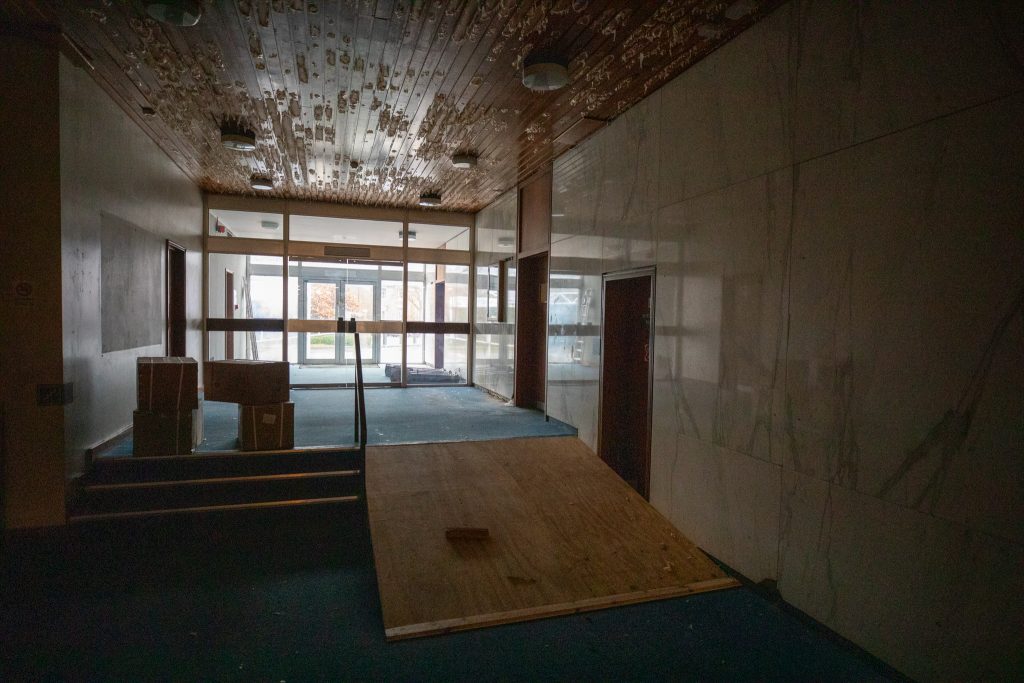
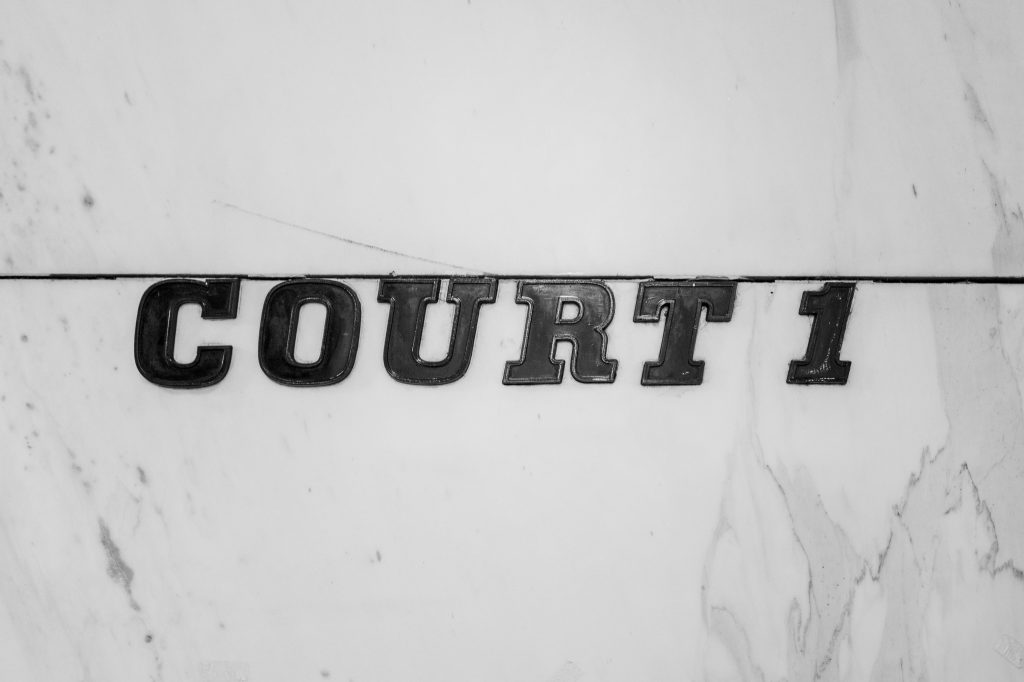
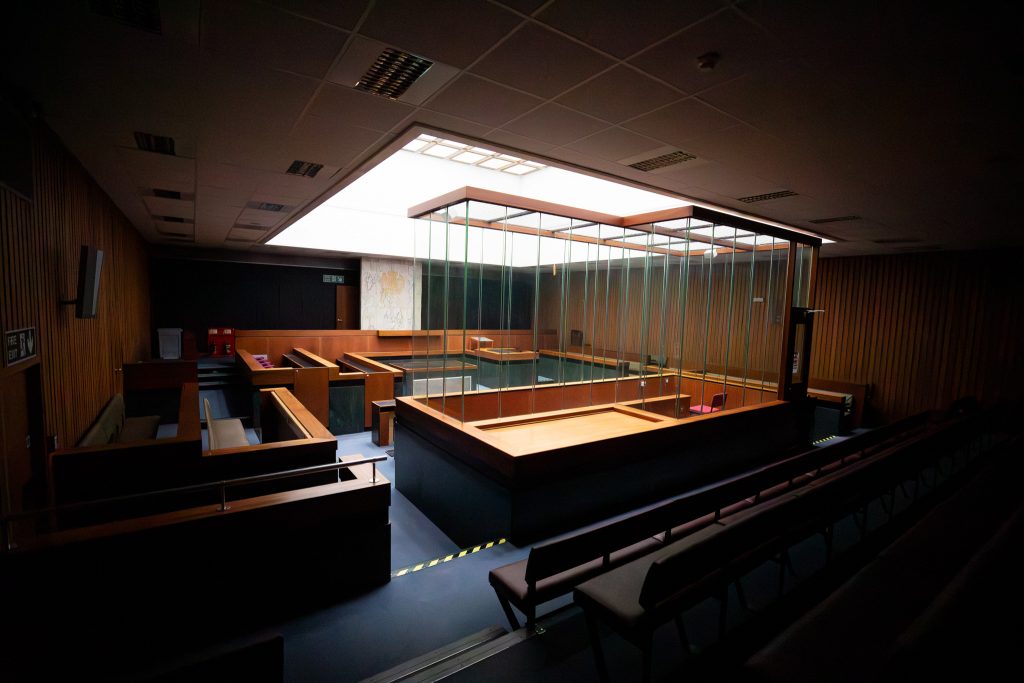
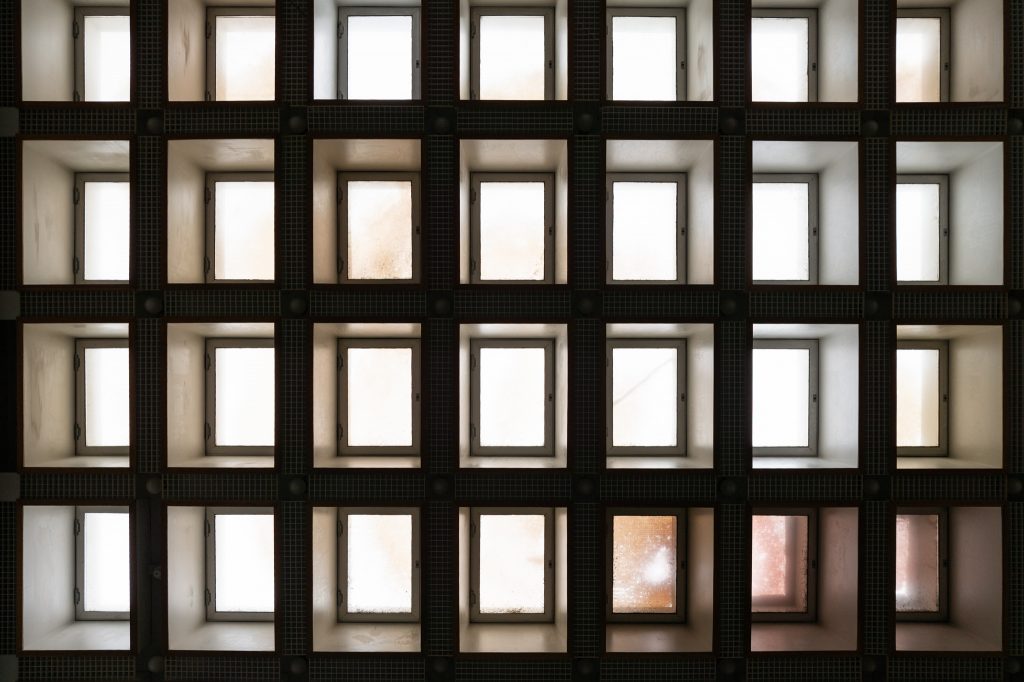
Now ascending up some stairs we enter the dock of court number one. The glass surround and metal grilled dock is where accused people would remain whilst the proceedings continue. The courts look older than they obviously would have done and have even appeared in TV and movies. One remarkable work that was filmed here was Small Axe which feature the courtroom and some of the other buildings as the police station. The layout of the court is clear to see but there are many little walkways to get between the different positions. There are no windows in the walls but the roof above contains a huge skylight, made of many smaller glass skylights. Even with no electric lights on the daylight practically fills the courtroom. There is a large slab of marble behind the judges seat that also hosts a royal crest in gold. Wood panelling around the walls is a vintage aesthetic but is probably designed for the sound deadening material it conceals. Outside the courtroom the walls are also faced with large marble slabs and whilst they are currently dirty and dusty they must look amazing when they are clean. The jury room is also there through a door but we didn’t enter this, I have spent a week in there back in my younger days on jury duty for a trial that revolved around a robbery of an off licence in the town. I wasn’t so interested in engineering, architecture or photography then though so my memory is quite hazy.
Processional Way
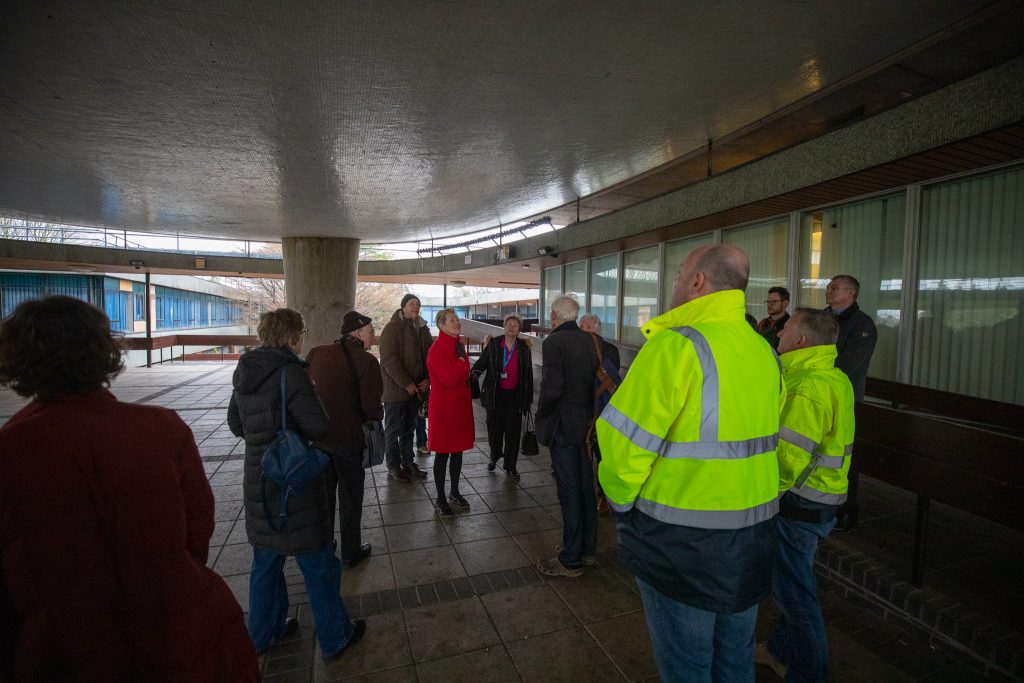
From the courtroom entrances we walked along the processional way, or the part of it that hasn’t been filled in to create another area, where the IT data centre still resides to this day. We stand beneath the rounded structure of the council chamber for a quick chat about the level of detail afforded to the building in that there appears to be a mosaic tiled underneath that not many people would ever pay attention to. I have noticed this several times though and even made images using block printing methods of the similar mosaic tiles around the site. The chamber sits on top of four conical legs that suspend it over the paved area where I once learnt to ride a unicycle and later an electric skateboard.
Reception
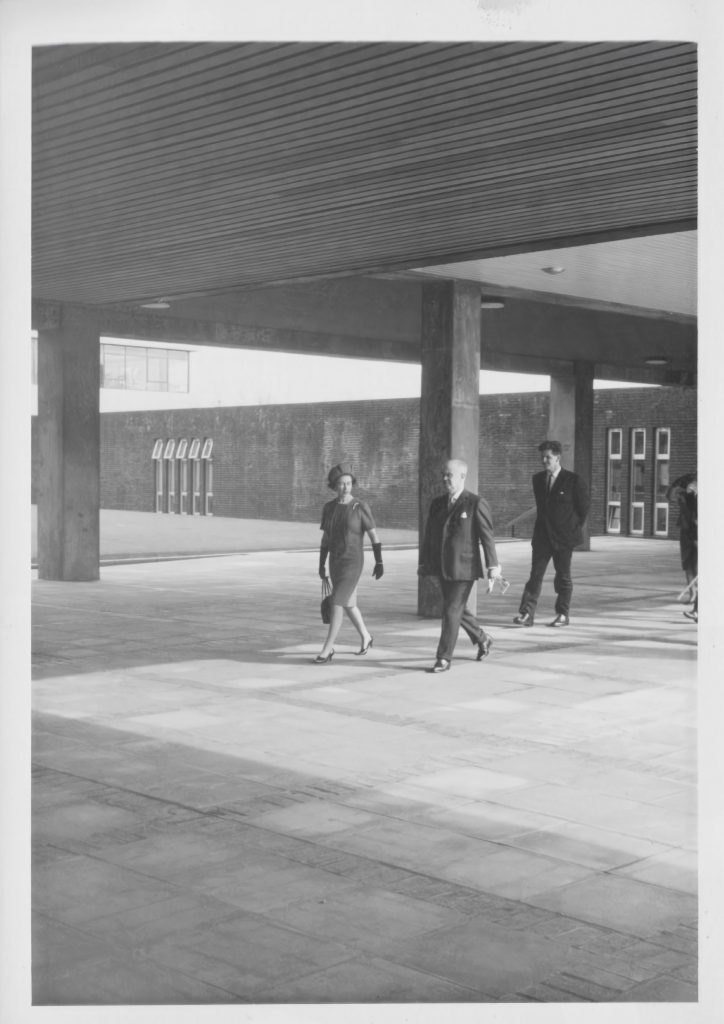
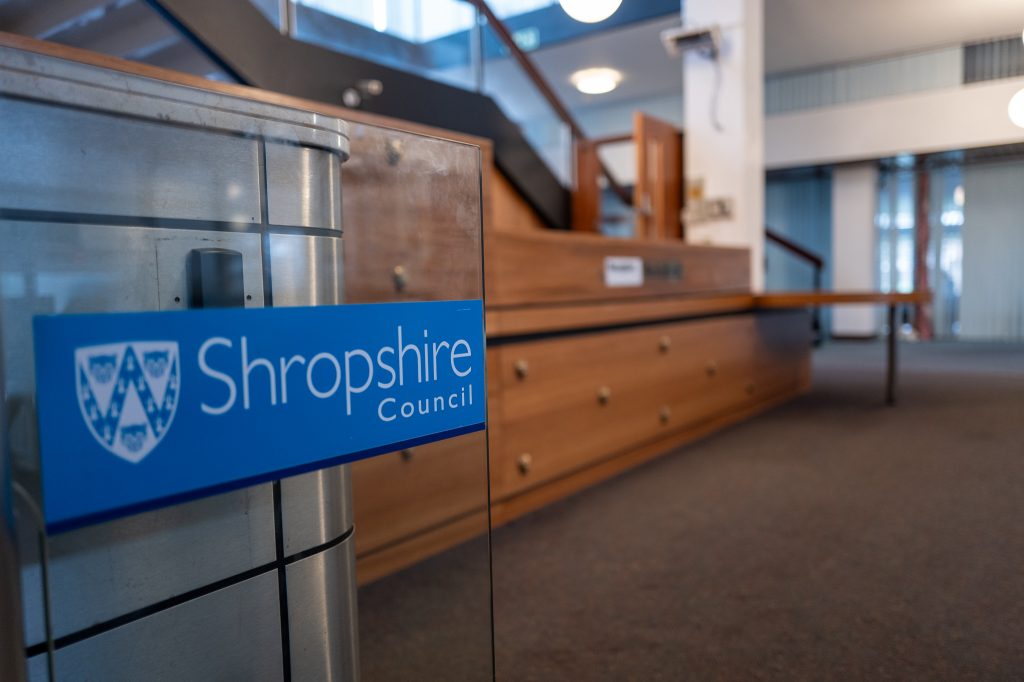
From here we walked up the ramp and into the main reception area where the desk from which visitors were greeted sits empty , save a cctv screen, a defib and some paperwork. On the front of it in a pattern of sorts are studded decorations in the shape of Loggerheads. These big cat heads are thought to be Leopards and feature on the flag of Shropshire or in its archaic form Salop. A loggerhead is thought to represent a type of battering ram that symbolises strength and power. These brass features were originally featured on the desk when the building was opened in 1967, by none other than Queen Elizabeth II. There appear to have been some that have been stolen away, possibly as a piece of memorabilia in case the building is demolished.
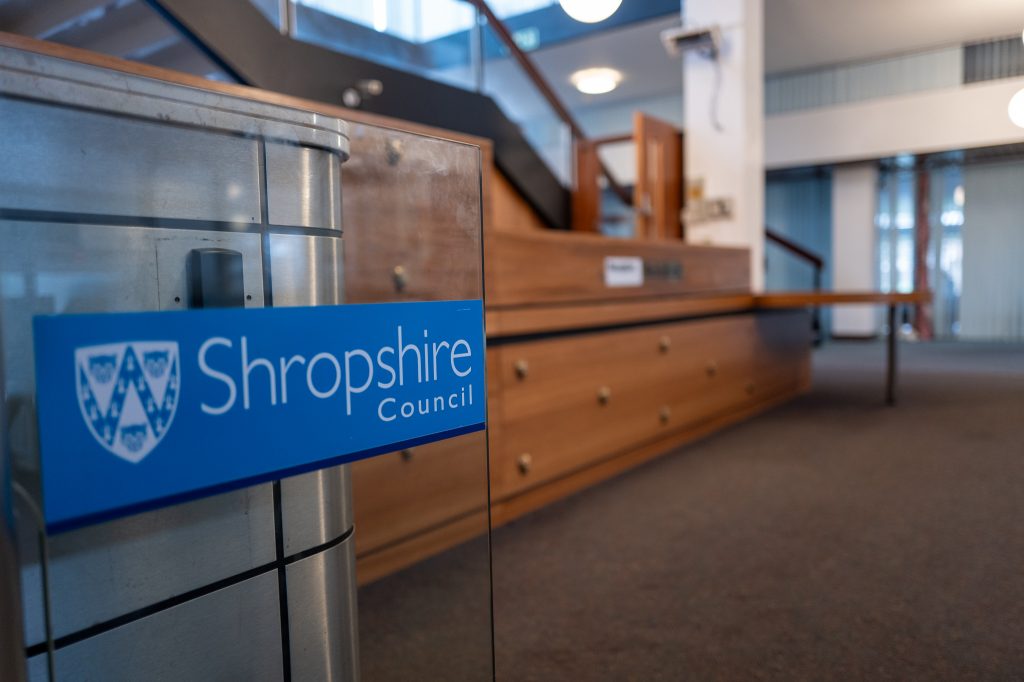
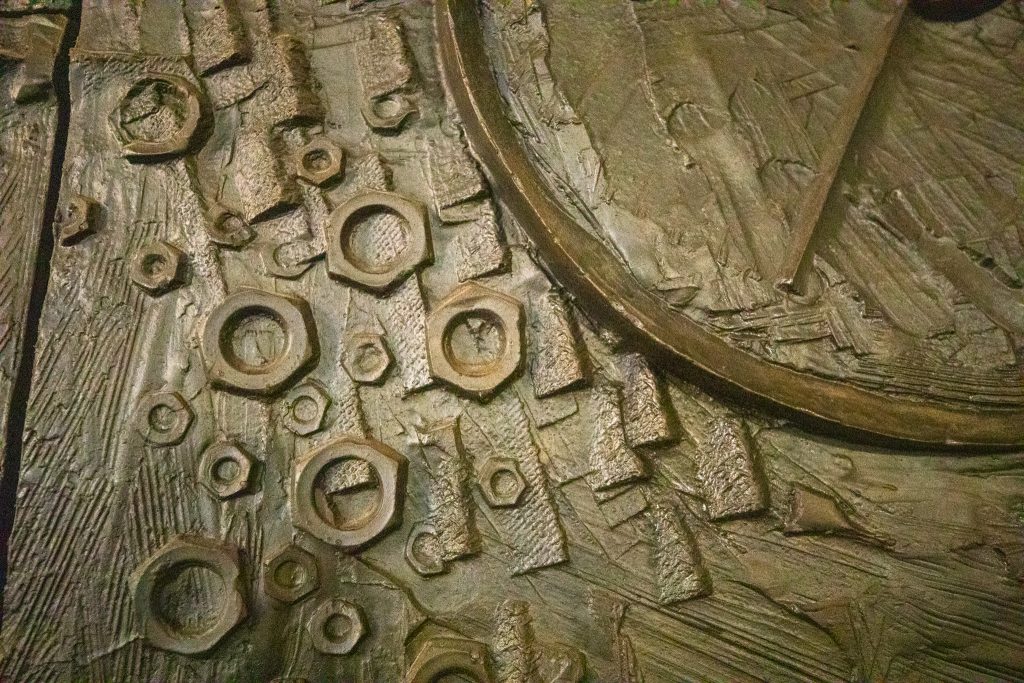
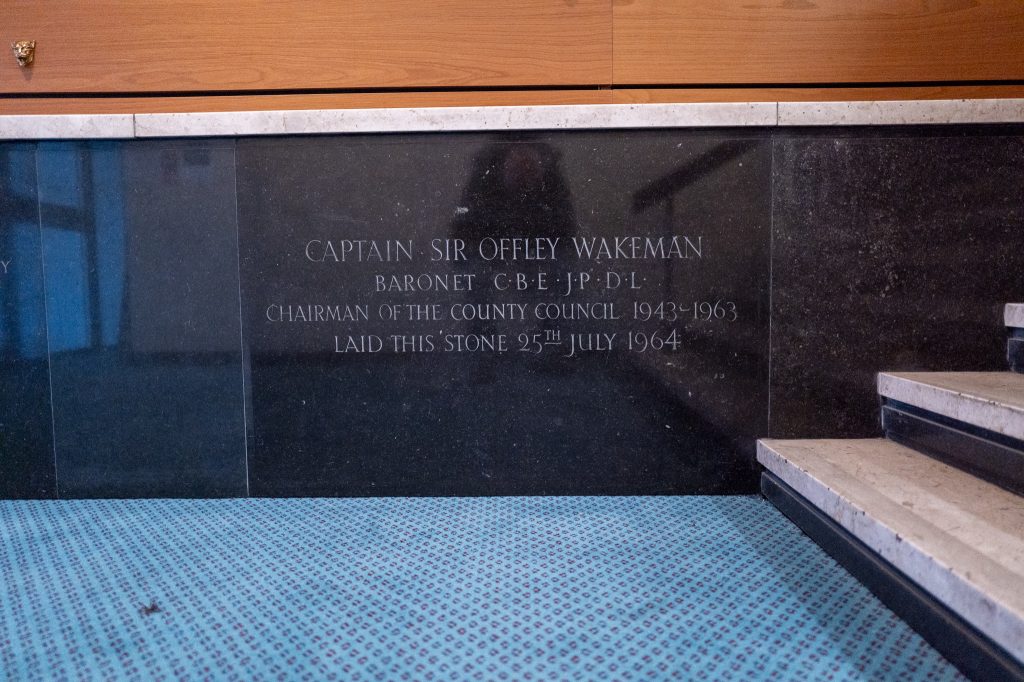
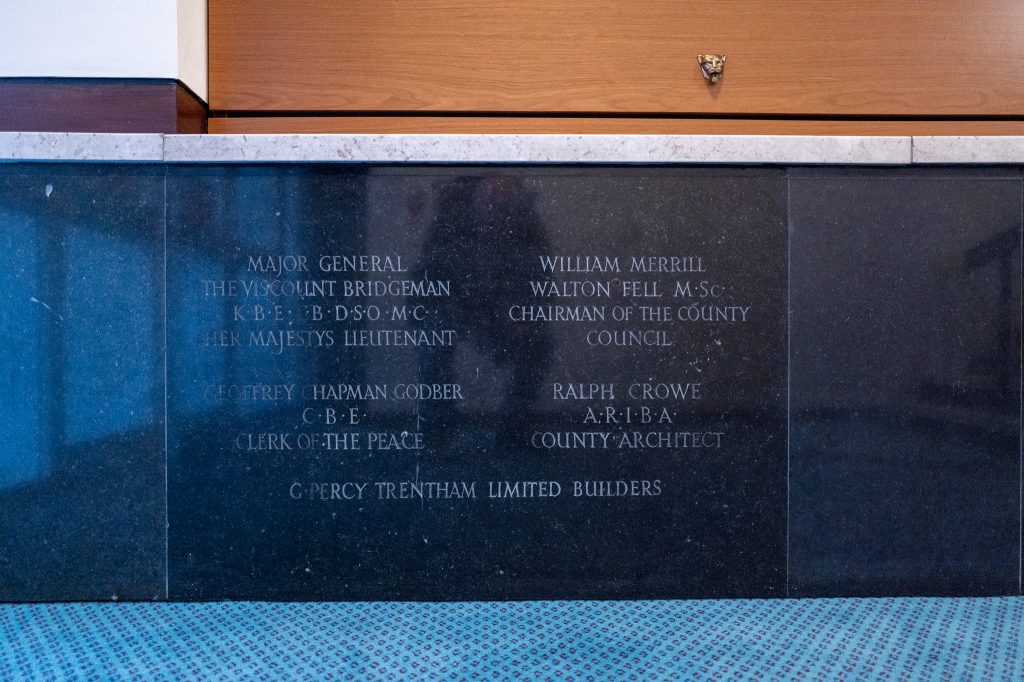
The carpet in the reception area covers a high quality mahogany wooden floor and to one wall there is a cast iron mural by Rosalind Alexander featuring the Shropshire area’s industrial heritage. It’s been said that this would be kept in the event of the demolition too which is a great thing to hear. Nearby there are two foundation stones, one laid by Captain Sir Offley Wakeman who was Chairman of the council. Another stone next to it details the Architect, Ralph Crowe, the builders, G Percy Trentham Ltd Builders, the clerk of the peace Geoffrey Chapman Godber, Her Majesty’s Lieutenant Major General Viscount Bridgeman and finally William Merrill Walton Fell who was Chairman of the County Council.
Royal Mile
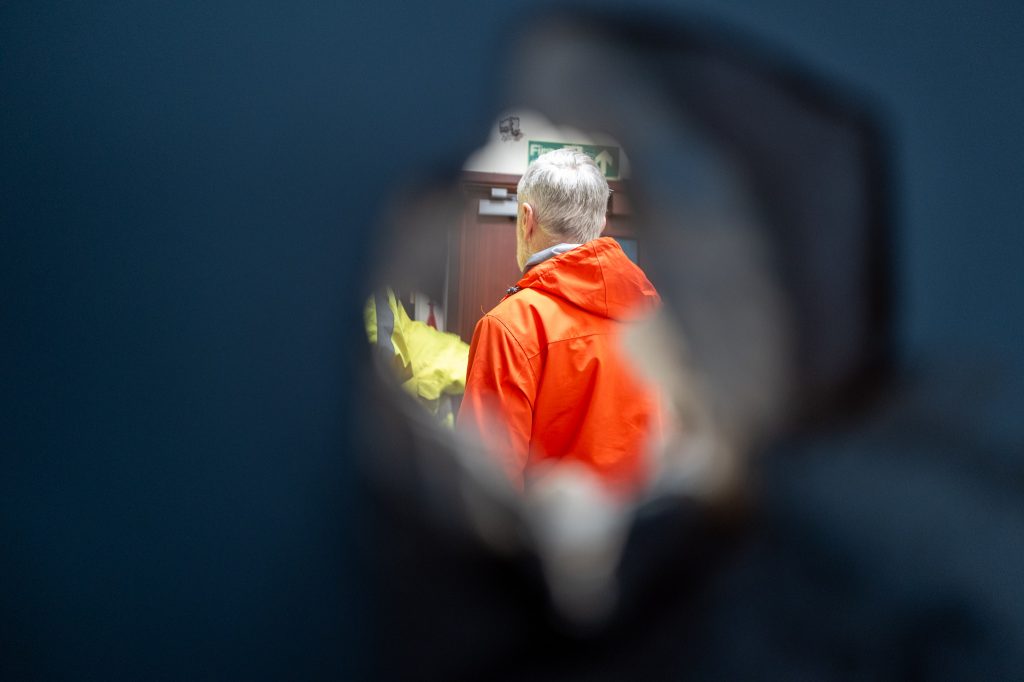
Up the stairway from the reception area we entered an area informally known as the Royal Mile, where portraits used to hang on the walls and the committee meeting rooms can be found. Named after areas of Shropshire such as Bishops Castle, Oswestry, Shrewsbury, and Much Wenlock these rooms are huge conference spaces and can be reconfigured into larger or smaller rooms depending on the attendance expected. On this level was also the Members area and the Chairman’s office. A wall adorned with old wooden, lockable pigeon holes was visible whilst the members restaurant was locked an unavailable. In this area I noticed the walls were occasionally damaged with holes that looked like someone with a claw hammer had been having a bad day. Talking to people I found out that this was part of the asbestos surveying activity and couldn’t help but think what happened when they did smash through an asbestos panel. Did they wear masks and tidy up after themselves? These walls all looked like simple plasterboard so we were probably safe enough.
Chamber
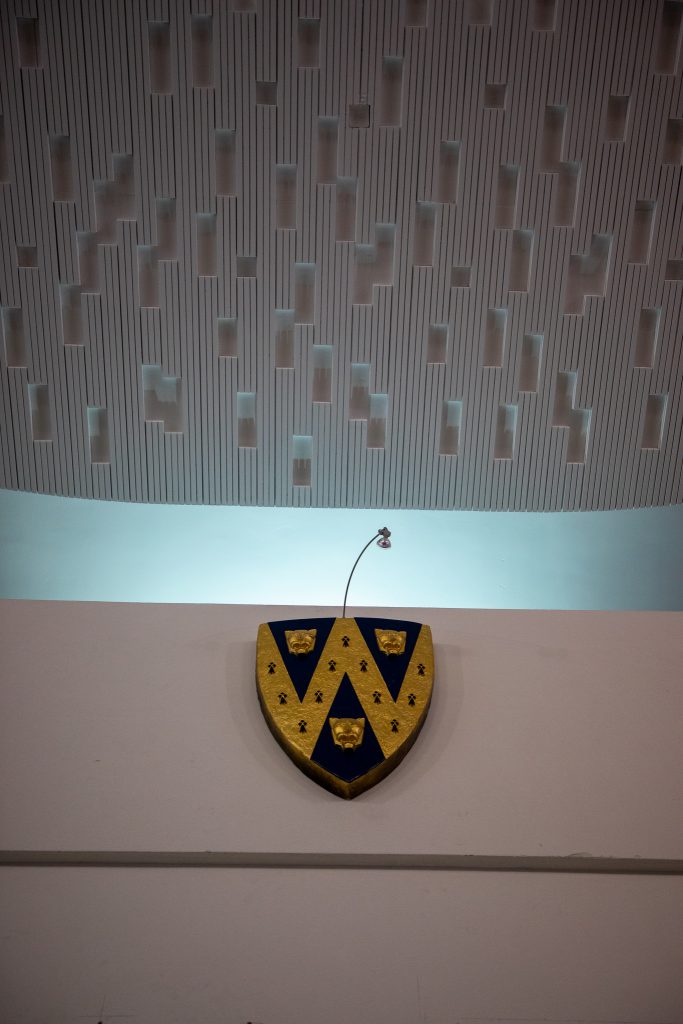
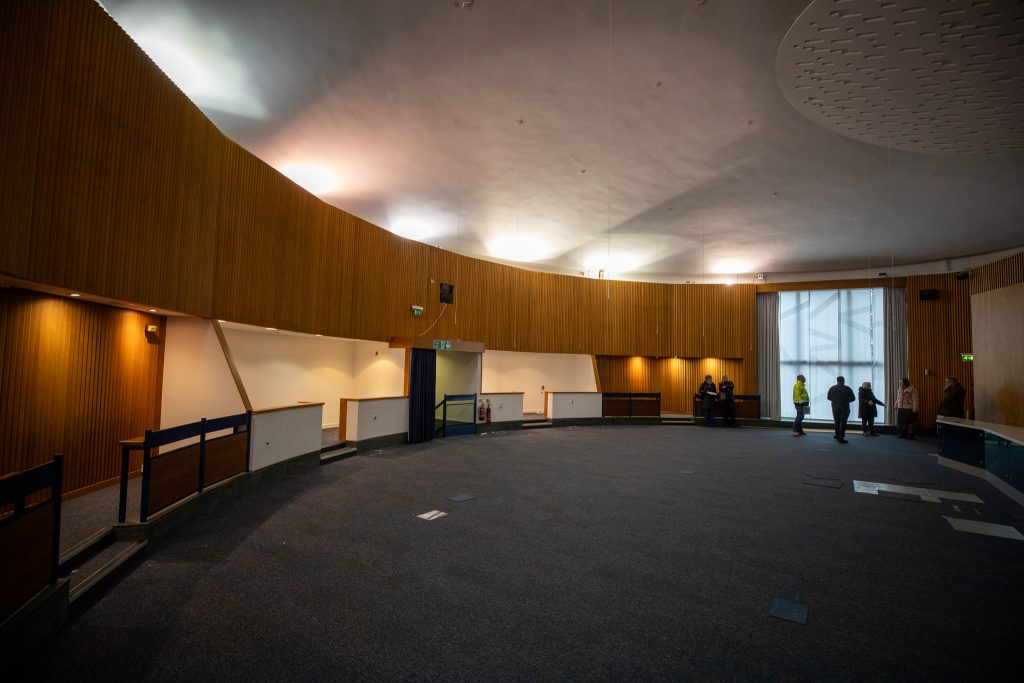
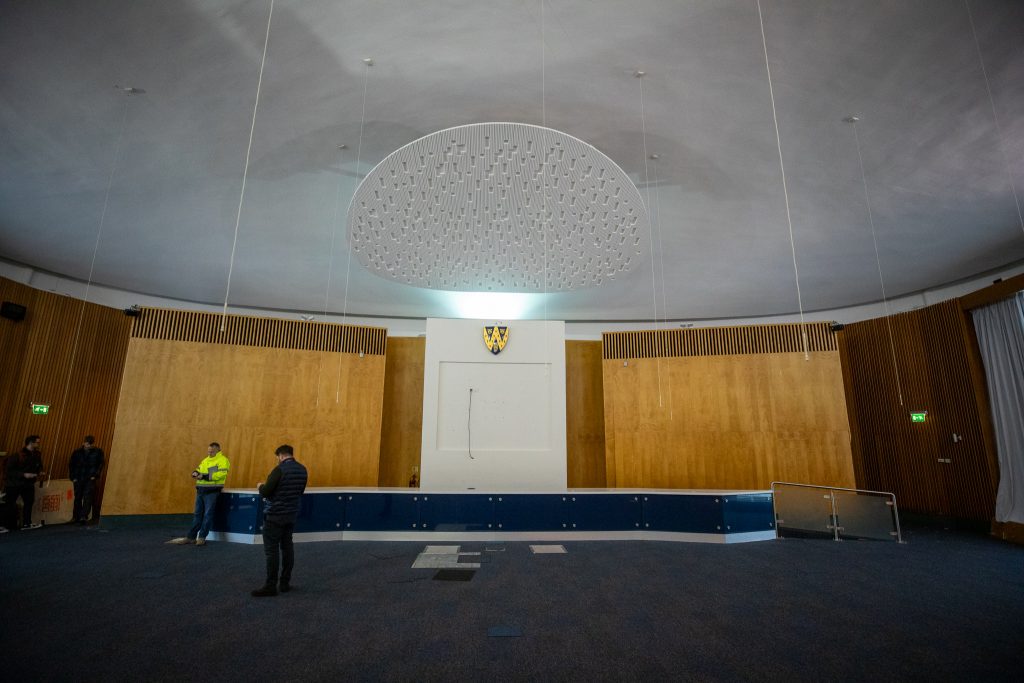
The holes continued into the council chamber, a large space with some strange acoustics that had been stripped out entirely since my last explore here. The old bell that hung on the wall and any furniture that was removable was long since gone. The acoustics here are weird due to a new accessible floor being fitted to the chamber many years ago. The original was a bowl shape like an old amphitheatre and the microphones and audio system used to be top notch but since the floor was added it had gone to pot. An architect I spoke to said he had given a talk here and found the acoustic properties of the room to be very poor. The wood panelling and the slate on the window ledges had all been damaged in a similar way to the plasterboard everywhere else too. Such a shame. There was some great natural light coming in through the windows on this floor when compared to the underground areas we’d just come from.
Top Floor
We waited here for a short while while groups of five visitors were escorted to the fifth and highest floor of the building. Groups were small and guided by a fire marshall at the advice of the local fire and rescue service. The upper floors of this building are not compliant with current fire regulations, hence another reason to close the building. We were not permitted to visit floors 2,3 & 4 so we walked up the light and airy stairs that reminded me of my secondary school stairway in the Belvidere School, which has recently been flattened also.
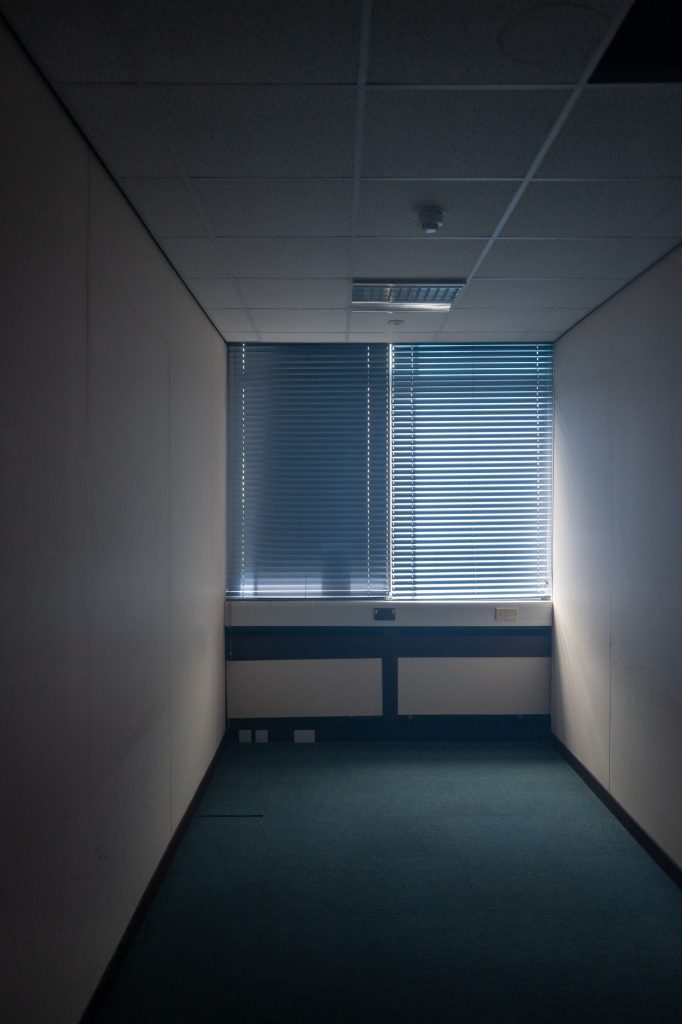
Up on the Fifth floor Tim, our guide, was explaining to the visitors what could be seen from up here around the town. I was happily walking around capturing some photos of the seemingly abandoned open plan office space. There were some strange colours in blues and greens with the blinds and carpets, accented by the wooden surrounds of the windows and the walls to the stairwells. From up here we could see the recently renovated Lord Hill’s Column being opened up again with the scaffolding being removed. I certainly would not want to be up that scaffold in the wind and rain that featured on the day. I was interested in capturing details that the users of the building might have seen and touched daily but it seems that everything had been removed and disposed of.
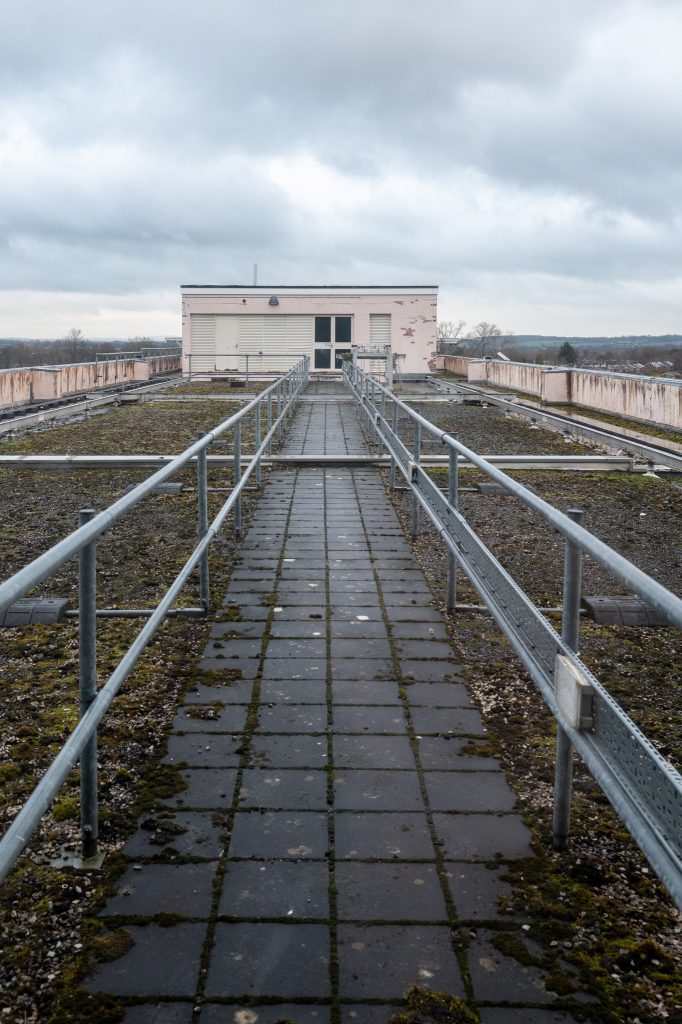
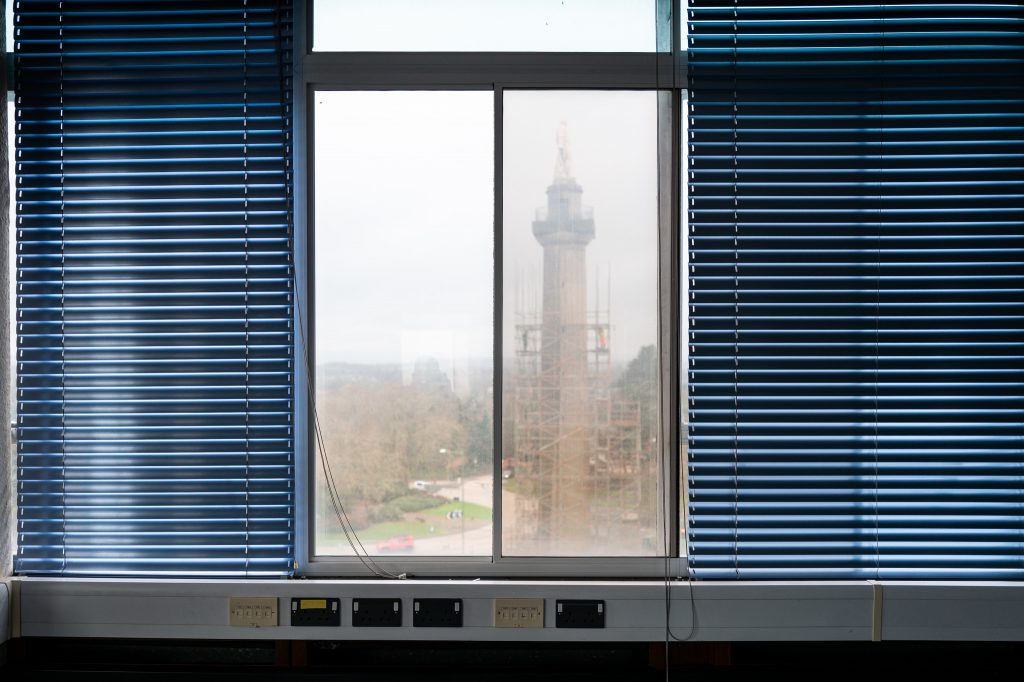
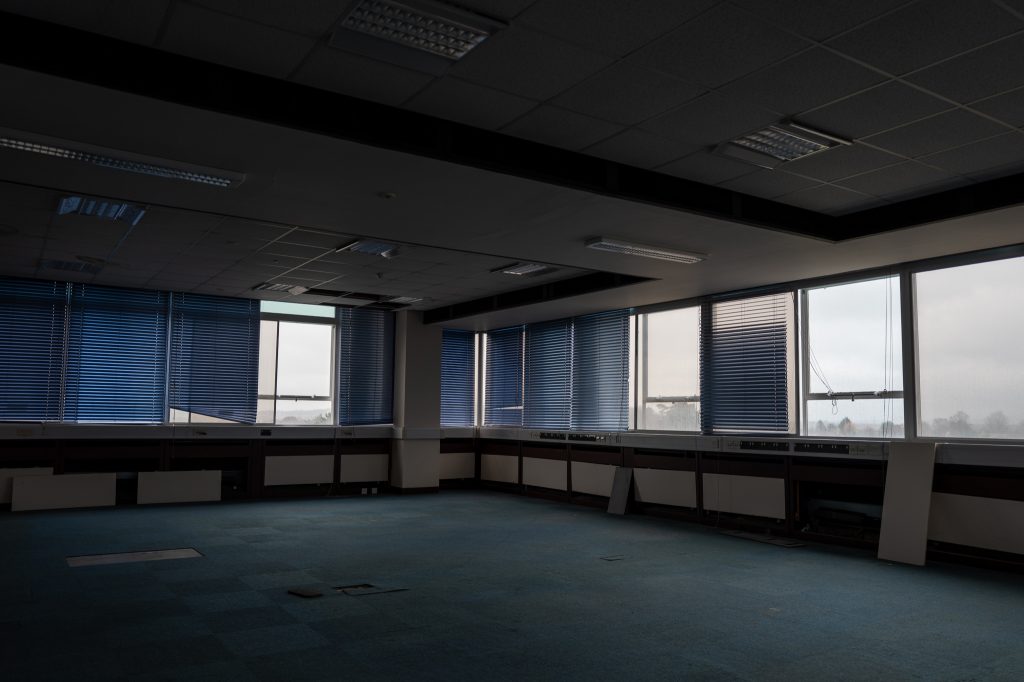
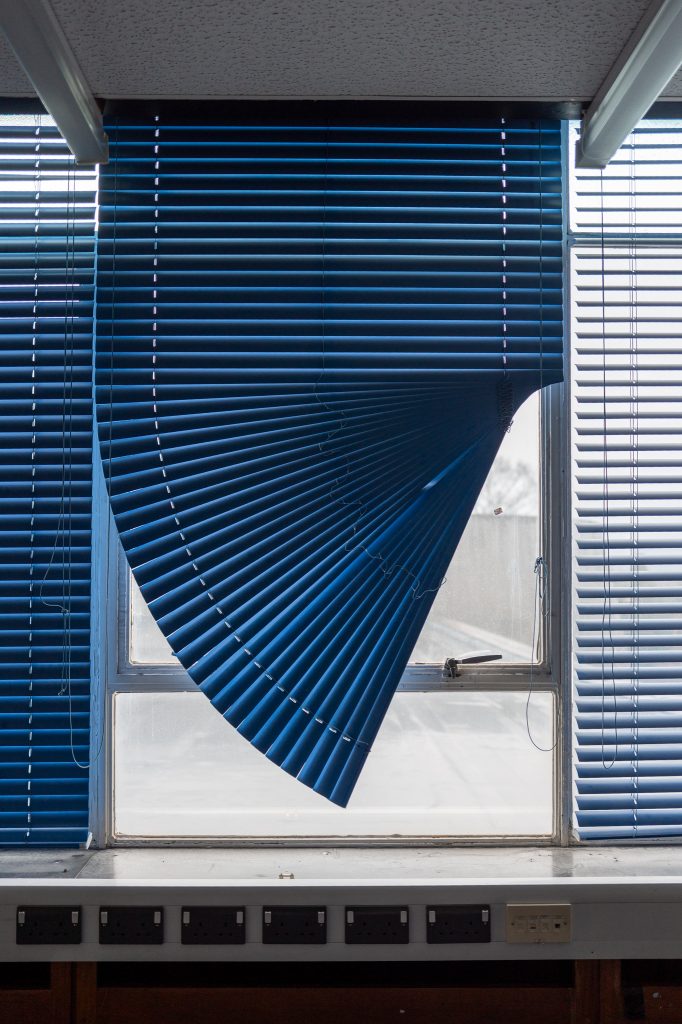
We also saw the caretakers bungalow that had later been converted into a conference room on top of one of the wings of the building, a former worker had told me in an interview that he had heard of kids misbehaving to draw down the caretaker, then disappear when he got to the ground level, and start playing up again when he arrived back at his bungalow. Shrewsbury kids are funny!!
Close Out
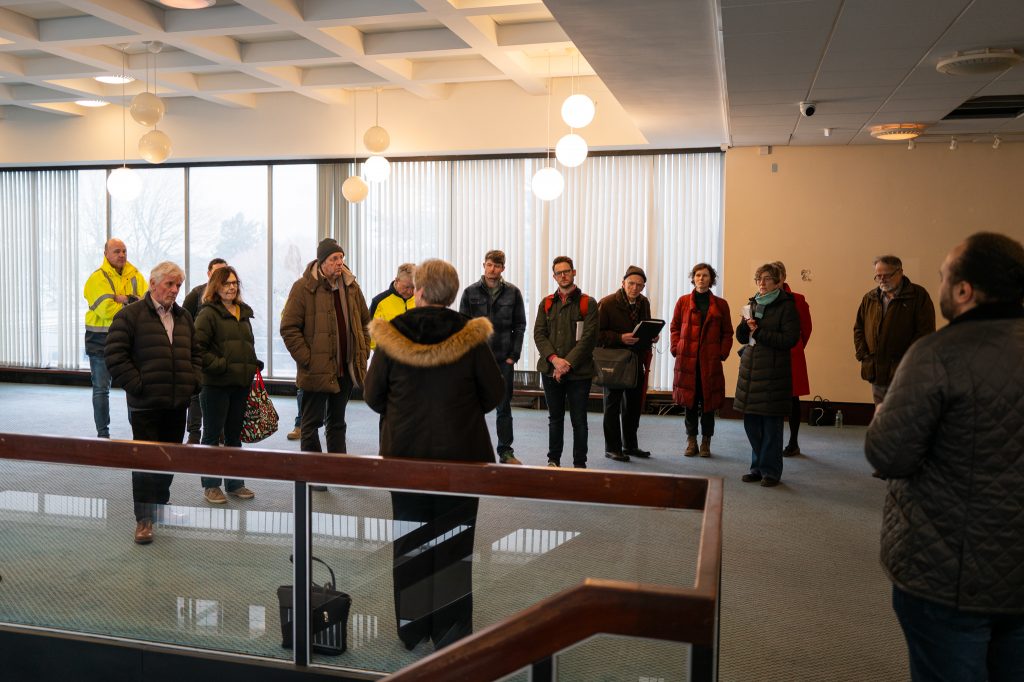
After the trip to the top it was time to head back to the area near the chamber and a quick speech from Dawn about the reasons for this visit and the later visit planned to include MPs and other politicians, as well as what the future holds. There will be further evidence gathering and then a meeting to present the findings and offer other options, rather than just demolishing this modernist icon. In terms of preserving it, applying for it to become a listed building is out of the question at present as the council have a certificate of immunity to prevent this, it does expire in 2026 though so it could be an opportunity to apply for that status, it might well be too late by that time though.
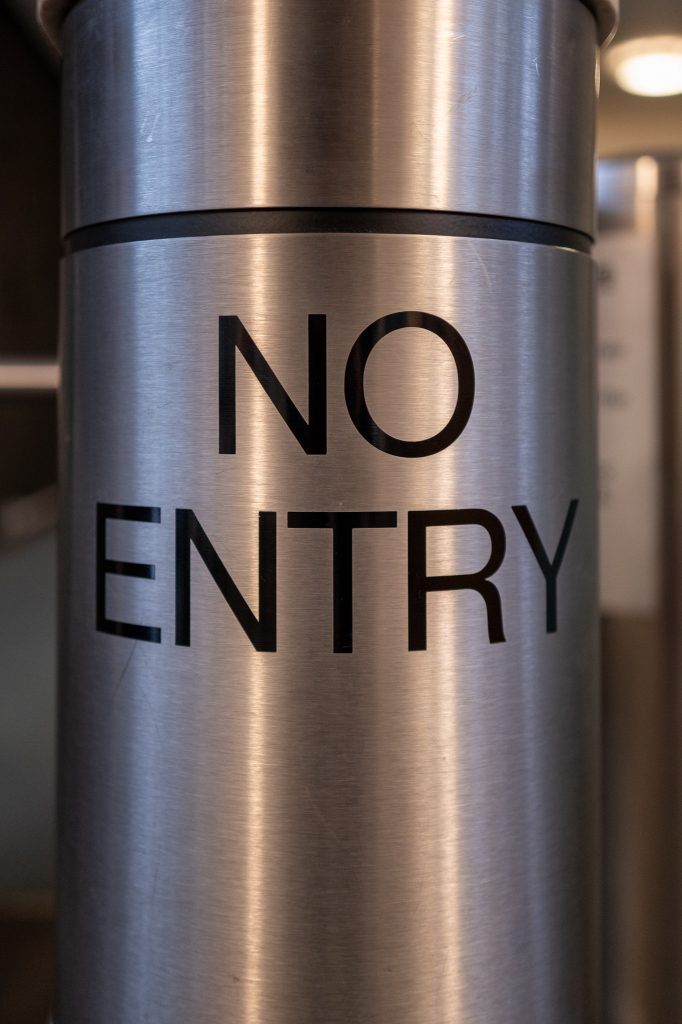
From here it was time to exit the building so after saying a thank you to the guides and the facilities team I made my escape for a quick walk into town and then a lift home from my long suffering wife.
I’d been talking to a BBC reporter during the tour and as I was taking photographs he asked if I could provide him with some of my images, to which I agreed. he needed them that afternoon for the article to be written and published as soon as possible to make it relevant. I went through the 760 images from both cameras and selected 52, some fine-art-like photos and others more documentary showing the people in the tours or speeches. He got back to me and thanked me for the photos saying they would help to bring his words alive, and that it will be published on Tuesday. I’ll stick a link to it somewhere in this blog entry or in a future post once it is out there.
Reflection
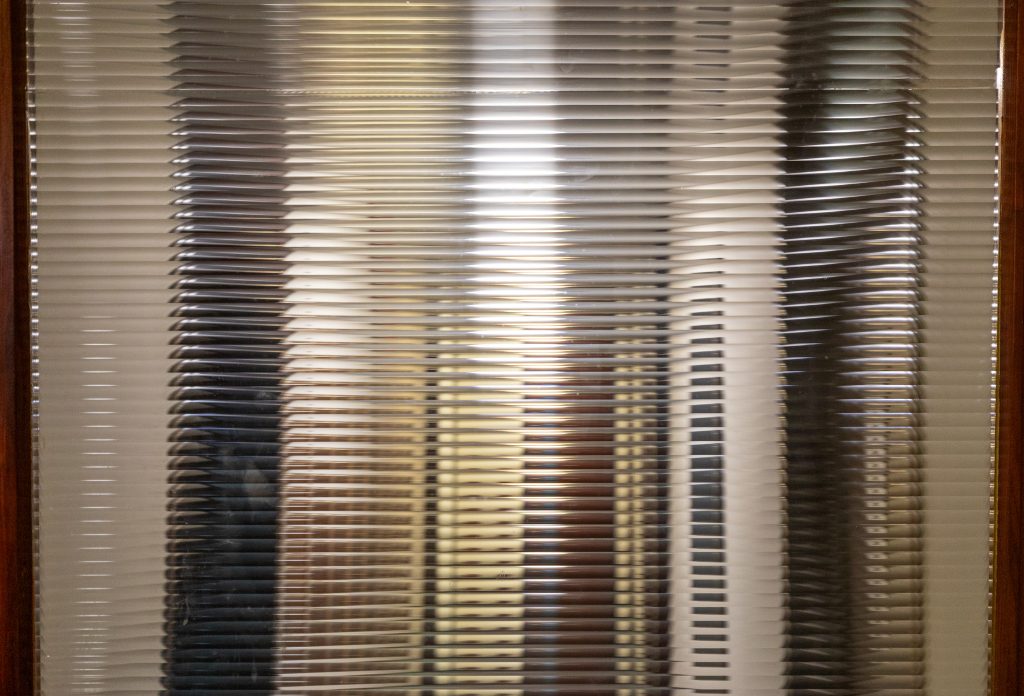
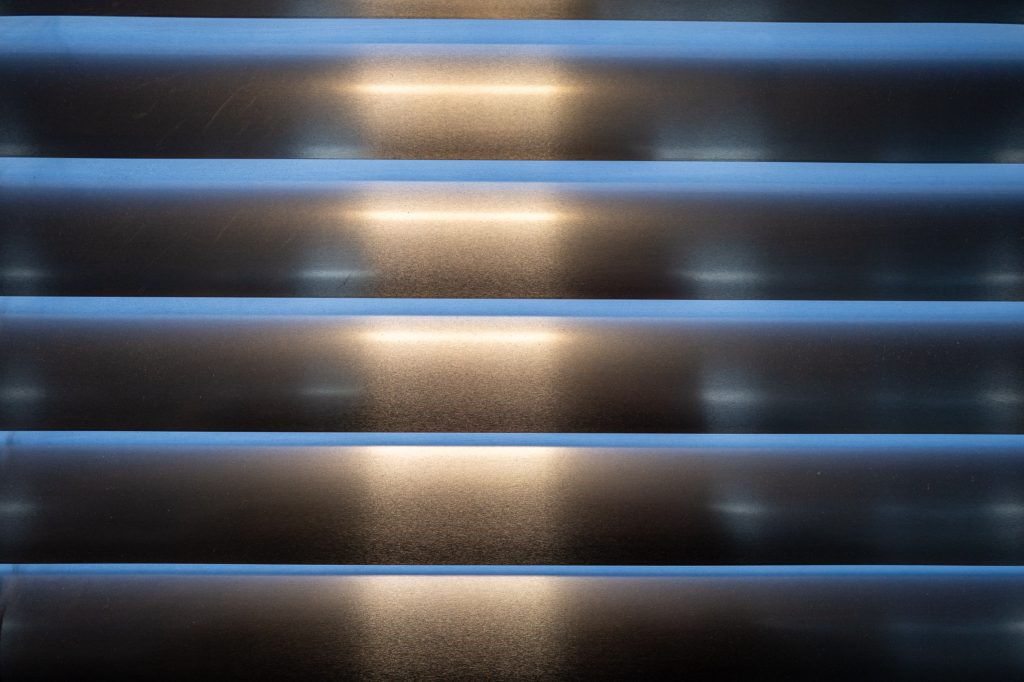
The photography I carried out on this tour was a challenge, I was trying to meet two distinct groups of images, the arty type and the documentary type. I was finding colours all over the place, in the boiler room and the underground areas was full of pipes and cables of all different colours. There were some areas that were very poorly lit, especially in the corridor to the cells, that the pictures came out far too noisy as the ISO had switched up to a crazy level, even the Canon 5D was having issues with it. The images that I had as a result, some of which are included in this post have come out well, there are a couple of stand out photos for me, the blue window blind and the valve with the open sign on, these colours are seen throughout the rest of the library of photos from the day too.
It was a good opportunity to continue the networking too, meeting the Civic Society again, members of the council, BBC reporters and other artists might help with being invited to future events. I share some of my work on Instagram but this is the mainly arty style of images but if any of the people who asked me to attend request any then I’d happily share some photos. I ask that they credit me for the images when they’re used as they won’t be used for commercial purposes in general.
In terms of my project and the opportunity to discuss art projects, the time to promote this was limited and when possible I mentioned the previous work that I have been involved with in the successful Flaxmill renovation and also other projects that I wasn’t involved with, like the Longbridge project that Gavin mentioned this week. There was little engagement about this topic though as they are still in the process of deciding what the overall future is. The fact that there were at least a few artists (including me) is a positive step towards future inclusion and recognition that art is an important step in the process.
Be First to Comment