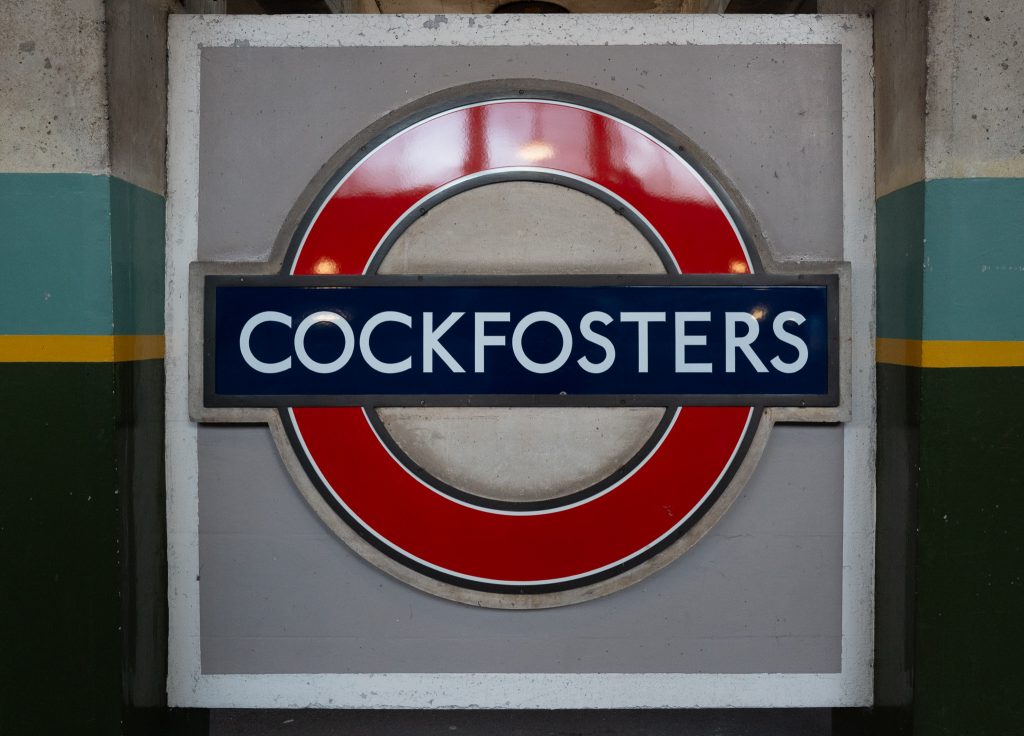
After a happy new year celebration and a day of tidying up ready to face 2026 I thought I’d take a road trip to cover the parts of the last planned trip I didn’t do. That can be read about in this post but I needed to drive to London, park at Cockfosters then a short list of things to do.
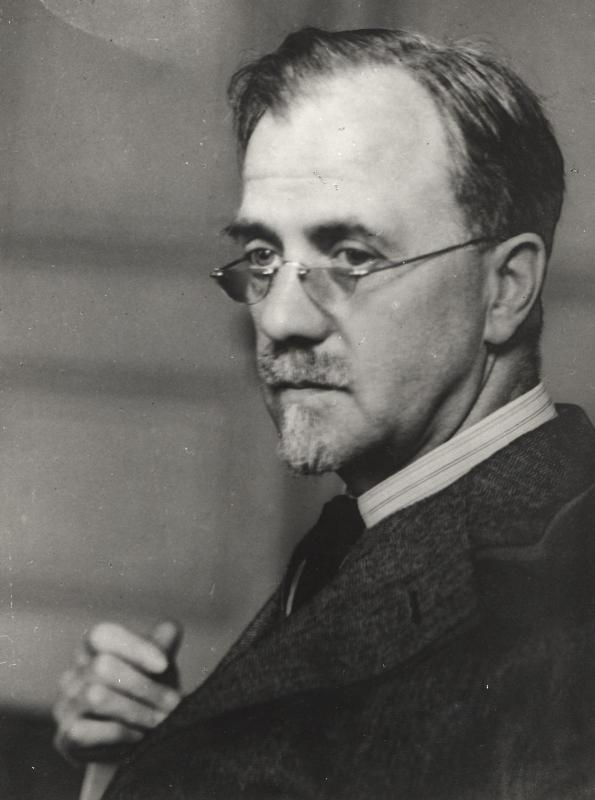
Park at Cockfosters tube station: investigate the architecture of this station and another few, all designed by Charles Holden in the 1930s and many still retaining some of their original design features.
Then Oakwood, Southgate, Arnos Grove, Wood Green, Turnpike Lane and finally Manor House stations all built using the same design principles. These were all on the Piccadilly Line leading into central London.
Once I reached Kings Cross St Pancras on the Piccadilly Line I would change to the Hammersmith, Circle and Metropolitan line for a couple of stops to Barbican. Here I planned to do some set jetting and visiting a TV filming location or two.
The plan was to shoot the railway stations using my Q3 digital camera and then once in Barbican shoot some redscale film on my M6 35mm film camera. My plan was to shoot in the dusk and darkness so I also had my tripod and shutter release cable to hand.
Cock it.
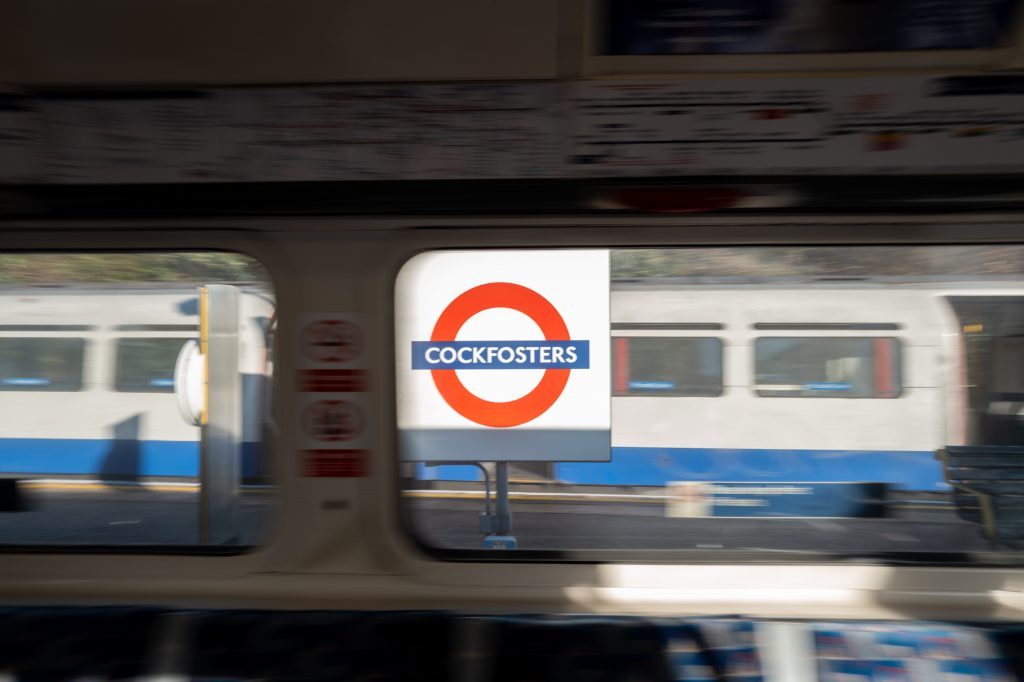
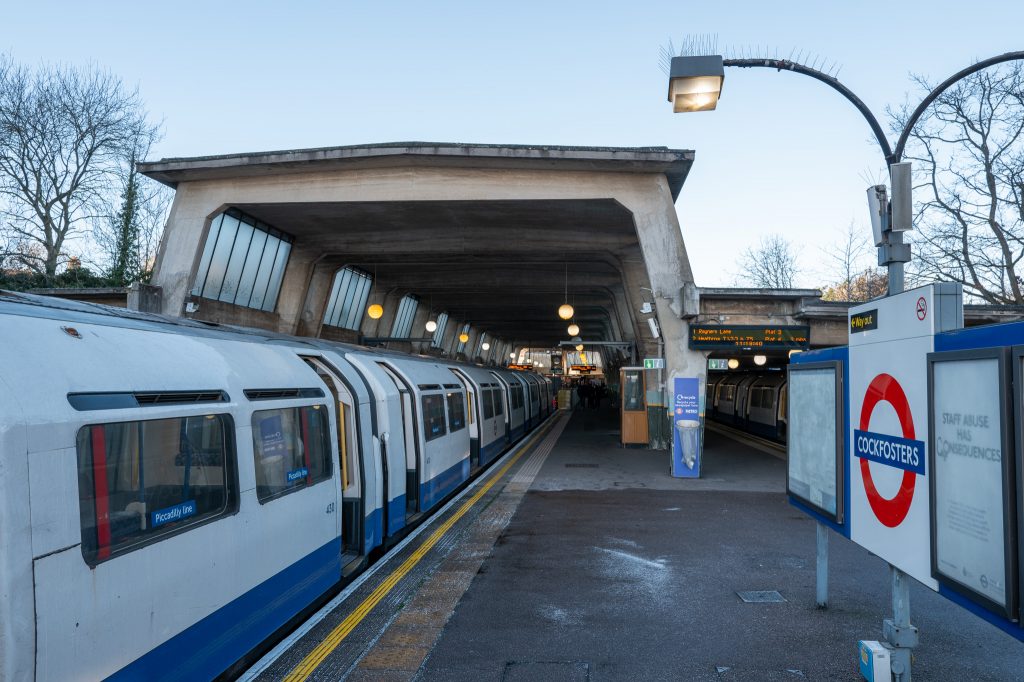
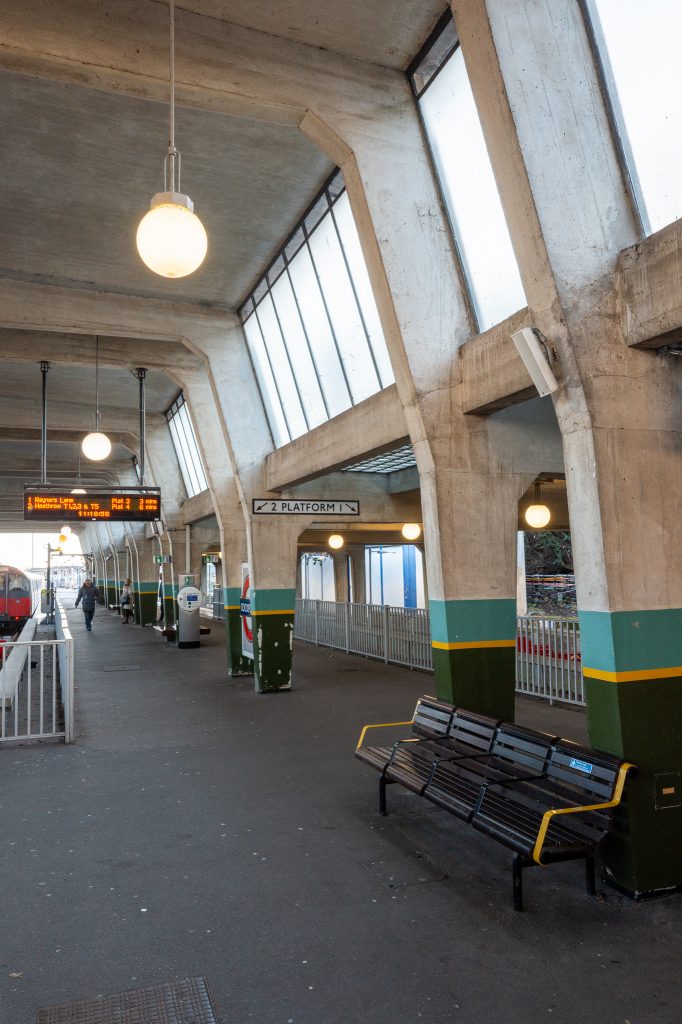
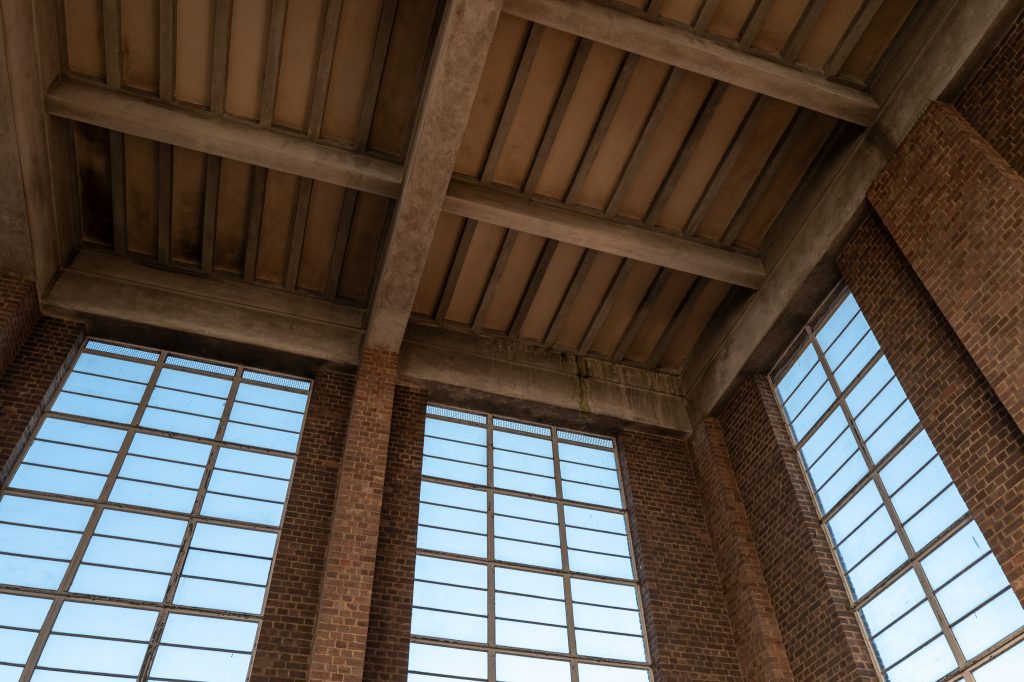
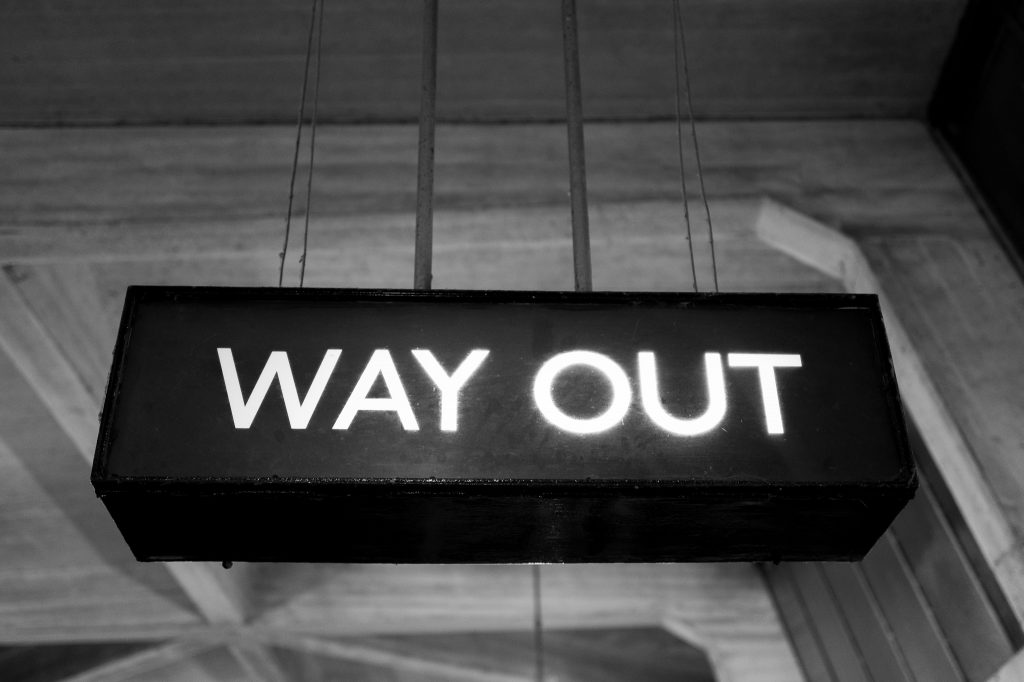
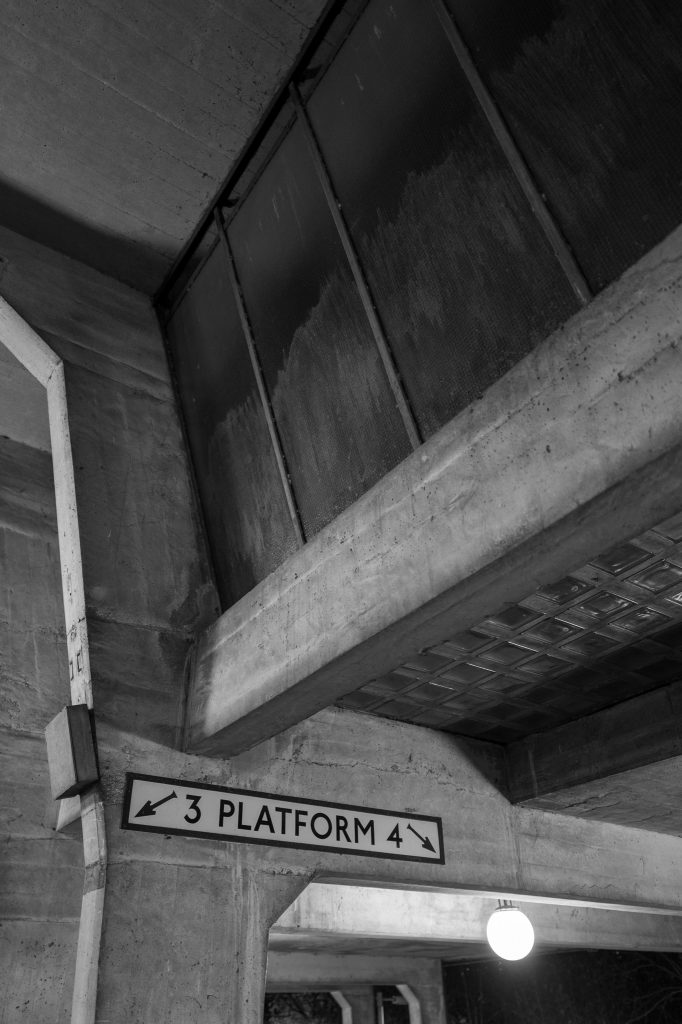
After arriving at Cockfosters I had a look around the station and it was only when I got to the platform did I see what Owen Hatherley was referring to in his book Modern Buildings in Britain, which I had received as a gift for Christmas. The concrete structures over the platforms designed to allow tall trains in Platform 2 and the tube carriages just barely slipped beneath the beams of platform 1. The concrete was smooth and raw looking, but painted at the foot of each of them with two shades of green and a yellow stripe. This was fitting when compared to the remainder of the station. Huge sloping frosted glass windows were all around to let the light into the ticket hall and the platforms but the lower height in platform 1 made it seem a little claustrophobic and dark. There were some panels in the roof of glass cubic blocks making up skylights and the design of the signs and text around the station felt classic and old school, whilst the concrete felt relatively recent, an odd contrast. Looking at the view from further down the platforms this structure would not look out of place in an episode of Andor or Mandalorian. Click on any picture on this page to get a better view of it.
Oakwood
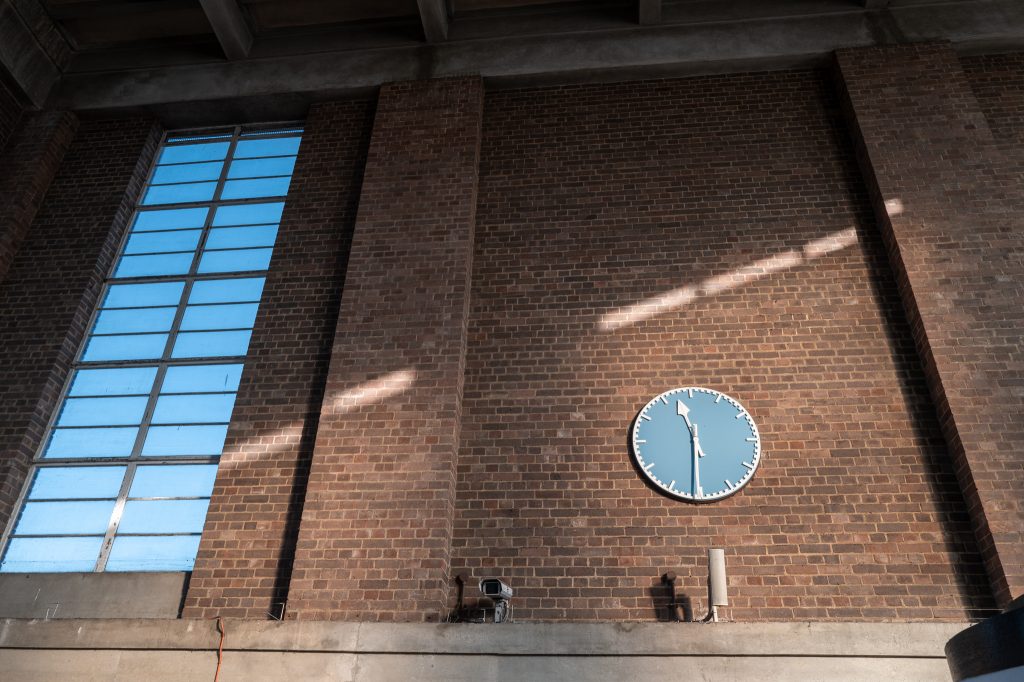
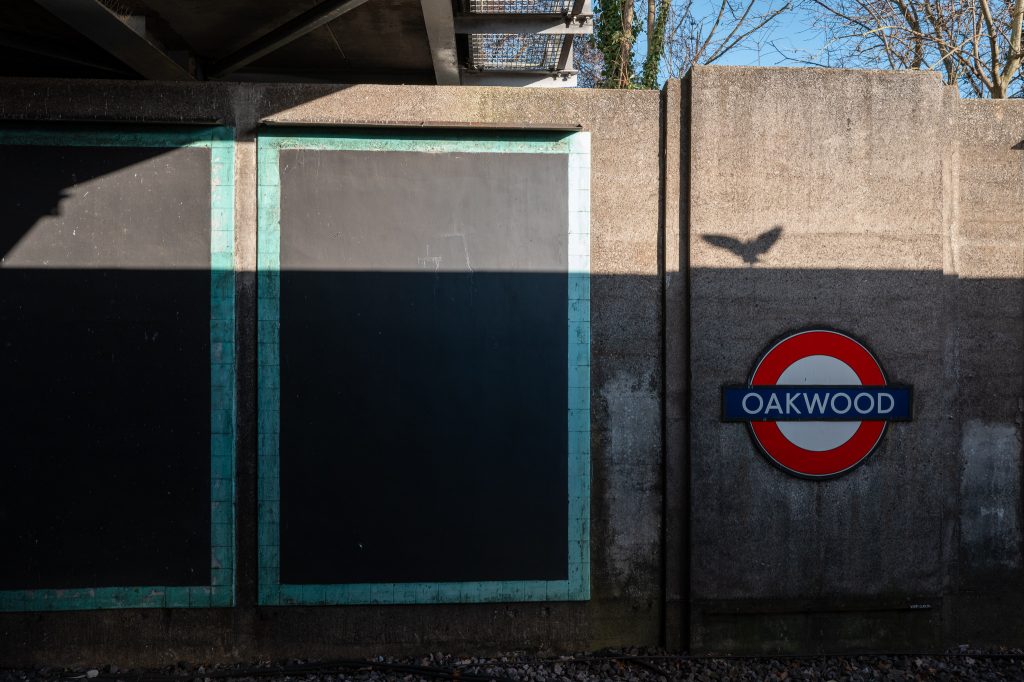
From here it was onwards to Oakwood and the huge open ticket hall made of brick and a high concrete flat roof. The windows in here were tall, providing so much natural light over the top of the Passimeter, which I found out was the old huts used to count the amounts of passengers using the services. This one was full of pot plants, (plants in pots, not mary jane plants) and a small cupboard outside held some books where commuters could pick up and put down a book in a community led scheme. It seemed that the height of the building was way too high for it’s intended purpose but as a sight it was wonderful to see.
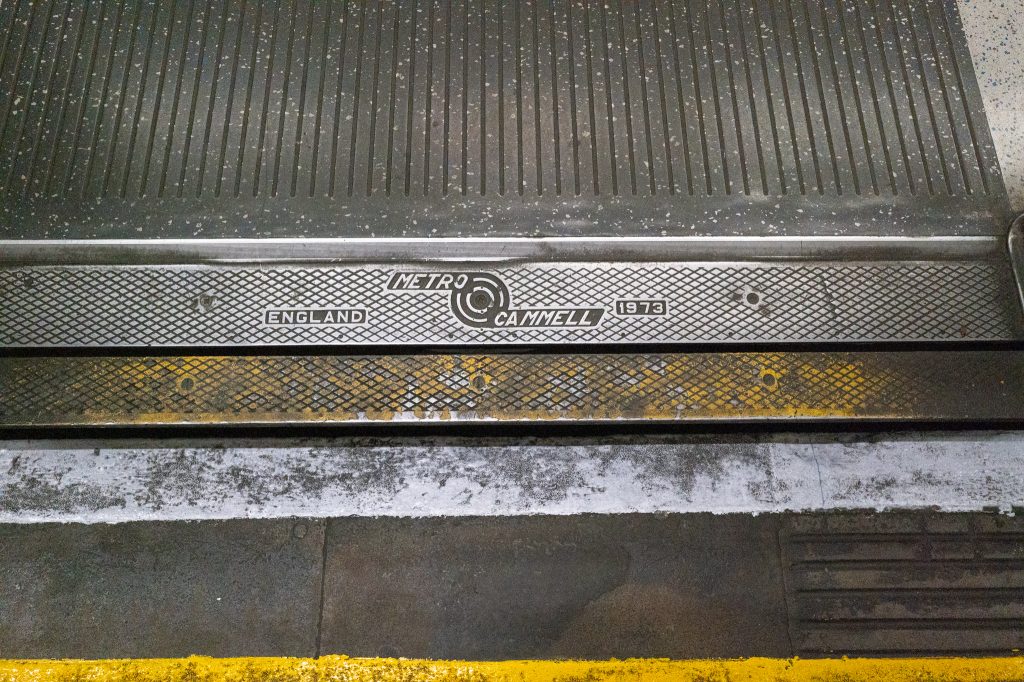
Light green paint (or is it a blue?) was accented around the whole station, around the bill posters and on the walls. Whilst on the platform I was fortunate to capture the shadow of a pigeon on a wall, after about five minutes of patiently waiting. At the same time, a man came down the stairs, barking and making some rare noises that could have been tourette’s syndrome or something else. I kept me eyes on him in case there was any issues and then he got into the lift and went back up to the ticket hall level. When boarding the train for the next destination I noticed that the plate in the doorway gave the manufacturer as Metro Cammell and a date of 1973, the same year I was born. It’s impressive to see these rolling stock still doing their job after 52 years, I’m barely able to do mine any more!! 😉
Southgate, no not Gareth.
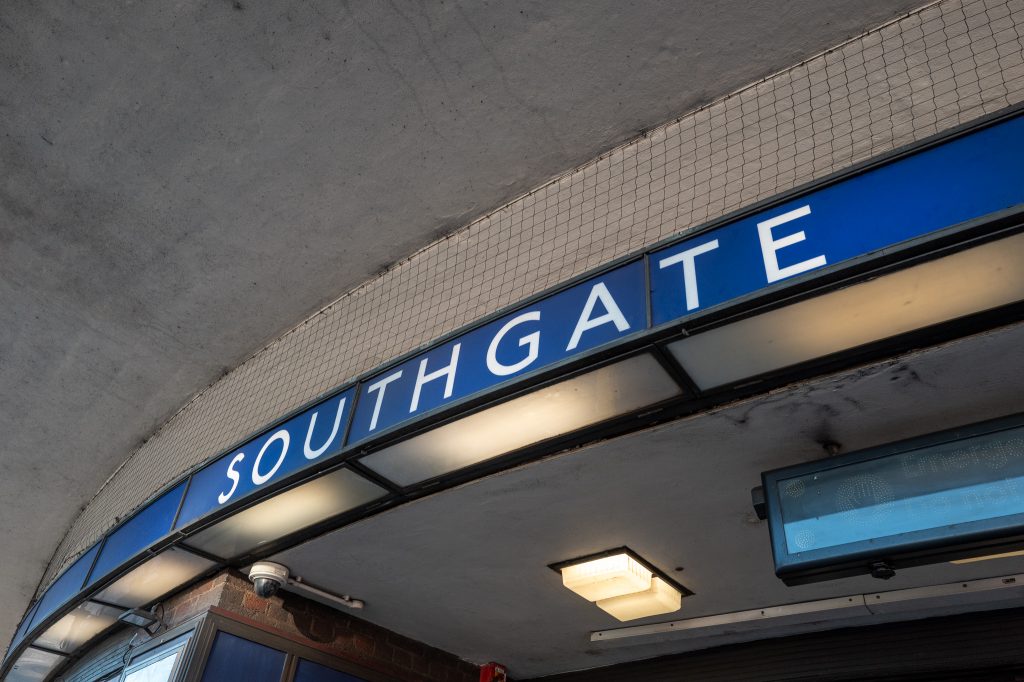
Next stop up the line was Southgate, a lower height ticket hall in a complete circular form looking like a 1950s American diner dressed with a couple of shops and station graphics. This station was opened in 1933 and whilst the outside offered some nostalgic views of the Station Parade shops that looked over the station. These shops including the clock that was recently refurbished were also built and designed at the same time as the station by the same architects. Inside this station, on the escalators to the platforms were some bronze uplighters that rise from the escalators and shine light onto the curved roof above.
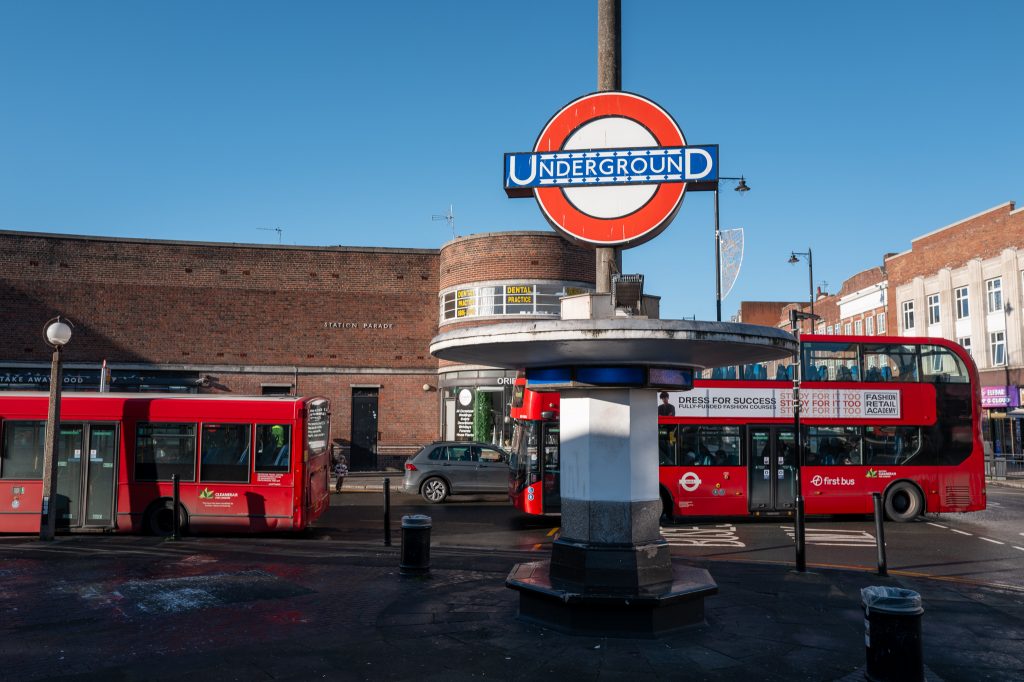
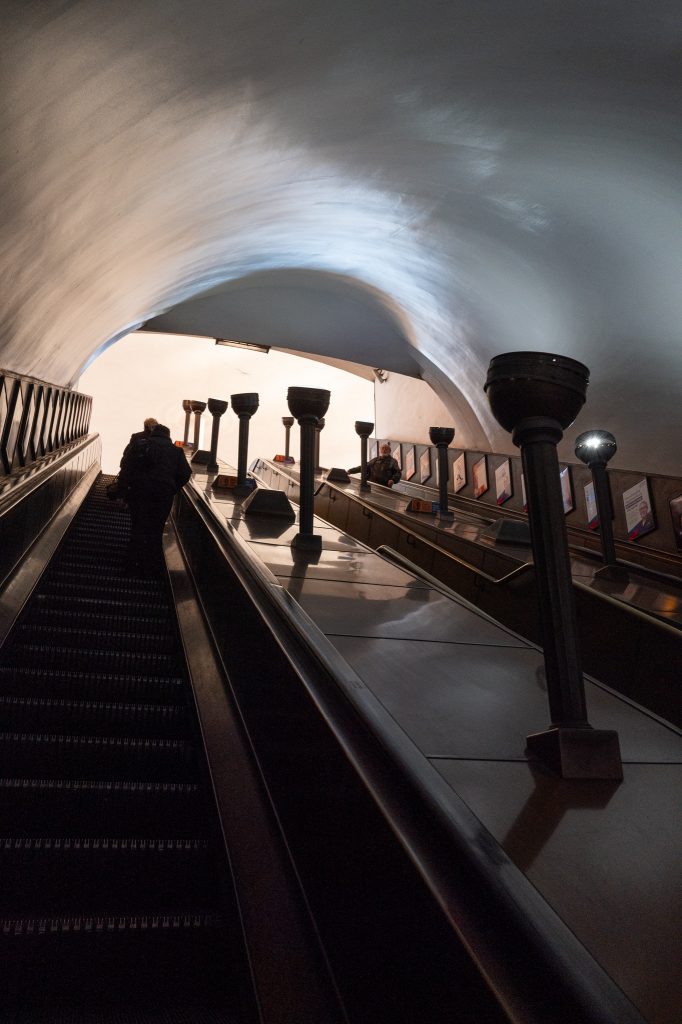
Arnos Grove
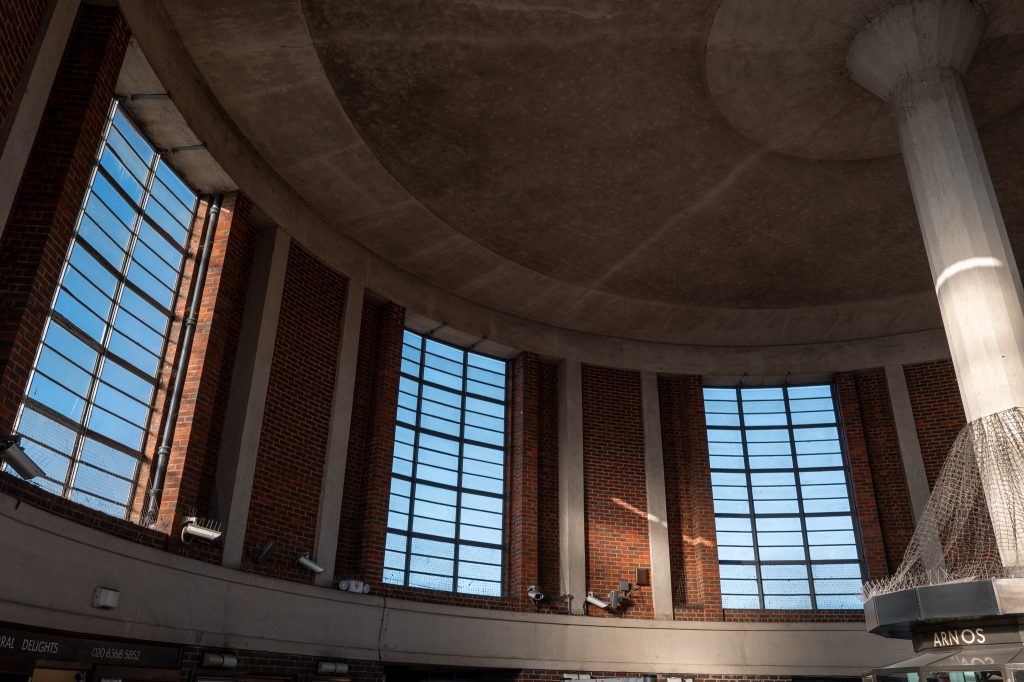
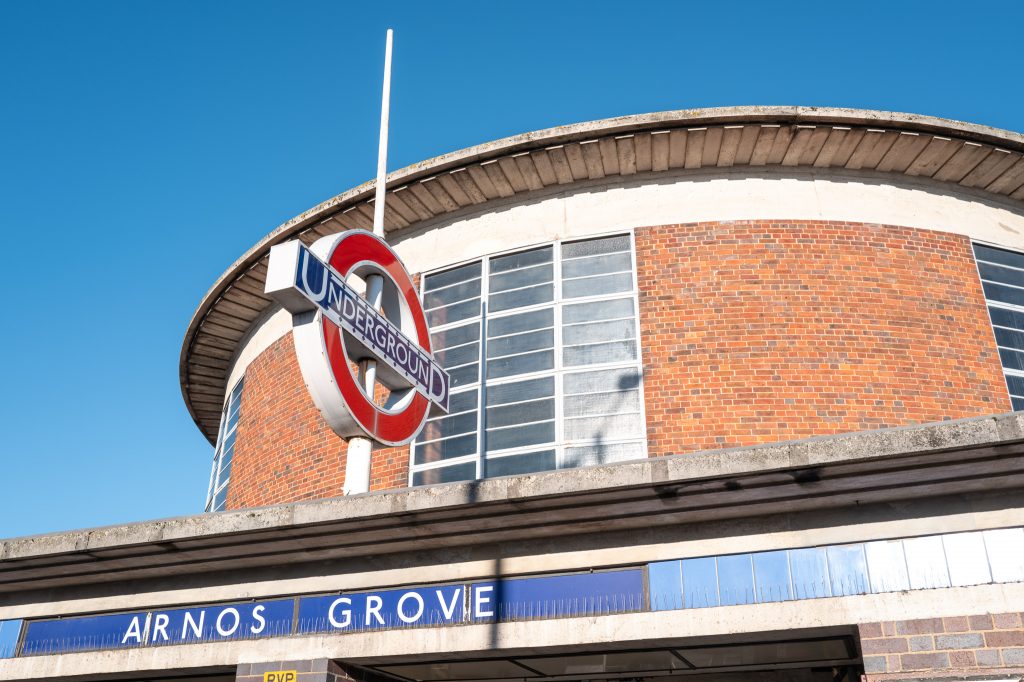
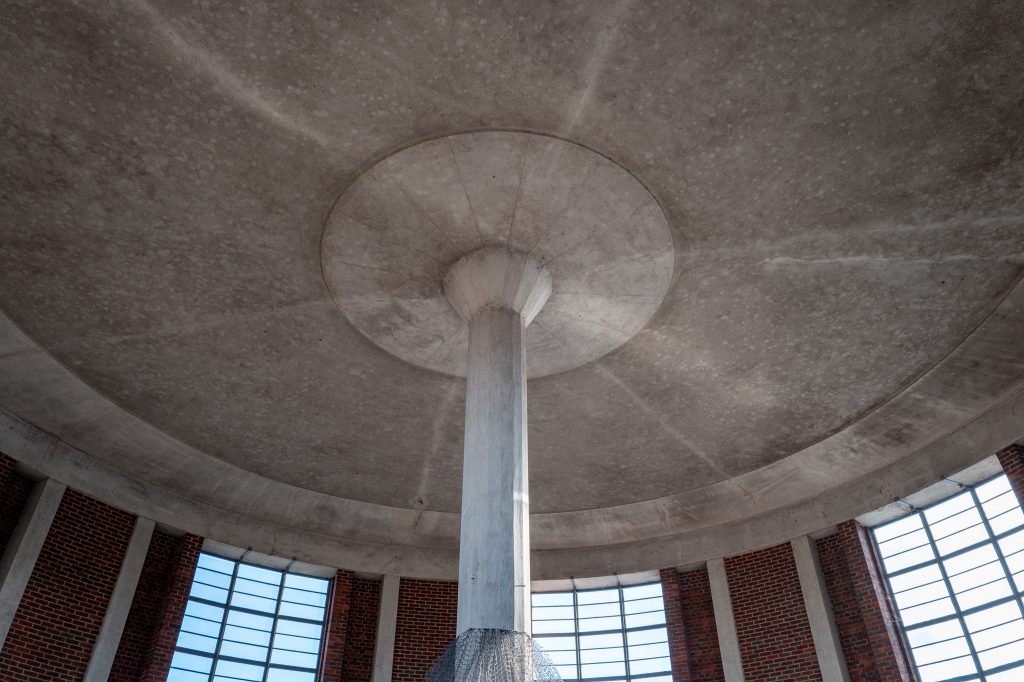
Arnos Grove was the next place I alighted, jumping off the train and letting it leave the station I was pleased with the light on the platforms opposite with another train sat there. The low concrete ceiling over the top of the platform. Moving up into the main station building saw a set of concrete stairs with the classic signage adorning walls and over stairs. Up into the hall there were some wonderful information boards “London Underground History” before getting into the main circular hall. The walls here are a mixture of Oakwoods tall rectangular hall and Southgate’s short and round building. It was tall with wonderful lighting coming in through the windows. The centre of the hall is seemingly supported by a singular column with a cone shape connection to the roof. At the foot of the tower is the passimeter, which looks like a small greenhouse with the signage in place above the windows. It would have been an information point before the TFL reduced the headcounts in the stations by fitting electronic boards in the windows. Time to head back down to the platforms and head on to the next station.
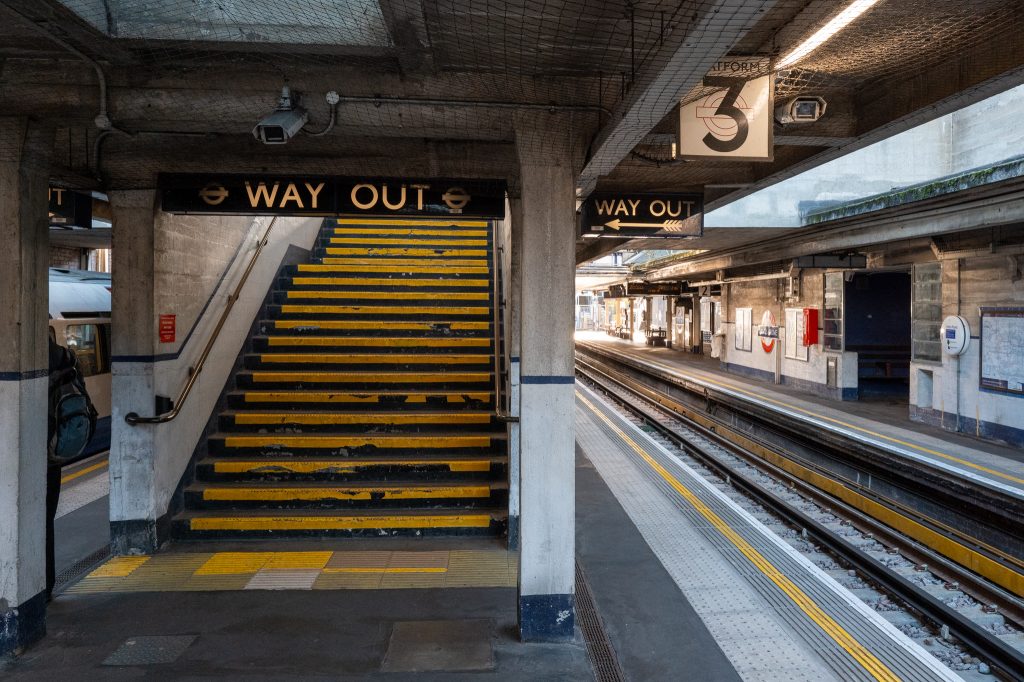
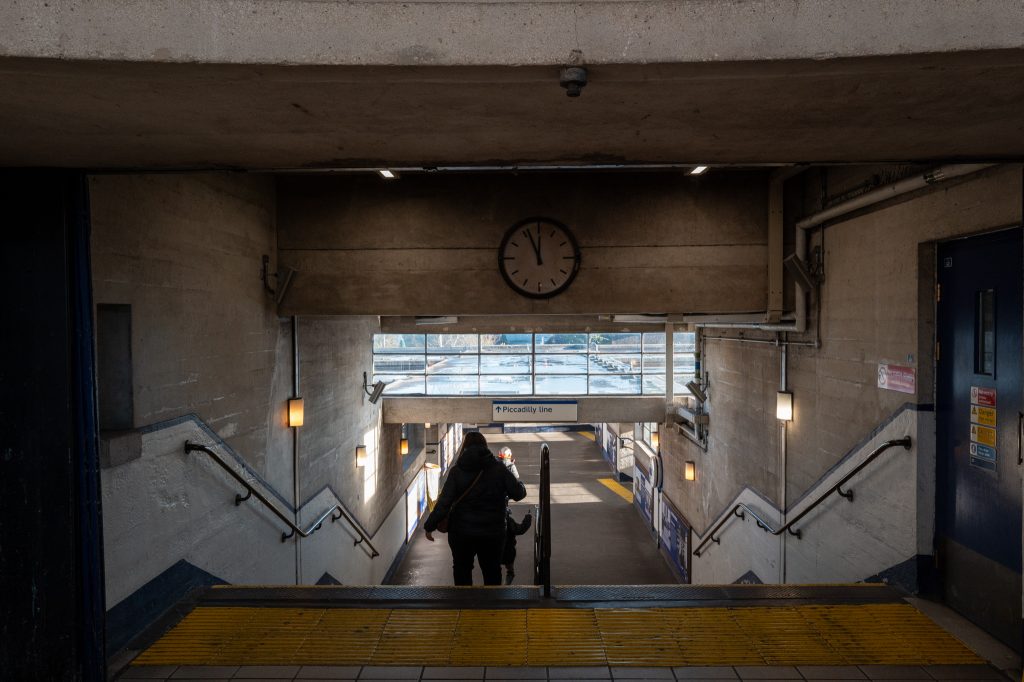
Wood Green, I think he probably would.
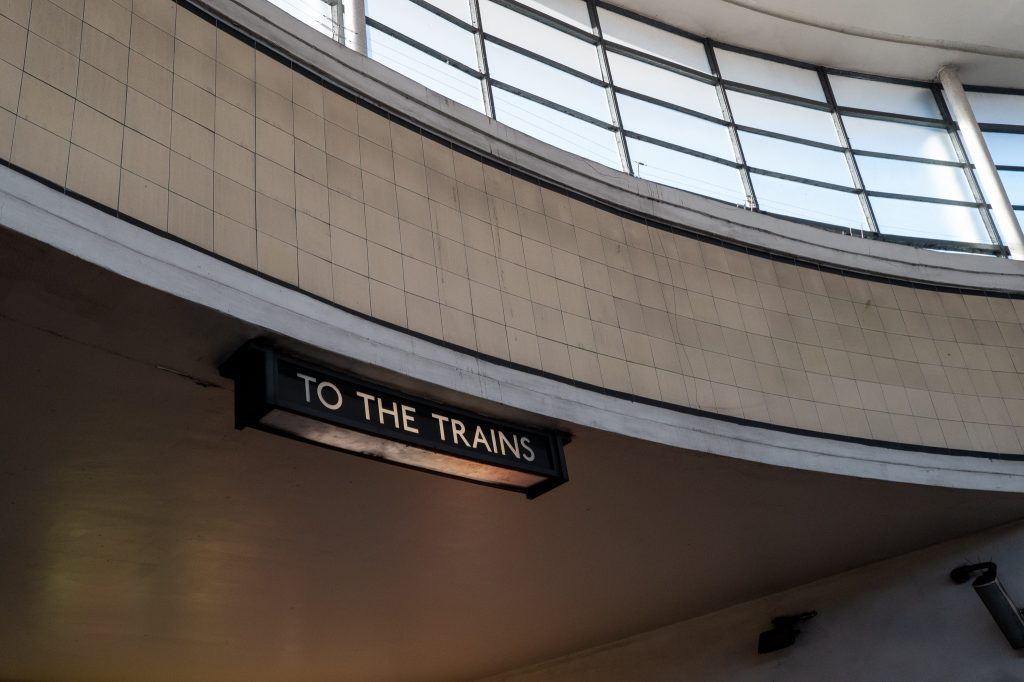
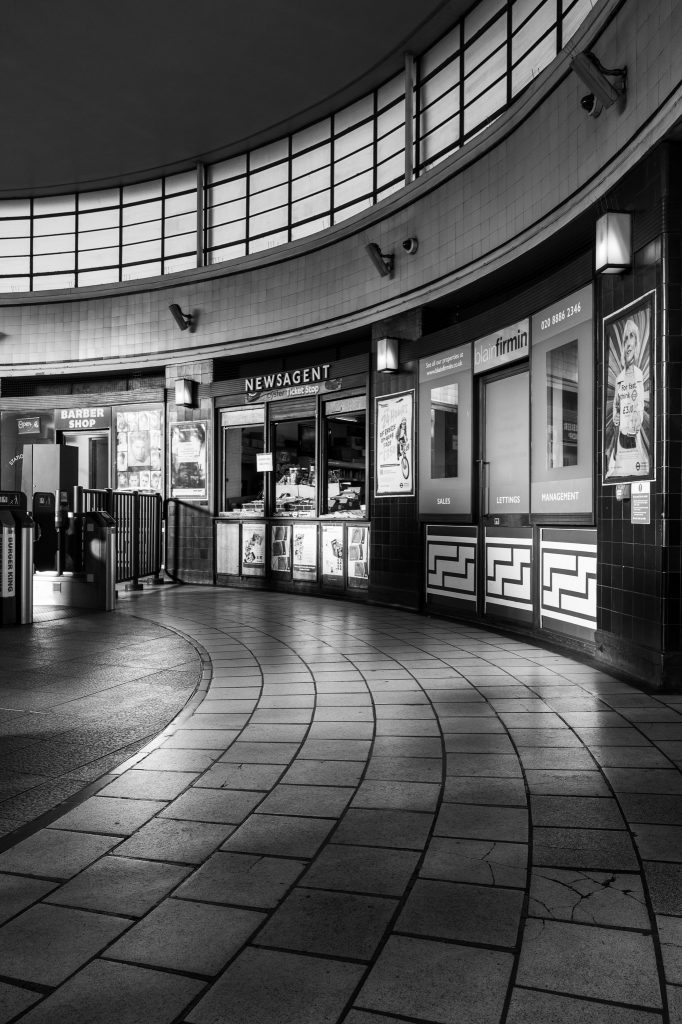
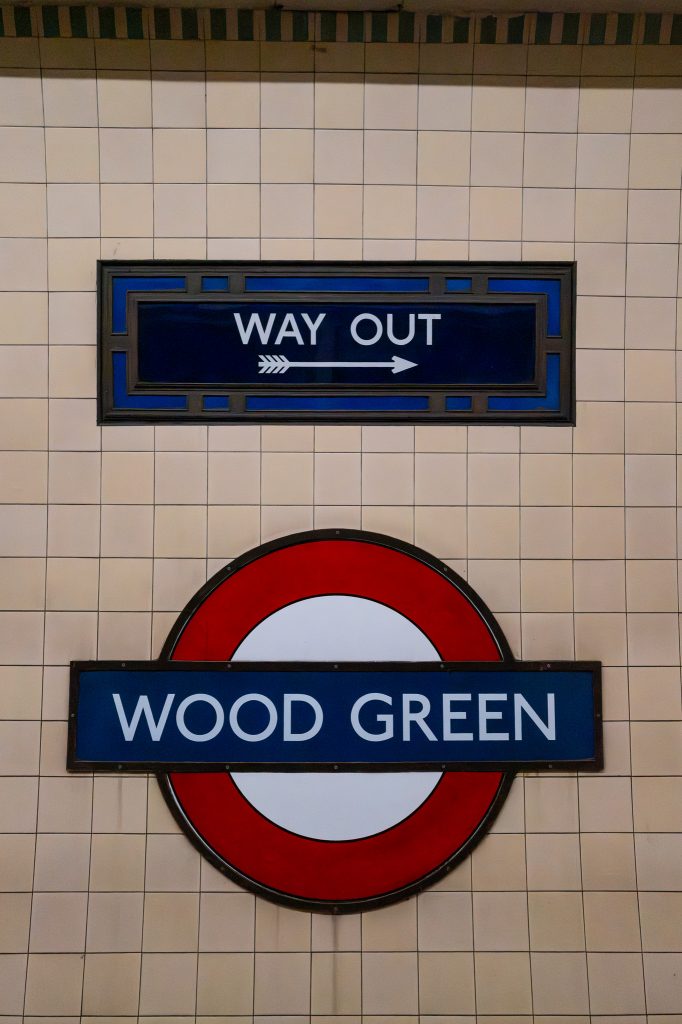
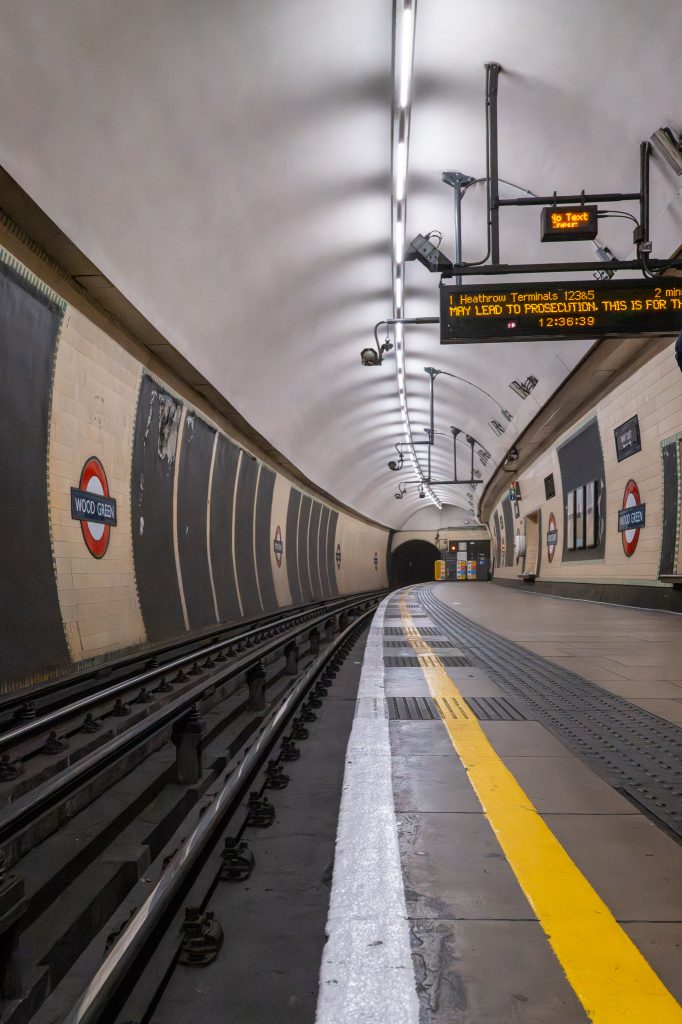
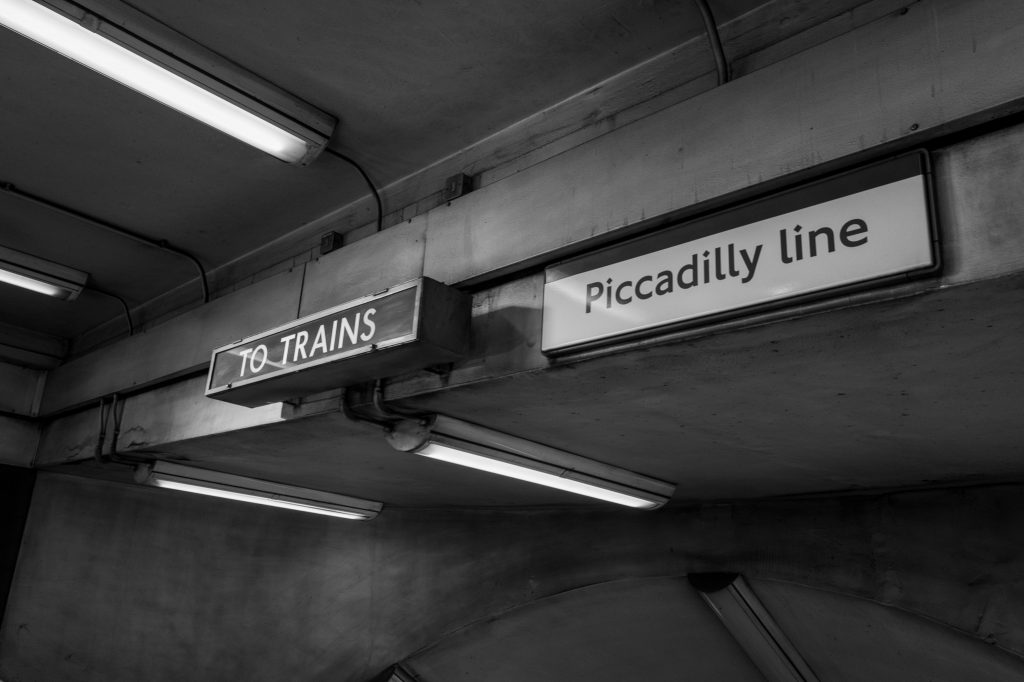
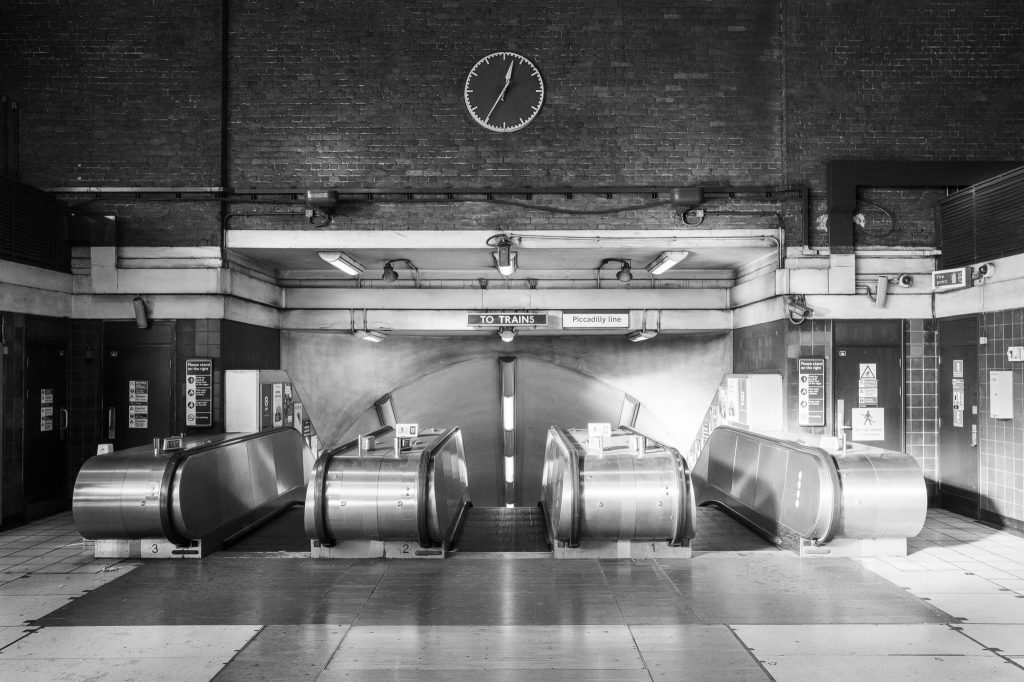
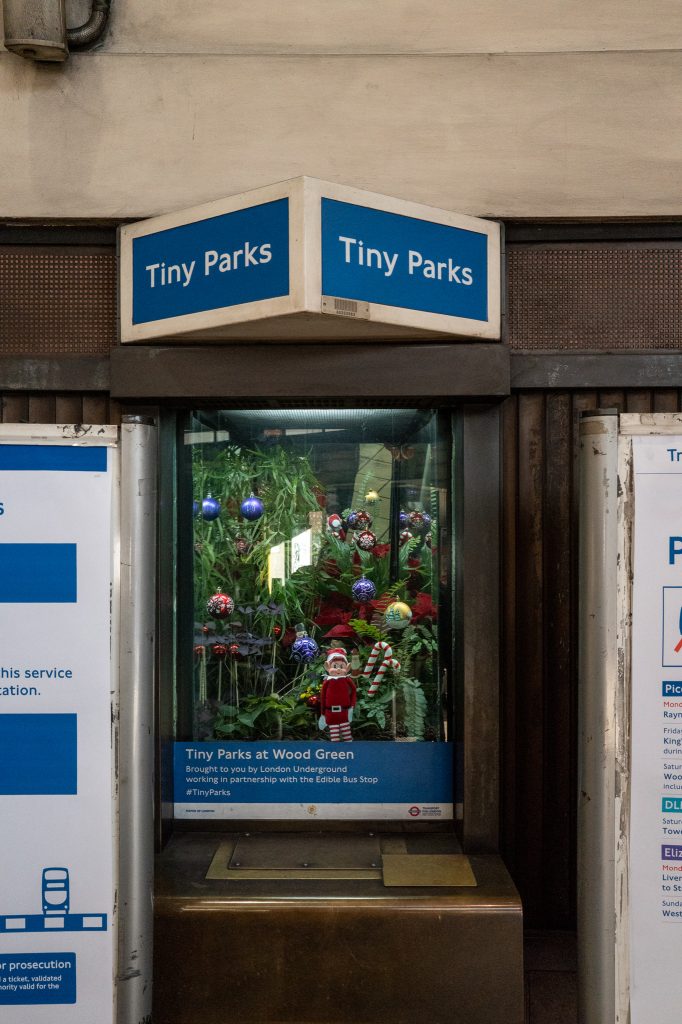
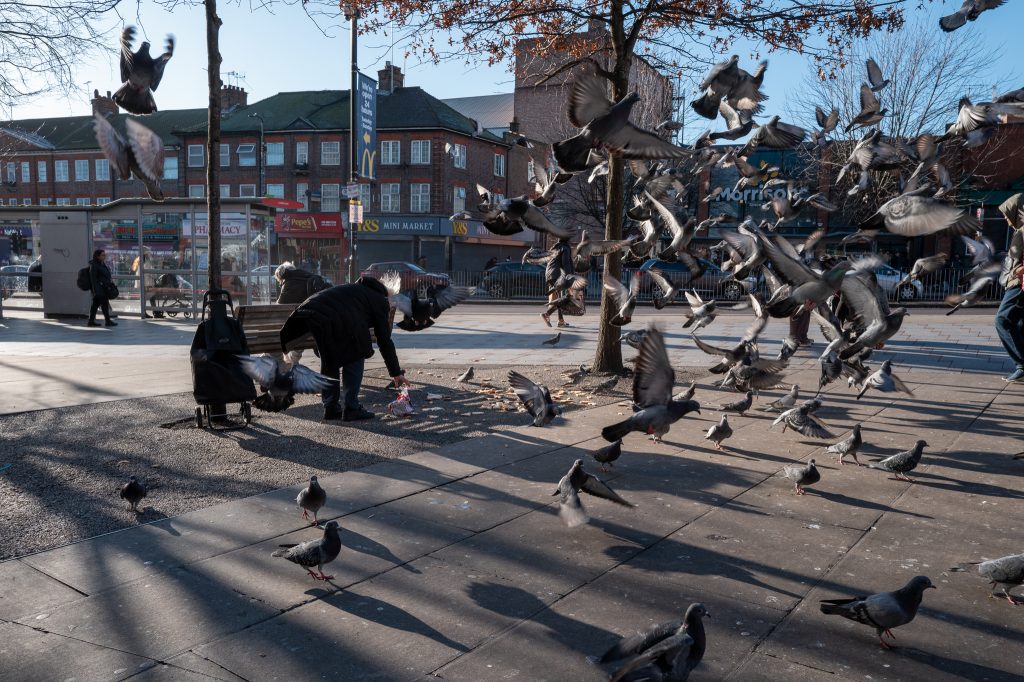
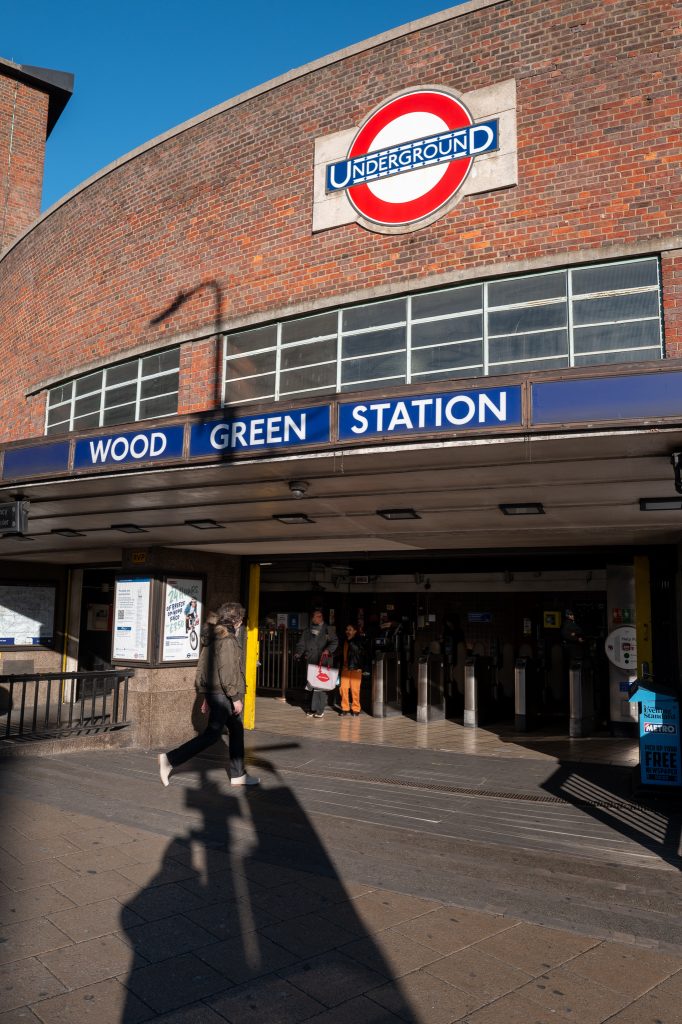
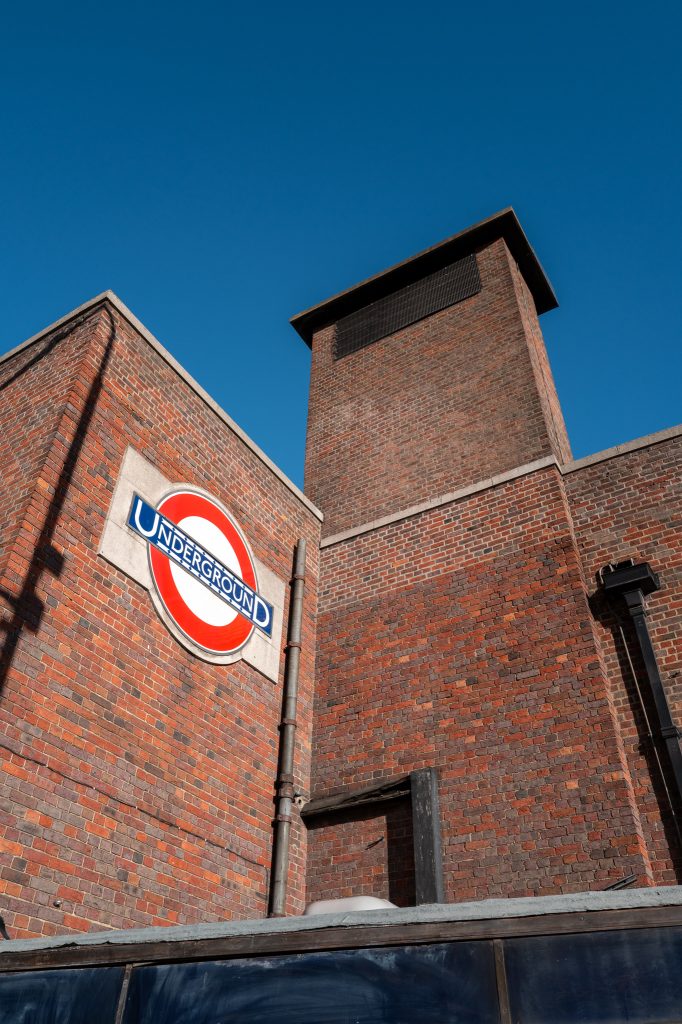
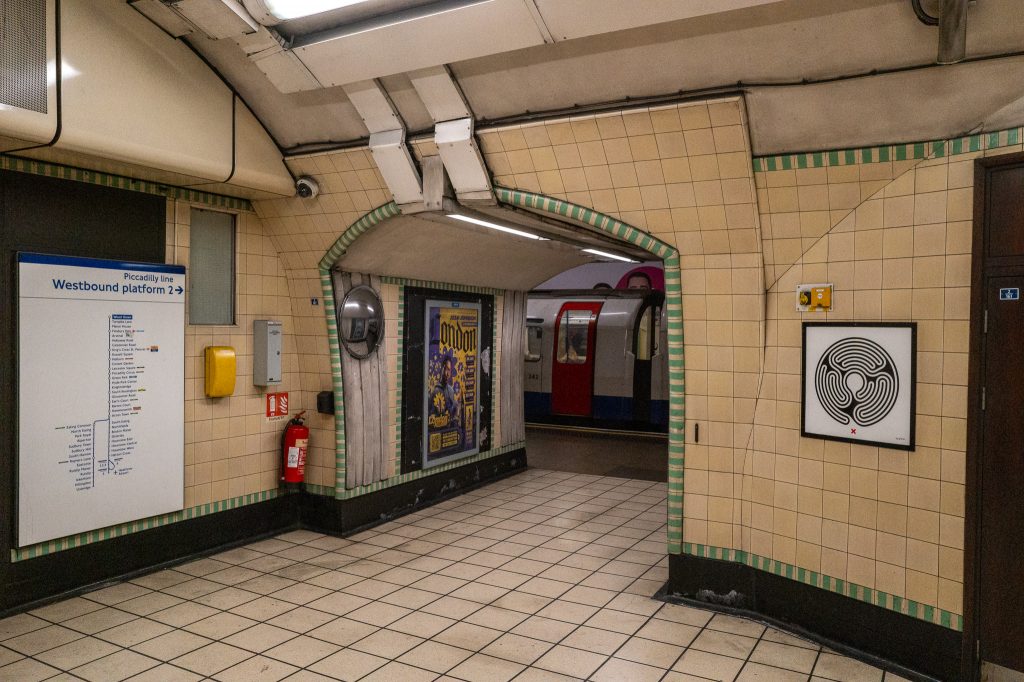
Wood Green was the next exploration, and after coming off the platform I can see the similarity in the apertures from the platform into the exit hall, with the previous stations. No uplights on the escalators here though, just the usual fluorescent tubes on the ceiling of the electrical stairway. The exit of the station leads me out onto the street where a person was feeding a huge amount of pigeons. Behind me was the large circular building of the station with a tall rectangular tower that probably contained the ventilation. Heading back into the station I noticed that the ticket windows were not manned but the signs above them showed that they were now “Tiny Parks”, a small terrarium inside the glass and as it was the Christmas period there was also an elf in there who was being missed from his shelf no doubt. Moving towards the escalators down to the platforms I liked the look of the tops of the three electrical staircases with the original clock and “To Trains” sign so thought I’d stay there and grab a photograph, only the people in the station thought I shouldn’t get a photo. They kept coming through the gates and then as soon as they’d disappeared over the brow of the escalator another person’s head would pop up and get in the way. About ten minutes waiting yielded a couple of photos before the area filed with families once more so I then headed down to board the train.
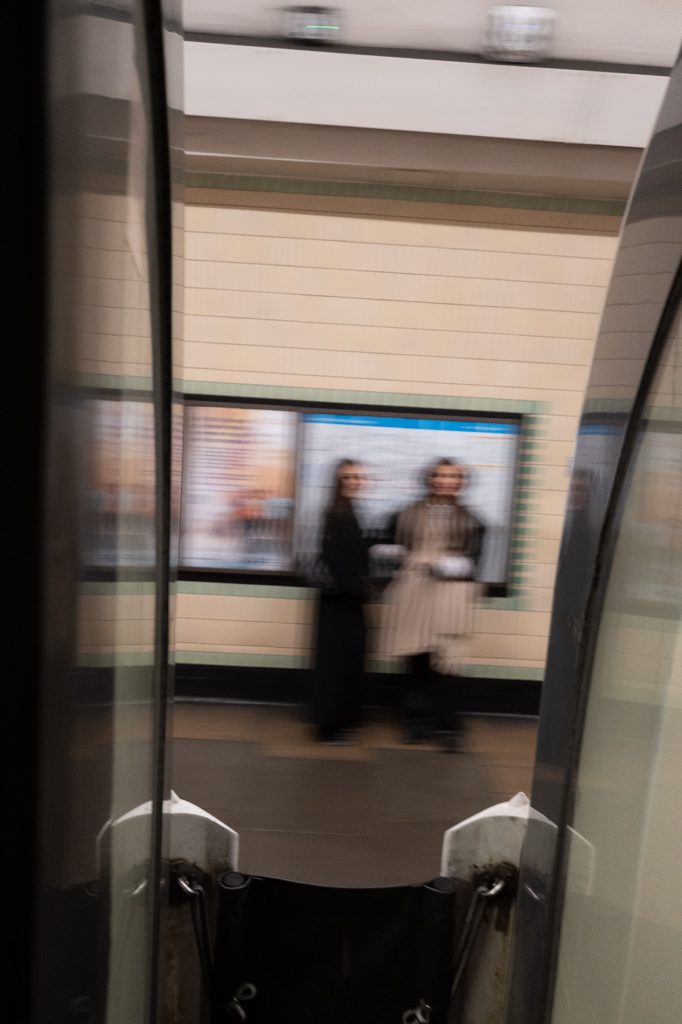
Don’t tell him your name Turnpike
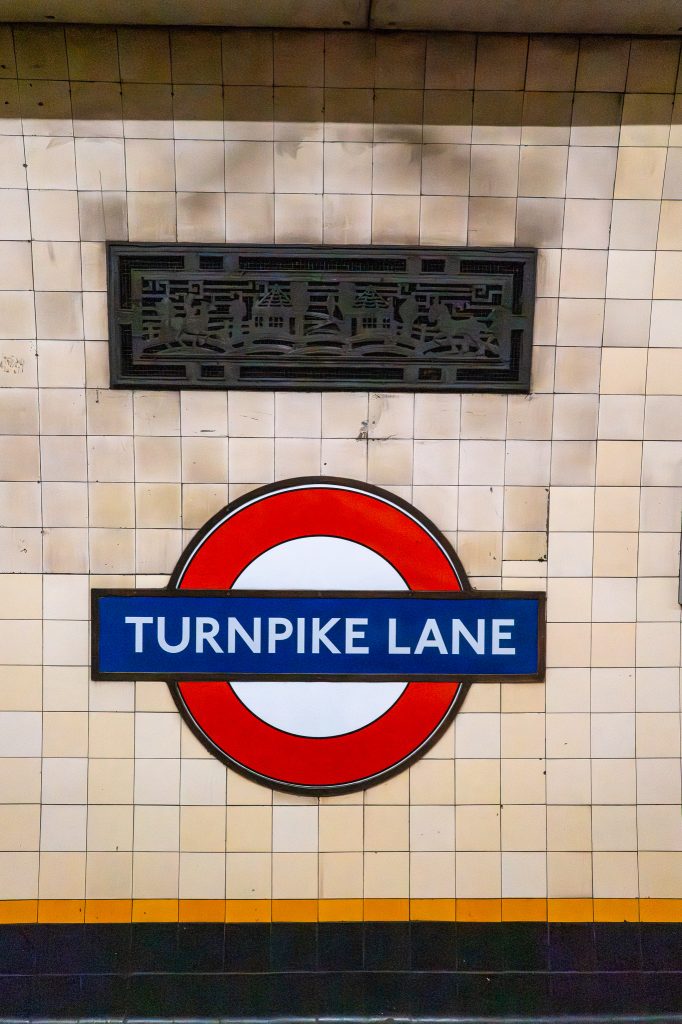
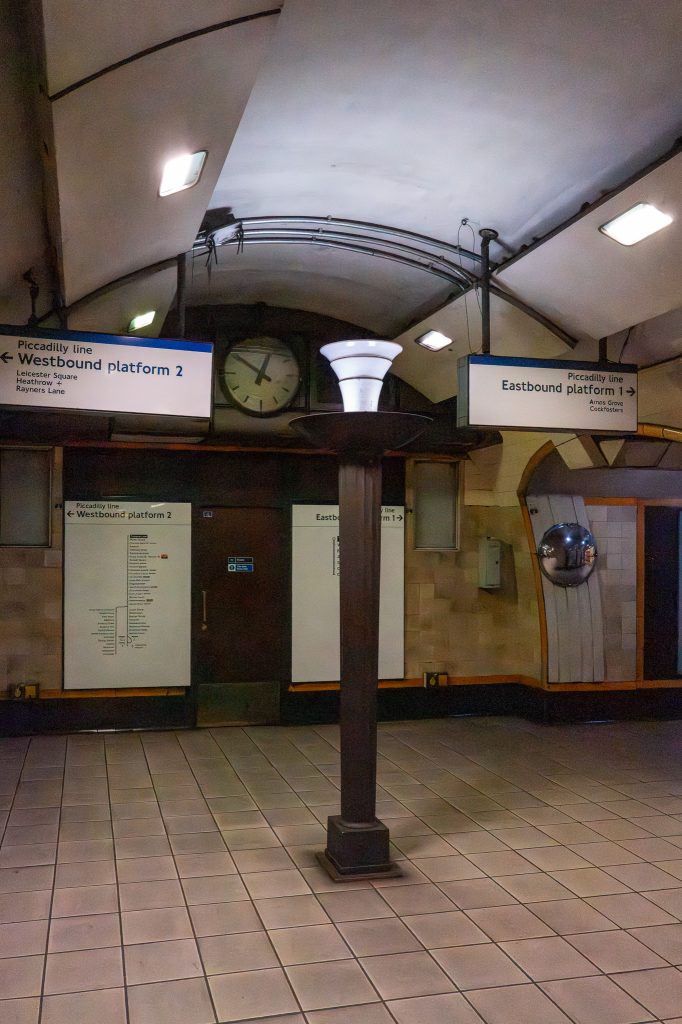
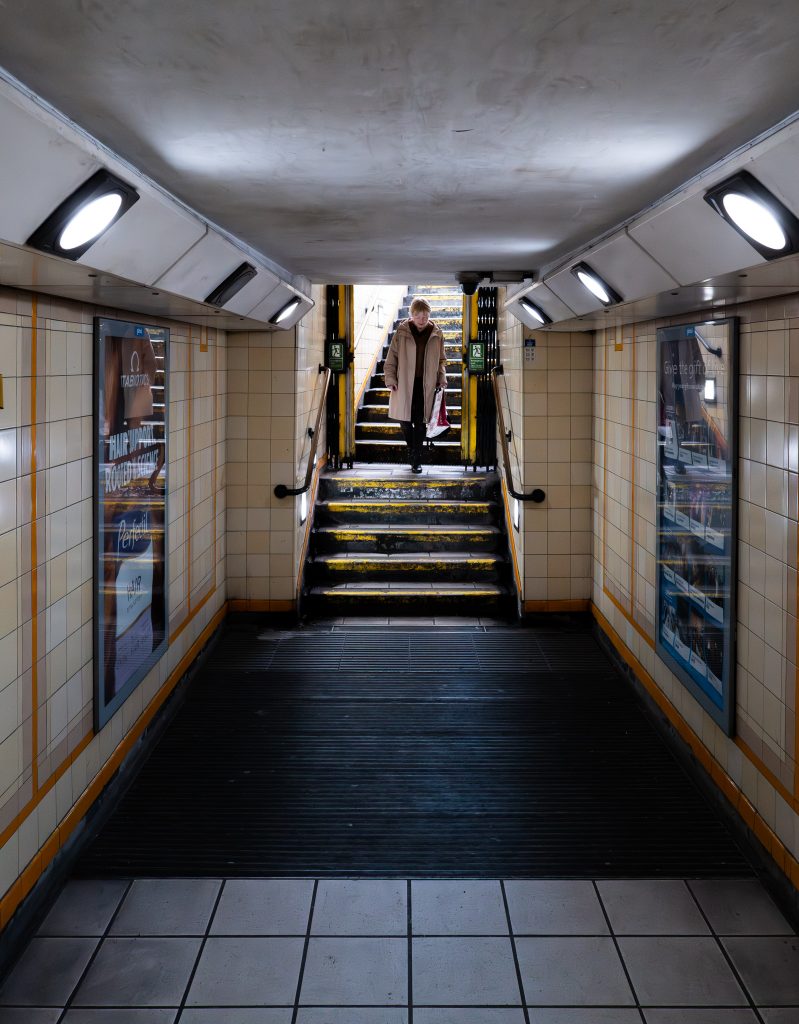
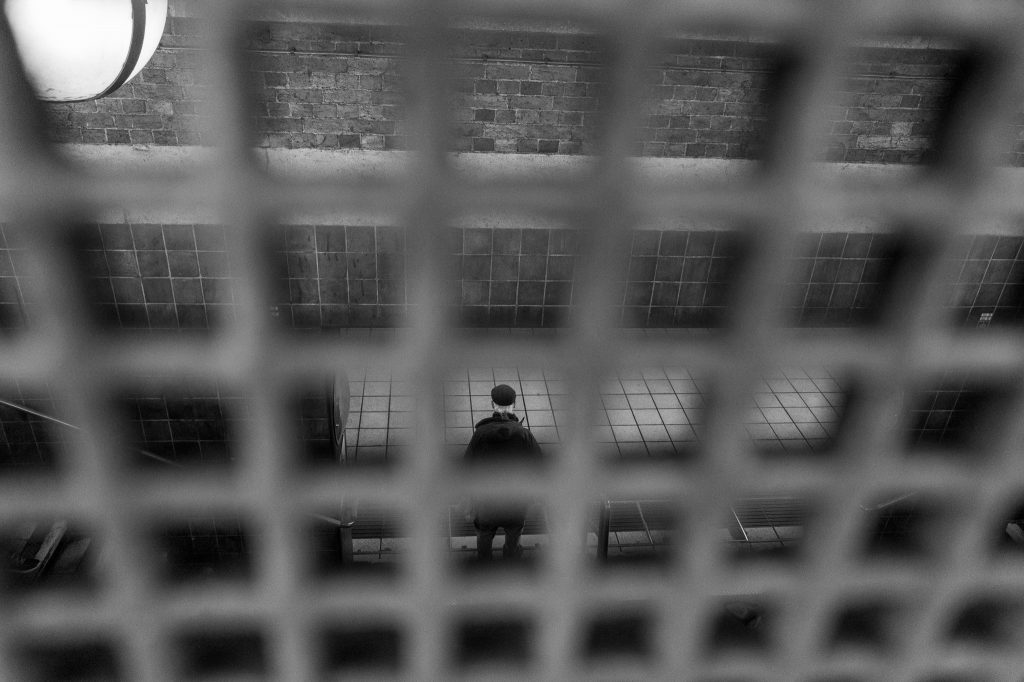
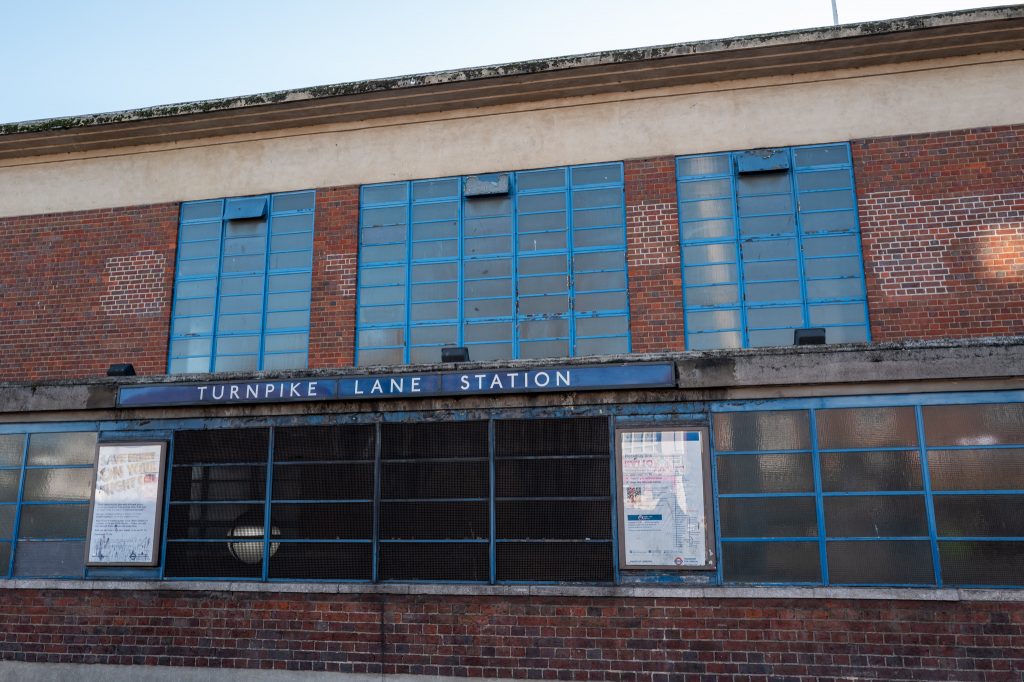
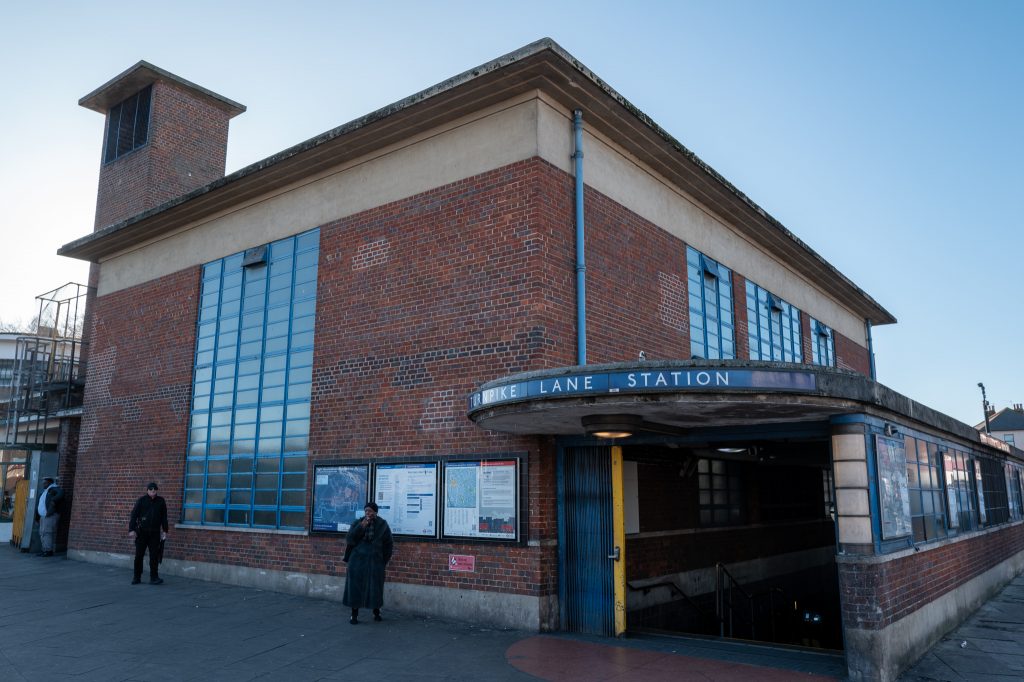
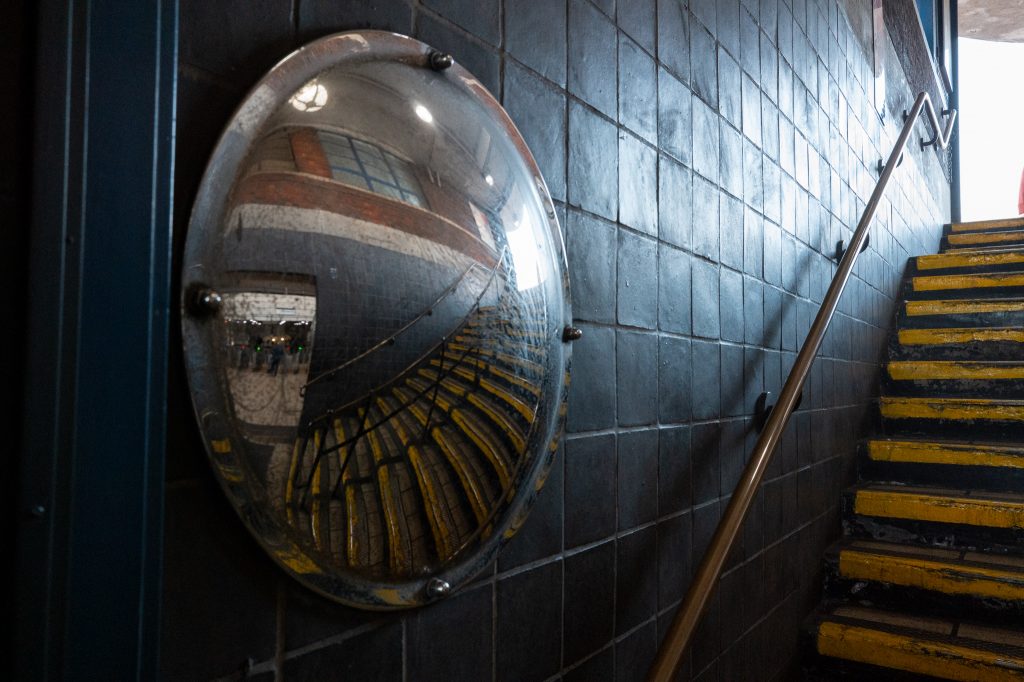
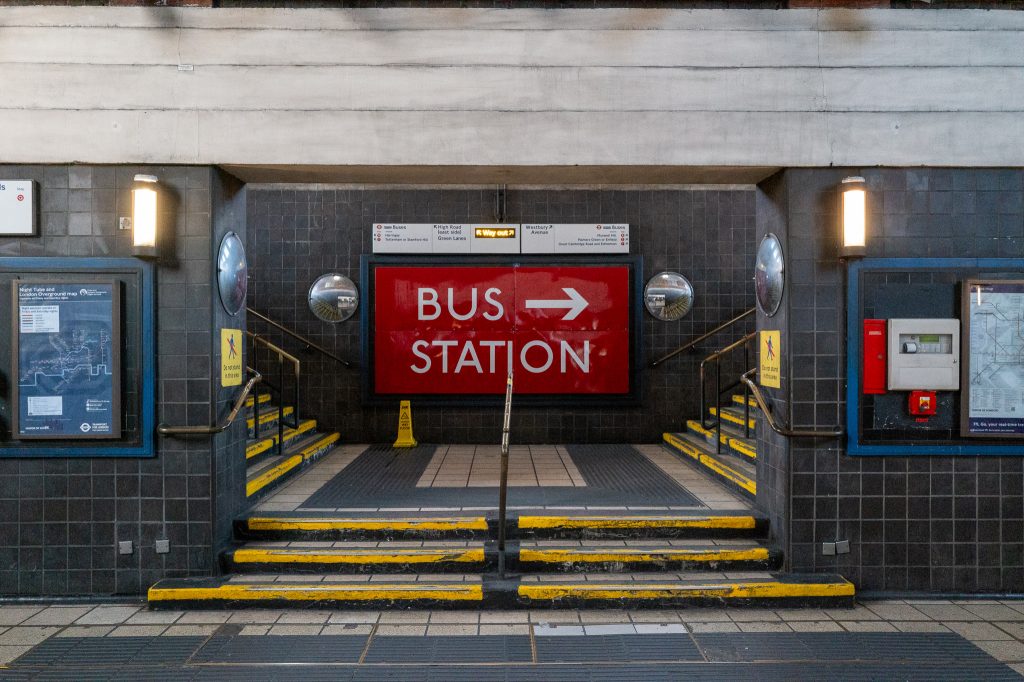
Out of the carriage door onto the platform of Turnpike Lane next and a brief stroll up the escalators with their bronze uplighters as per the earlier station. It has a mixture of buildings atop the underground infrastructure with the largest being a rectangular building with many windows in it as well as a smaller capsule shaped building that the stairs emerge from. The decor looks tired and uncared for with the windows and almost all the wall surfaces appearing dirty and in need of a good wash. I do like the structures and the layout though it is a good place to wander around with the same exits from the escalator hall to the platforms, here though, everything is accented by yellow lines and tiles etc.
There are also some metal panels in the walls on the platform that are for ventilation I think, but they are intricately carved with details featuring horses and possibly the road where the toll barrier or “Turnpike” would have originally been the toll road for the traffic in the early days of horse drawn carts etc.
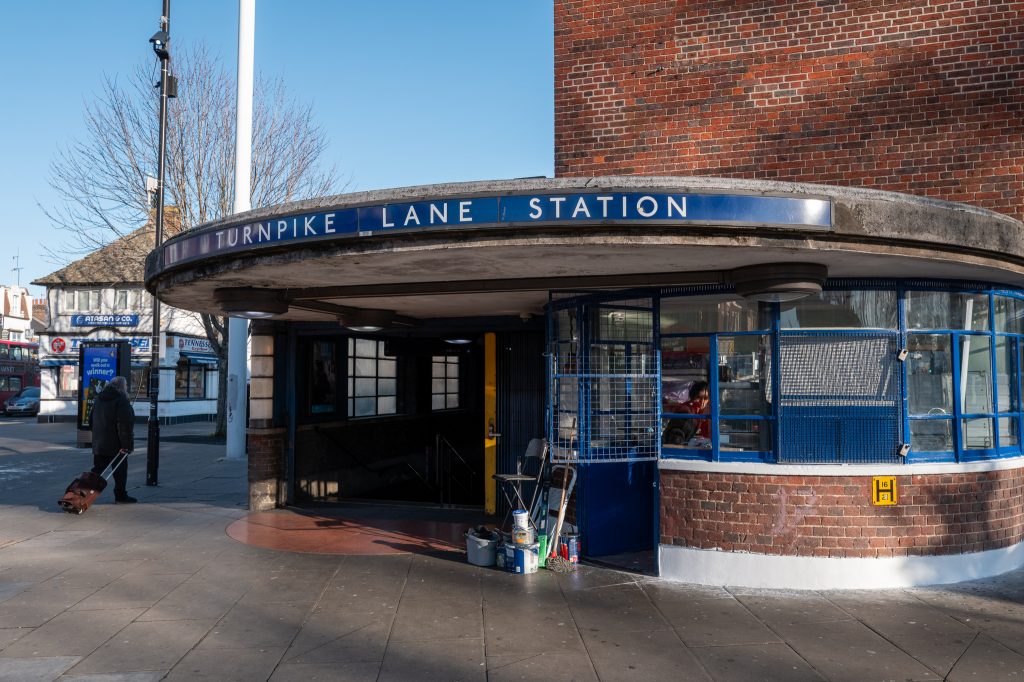
Manor House? Definitely the latter.
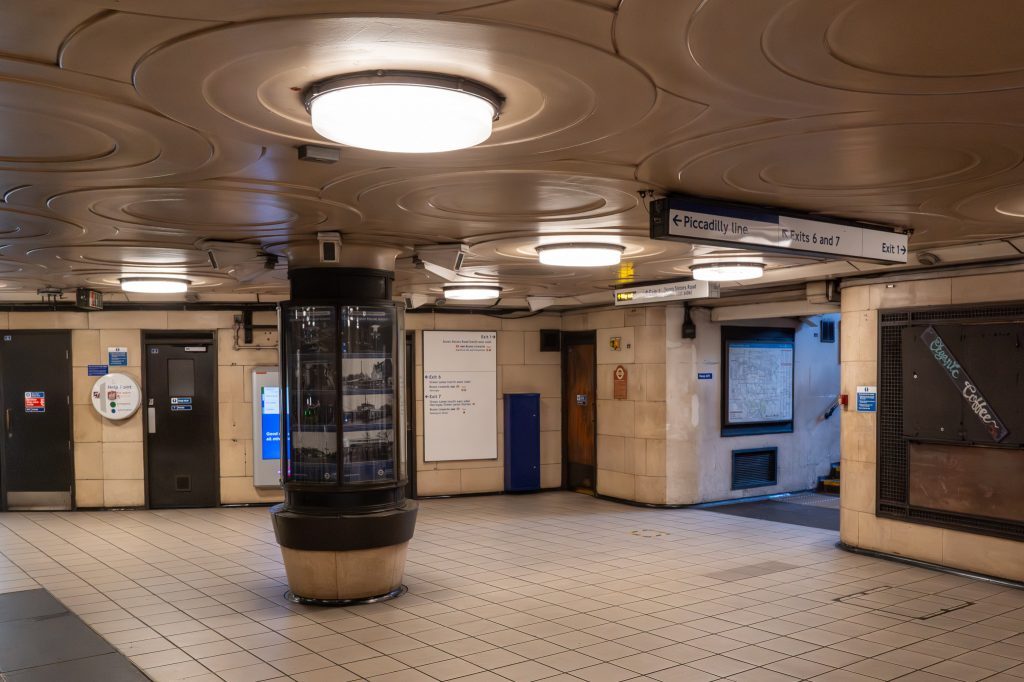
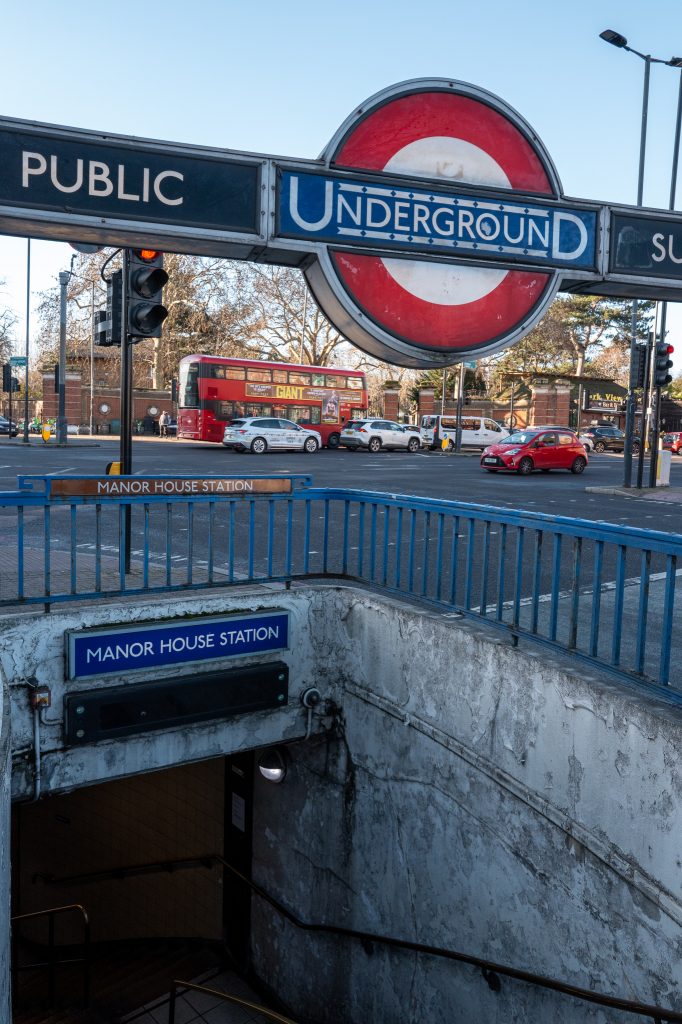
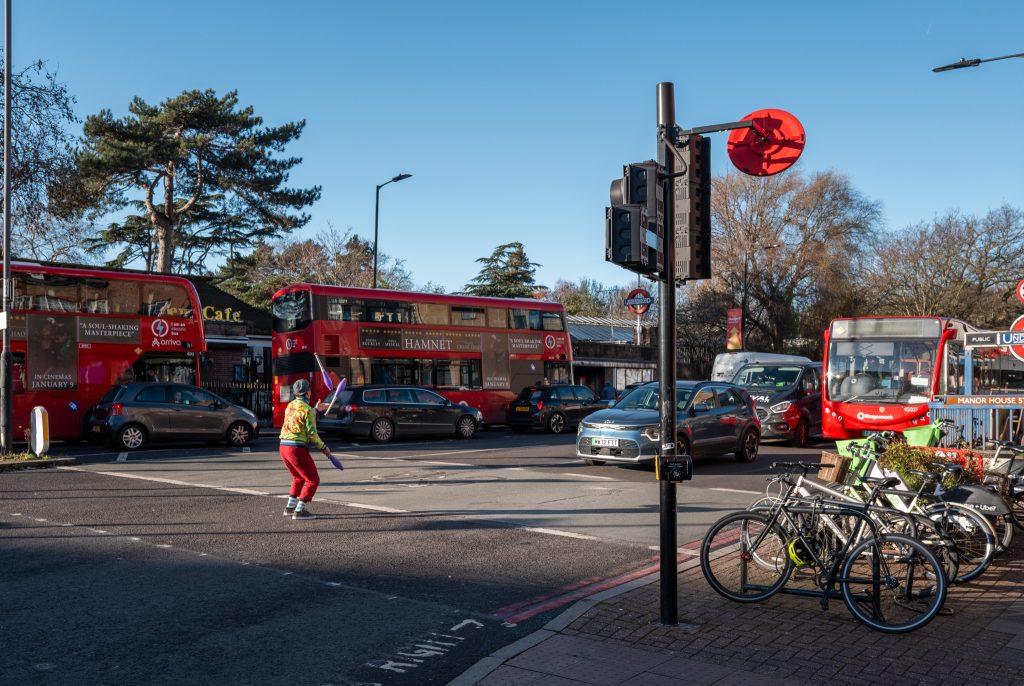
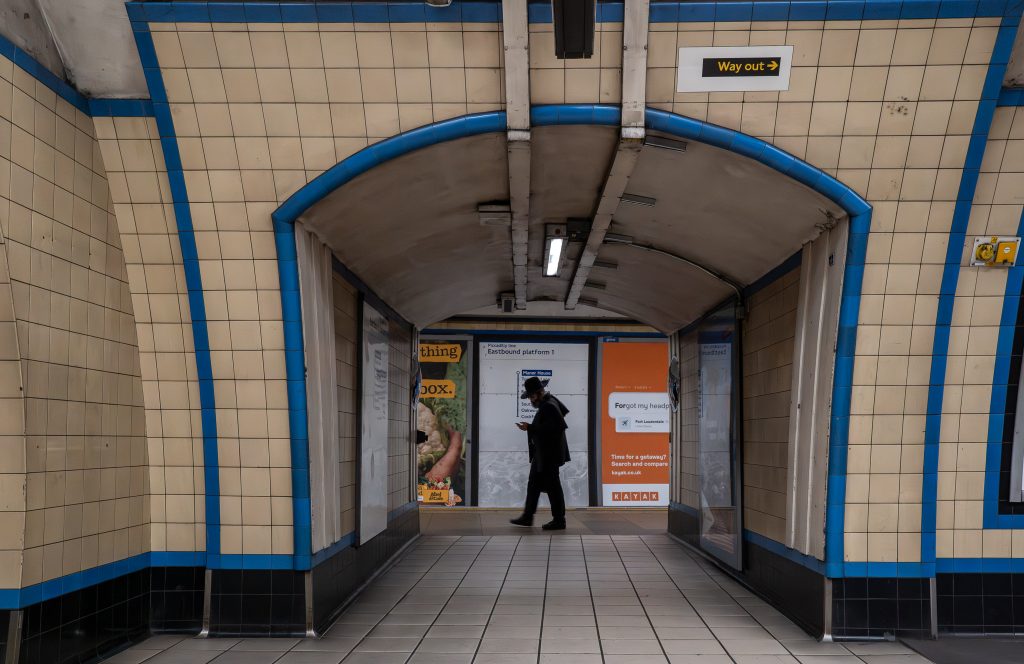
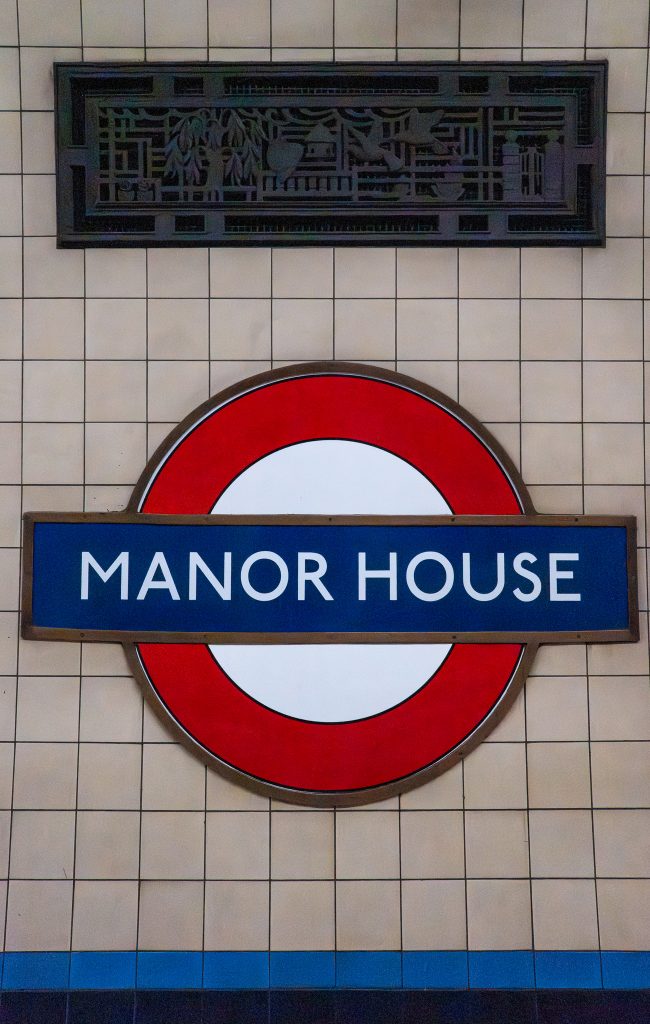
Next stop on the way into the city was Manor House and the station featured blue accents all around and the ceiling in the ticket hall was covered in a concentric circular pattern with the round lights in the centres. In the centre of this hall was an information board featuring history of the station, but it would have originally had train timetables etc on display. This set above a rubbish bin which also went all of the way around the column, in the history info it states that these rubbish bins were one of the earliest examples of multi purpose integrated features in the underground stations. I popped out onto the street for a scout around and the first thing I saw was a man juggling with clubs at the front of a stopped queue of traffic. Bus and car drivers must have sat there watching him with amazement and I didn’t see him go around with a cap for donations or anything so I wonder how he makes money from this. Probably on TikTok or something similar. Back into the depths of the station again after a quick look around and off to my final destination on this part of the journey. A change at Kings Cross St Pancras and then two stops on Circle line to Barbican.
Barbican & Slough House
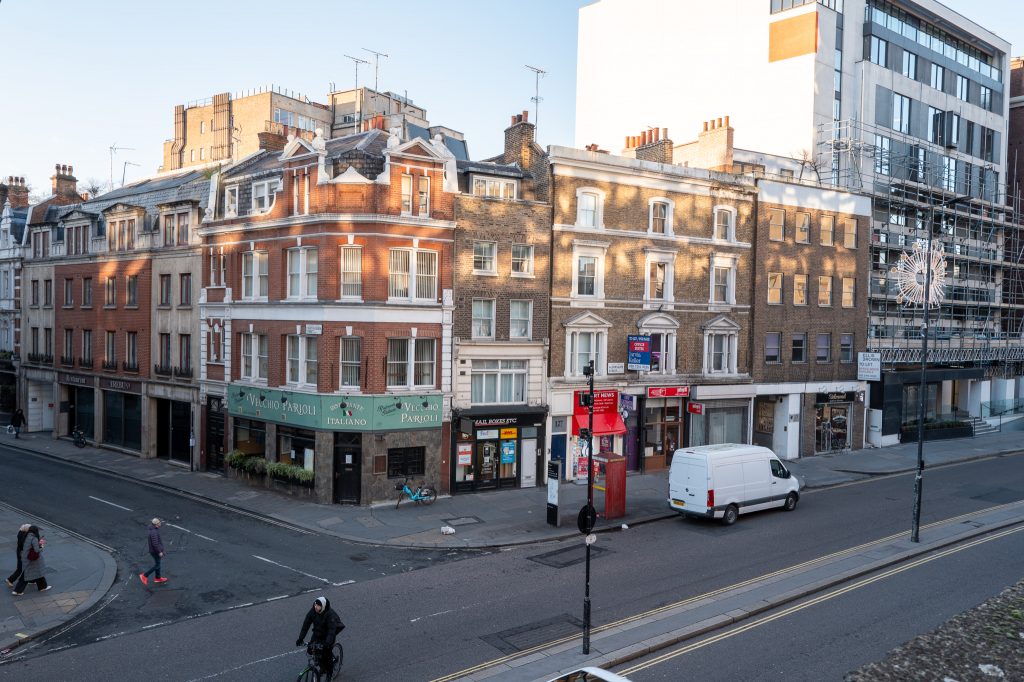
I was visiting Barbican again, to visit Carthusian Street and the home of the Slow Horses, Slough House which is above an Italian Restaurant close to the exit of Barbican Station. Its featured in five series of the TV Spy drama featuring Gary Oldman and Jack Lowden and I wanted to go and take a look as well as have an amble through the Barbican Estate with my Redscale film in my 35mm camera. I took my tripod and shutter release cable as the redscale film is ISO 125 and it was going to be dark soon, so I wanted to get some good photos, and Ive learnt to overexpose the two different redscale films I have tried. Harman Red this time and Lomography Redscale previously at Dudley Zoo.
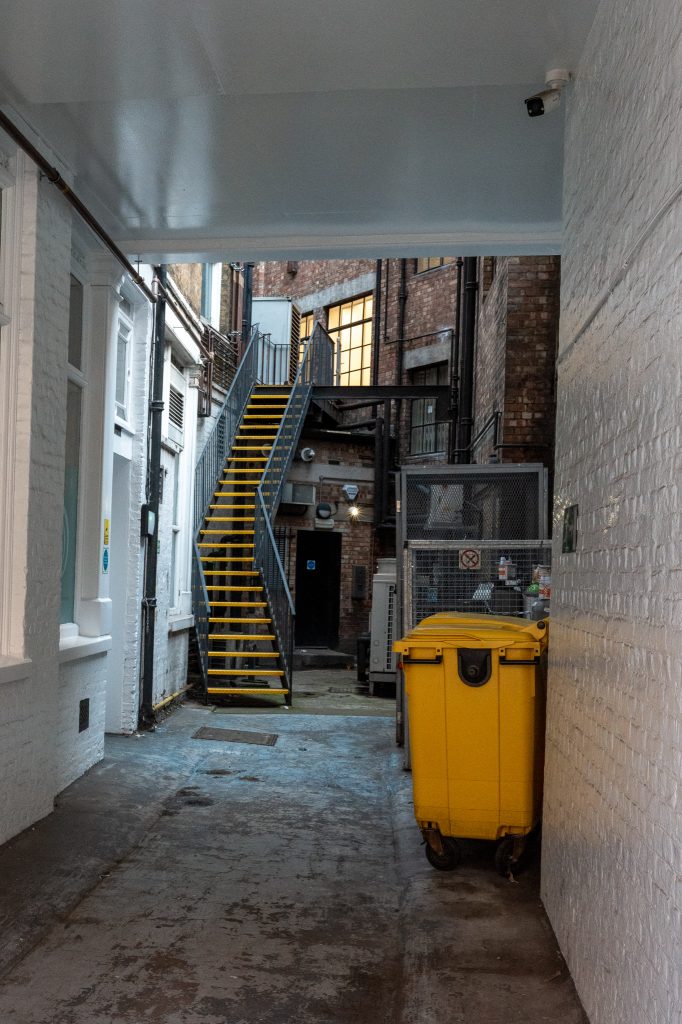
Catching some photos of the corner building and the small cafe nearby I walked a little further closer to the Smithfield Market for the location of the big metal staircase which in the show is located at the back of the cafe and offices. It isn’t, its in St John’s Street near the Smithfield so I took a stroll there to see if I could have a walk up the steps. It was gated and locked so there was no need to go any further. It did make me realise how complex some scenes must be to film though when they are filmed coming out of the building, going down the steps and then as they exit the archway they have to emerge onto the street outside their offices back in the other location. Continuity, lighting and everything must be tricky to get right.. Phew.
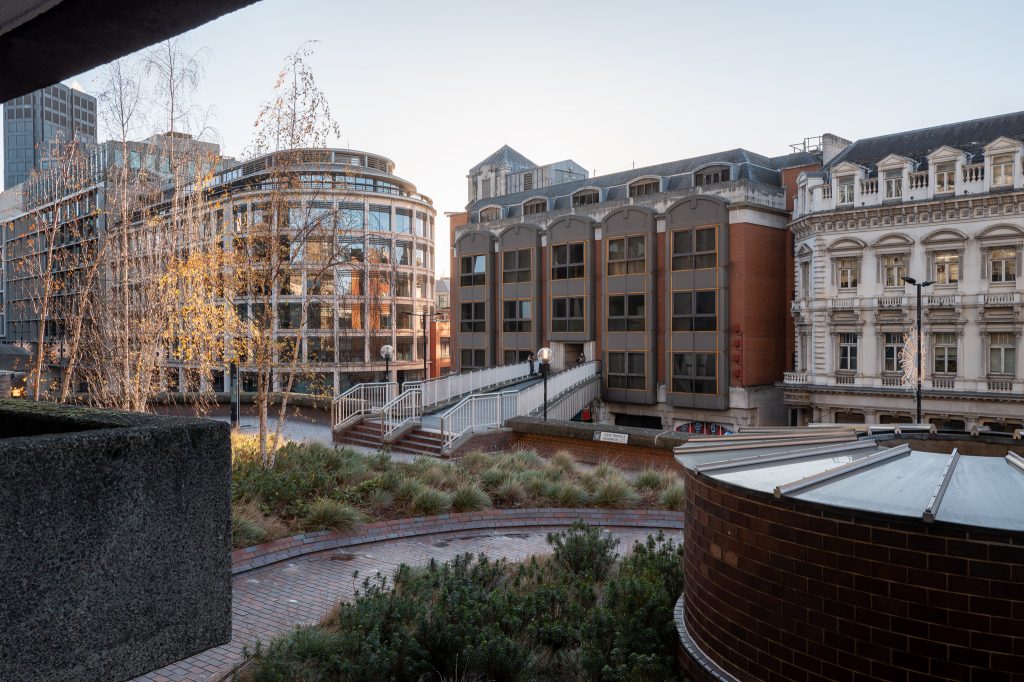
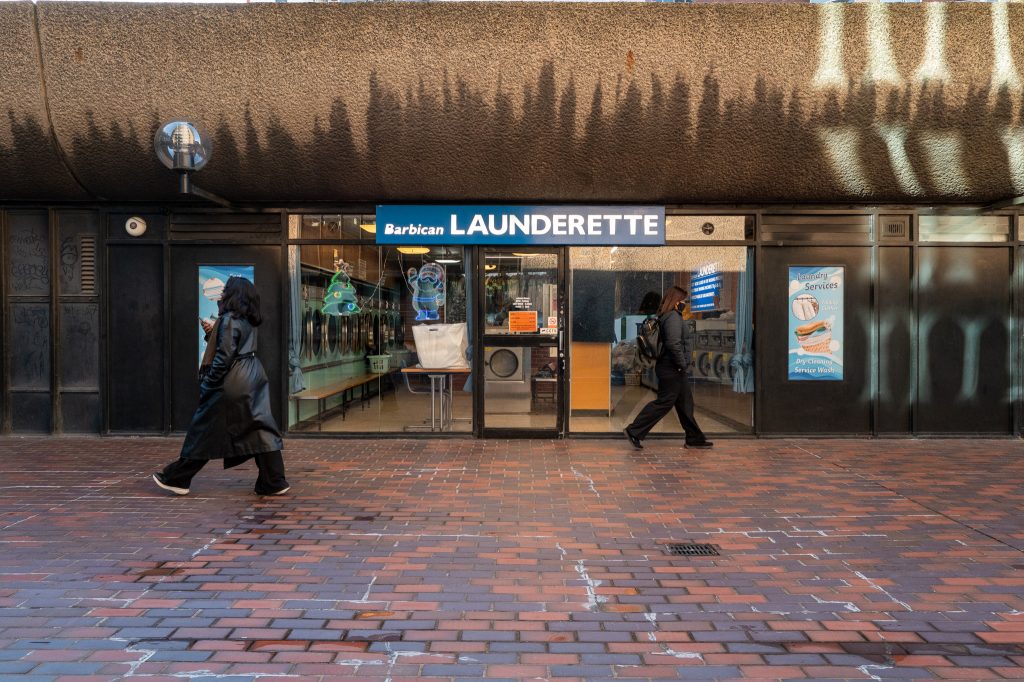
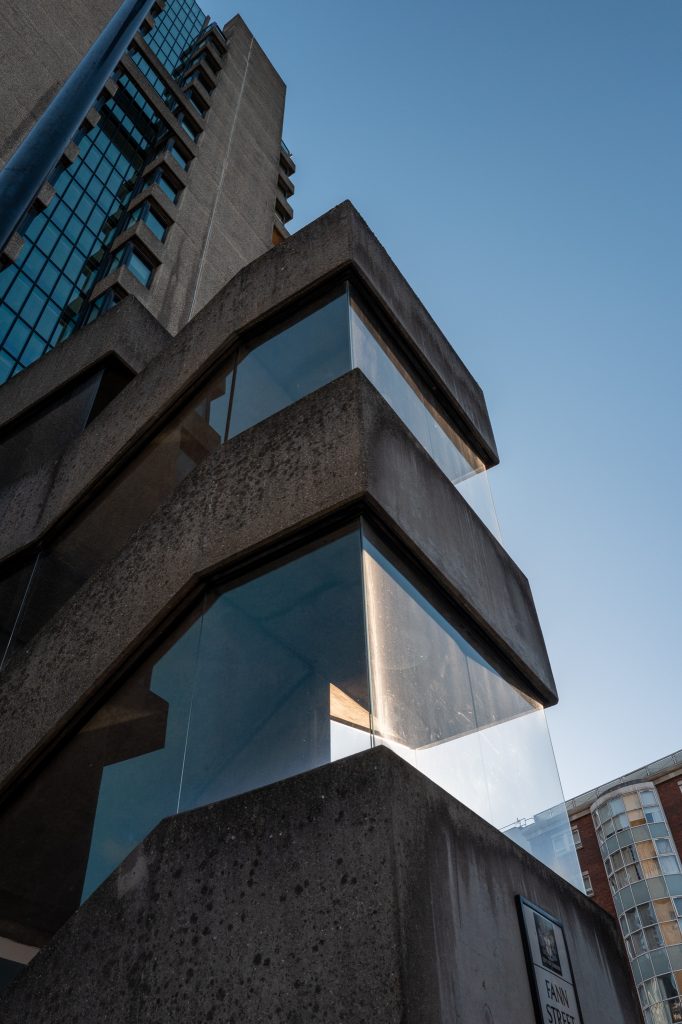
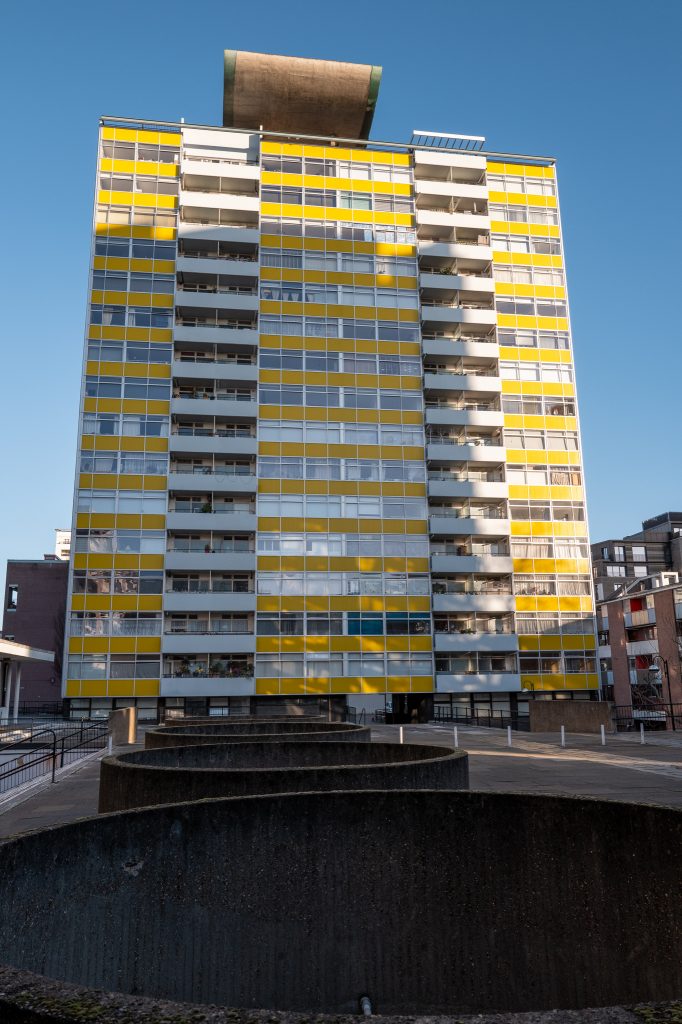
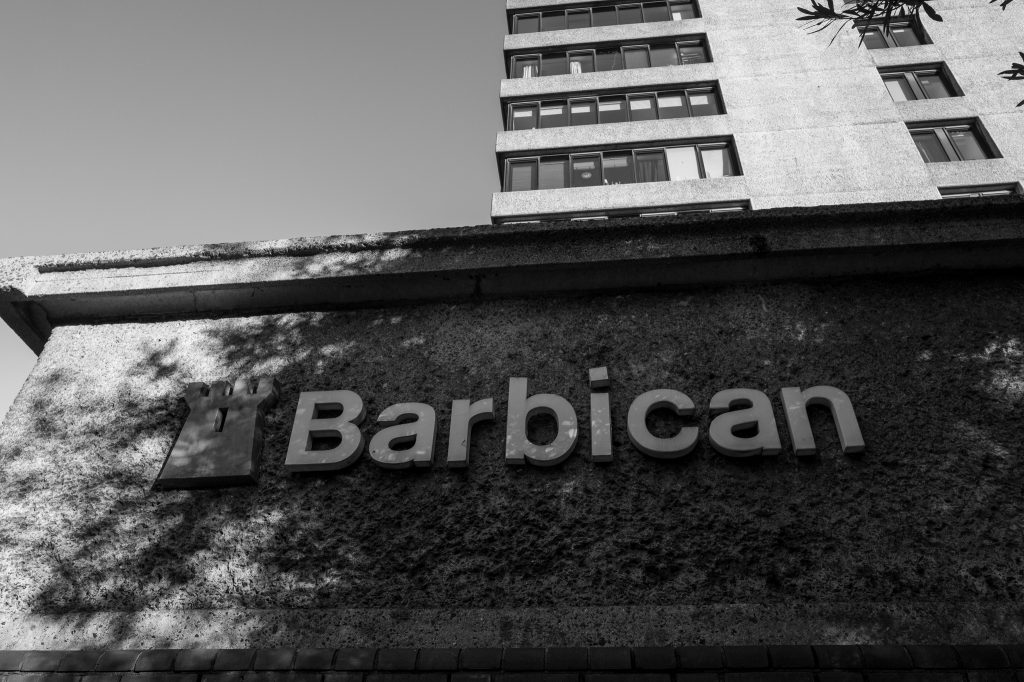
After poking around here I had a wander around the Golden Lane Estate where there is a large block of flats with yellow cladding on the outside, it stands out as a typical looking building from my childhood had I lived in London. Its a great place to have a wander around with some large circular shafts going through to the ground below and the Shakespeare pub which has also featured in the Slow Horses show. Talking of which, on the way into the Barbican Estate to get closer to the large water features in the centre I walked past a laundrette and recognised the machines inside it as those that appeared in the Slow Horses programme also, I wasn’t looking for this but noticed it and confirmed that this was indeed a location they’d used. Nice.
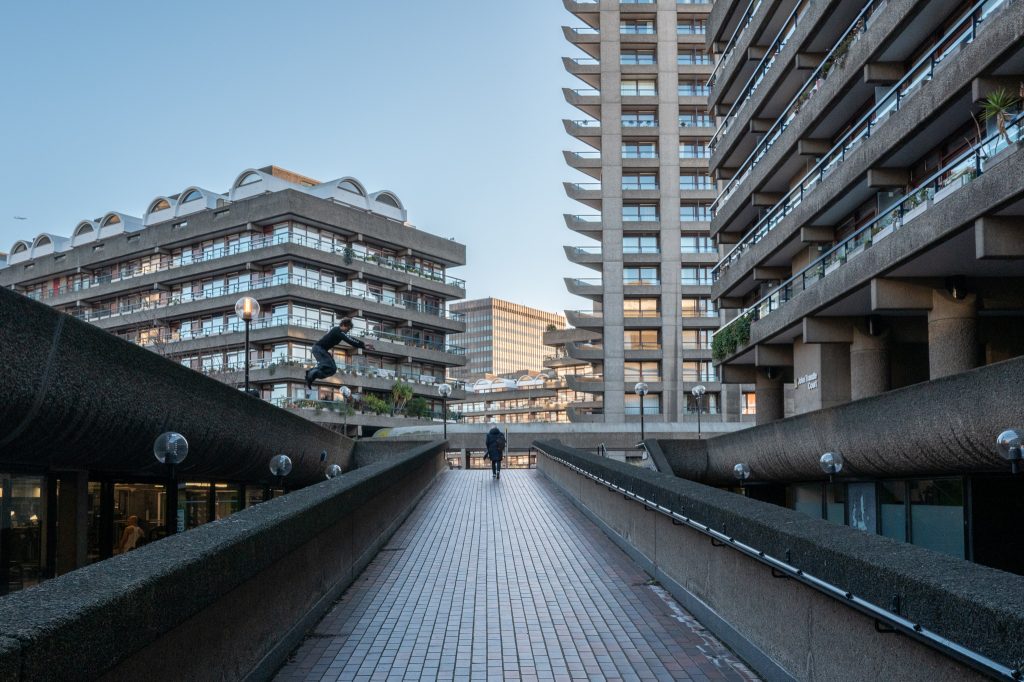
A walk onwards into the estate saw me stop for about ten minutes whilst watching a young French guy doing some parkour jumps from higher up to bounce of some lower walls and then land on the floor. I like watching skateboarding, parkour and other extreme sports where people show off skill and guts to do stuff that they probably shouldn’t. I know he was French, by the way, as I spoke with him briefly whilst he was patching up an open wound on his leg. It was about 14:45hrs now and as I continued the sun was dropping fast and creating some great shadows and contrast in the area so I did my best to capture as much as possible.
As I explored I found the bridge that comes to the “Podium” in the estate from the Barbican Station, this had also featured in an episode of the later series when River fights Spider on the “Barbican Bridge”, there was also a small photoshoot going on there with three young women taking photos of themselves in the now wonderful light. As the sun began to lower beyond the horizon though I figured it was time to give my weary legs a break and pop into the Barbican Centre for a coffee.
Blondie by Goddard
Making my way in towards a coffee shop in there I noticed what appeared to be an exhibition in the Barbican Library, an exhibition of Blondie, the American band from the 70s and 80s. Photos by Martyn Goddard in the “Blondie In Camera 1978” exhibition showed how he used natural light and played with some flash photography for extra effects, even putting two triggered flashes in the hands of the band members to appear in the final photos. It was a nice surprise to see another photography exhibition when I wasn’t expecting it, and one of the most famous rock stars and bands from the 20th century. Goddard’s photos are very intimate in the proximity in which he must have been with the subjects and some of his work was featured on album artwork. Looking at his website I can see he is an amazing photographer with a wealth of work on portraits, automotive and travel work. He seems to use a lot of accent lighting and includes movement in his work even though flashes usually halt movement in a photograph. He has some varied work and is not a photographer I had come across before.
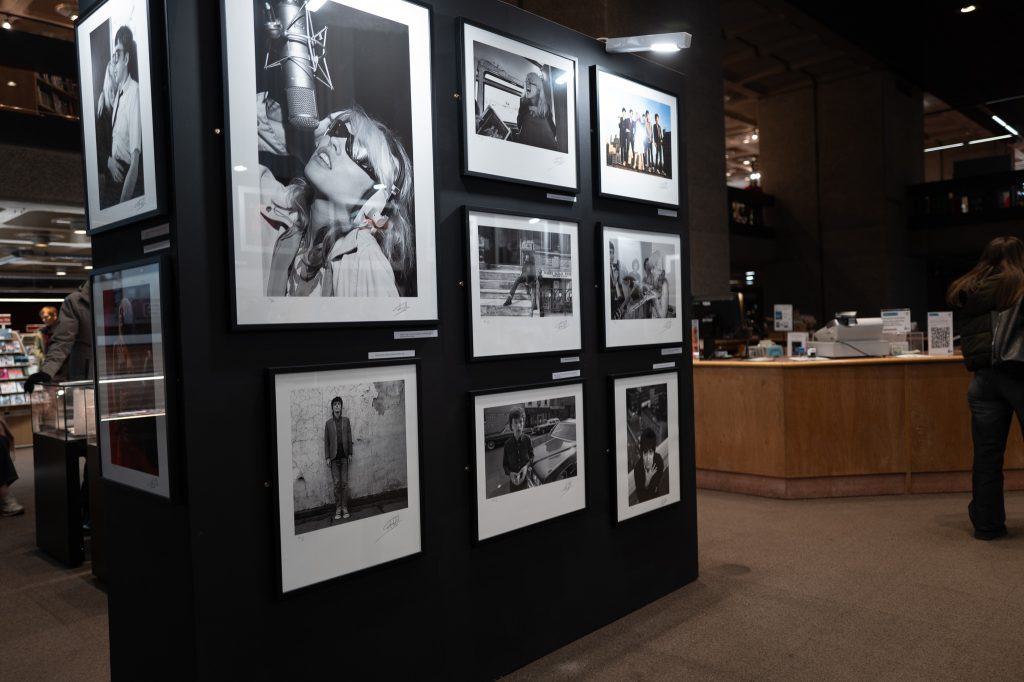
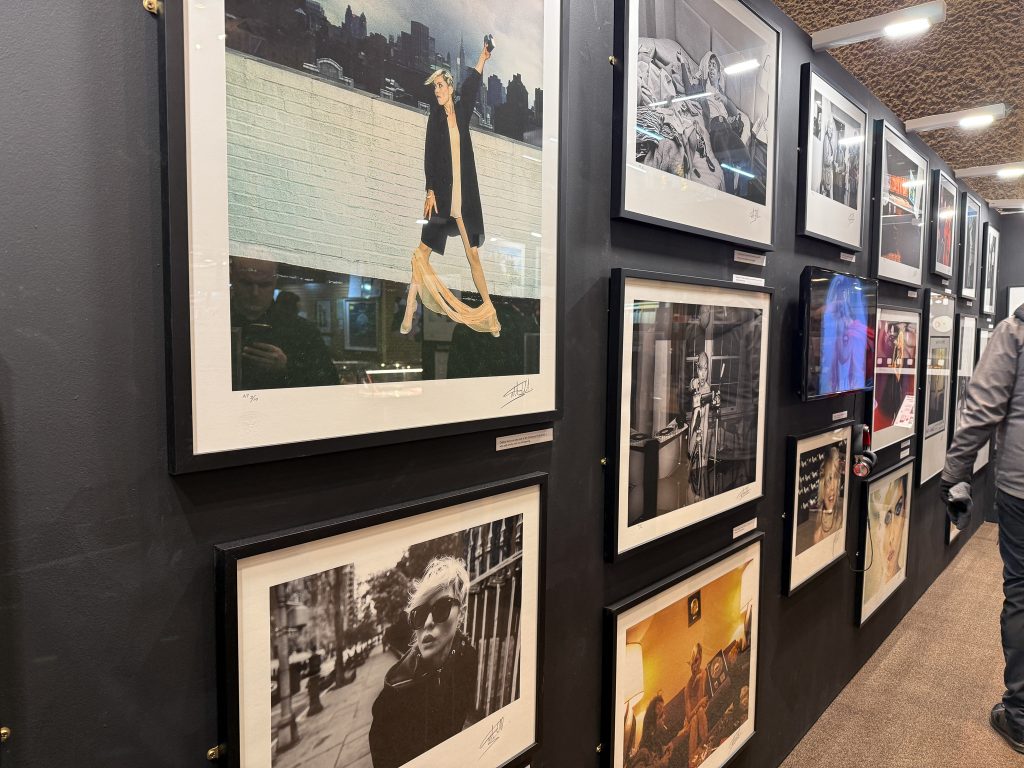
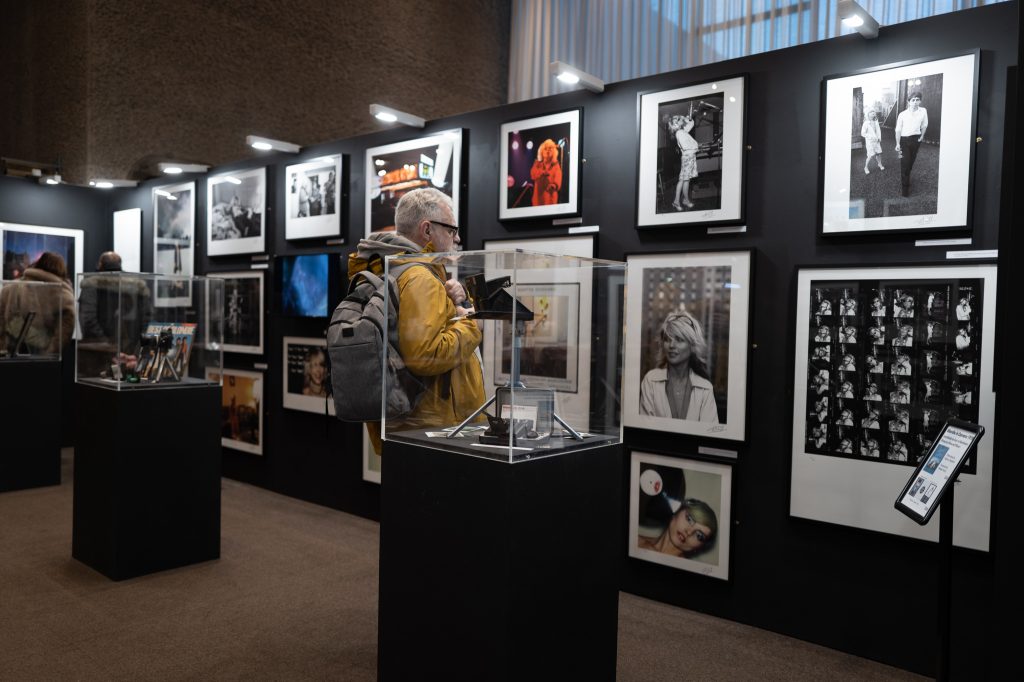
After a close examination of the prints and the exhibits including his cameras I found my way back to the coffee stand for a cup to give me a pep up for going back out into the cold. It was going to be dark and cold so I took the opportunity to warm up a little, change the film over in my M6 to the Harman Red Redscale film and get the tripod and shutter release cable all fitted to save my faffing once outside. Coffee supped and everything ready I was off out into the area near the water features and had a good stroll about trying different angles of photos of the huge towering buildings along with others of the watery pools containing fountains and other features.
Red and Blue Hour
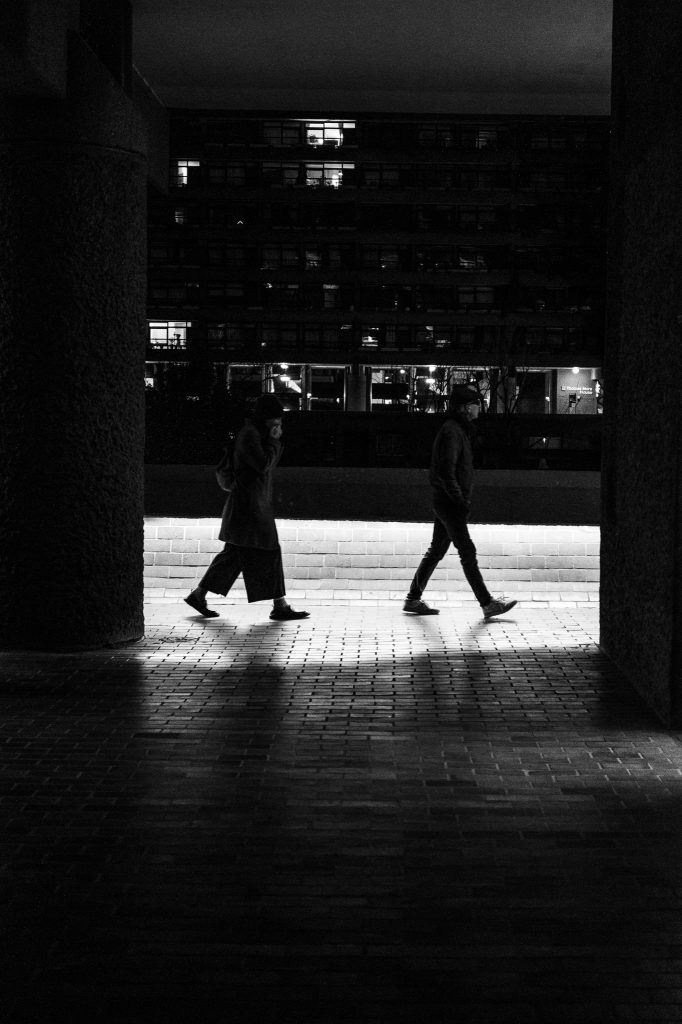
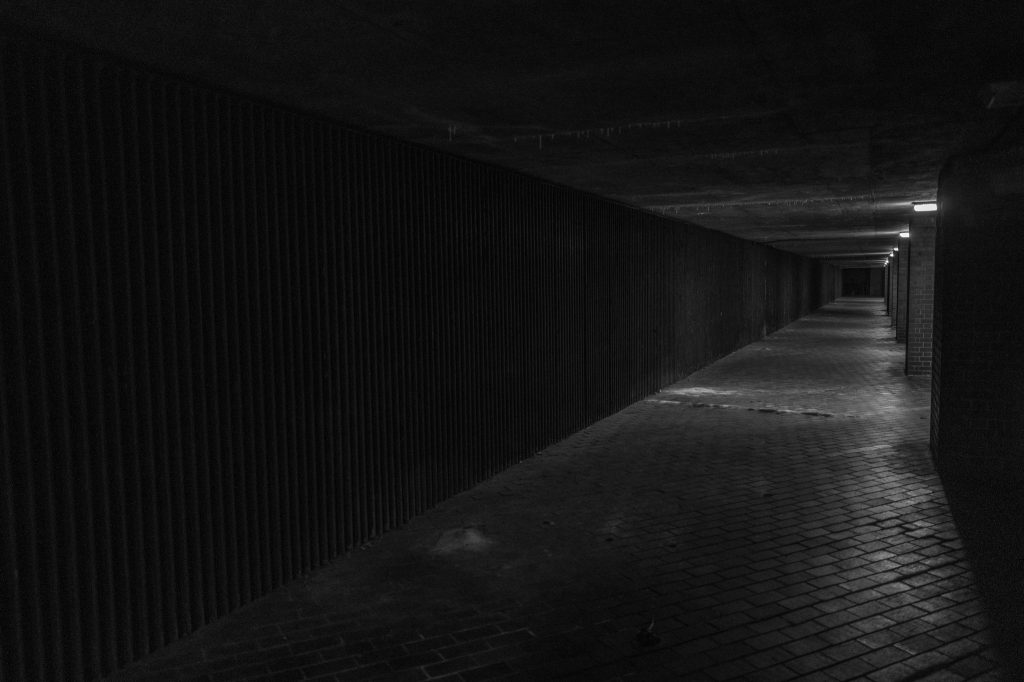
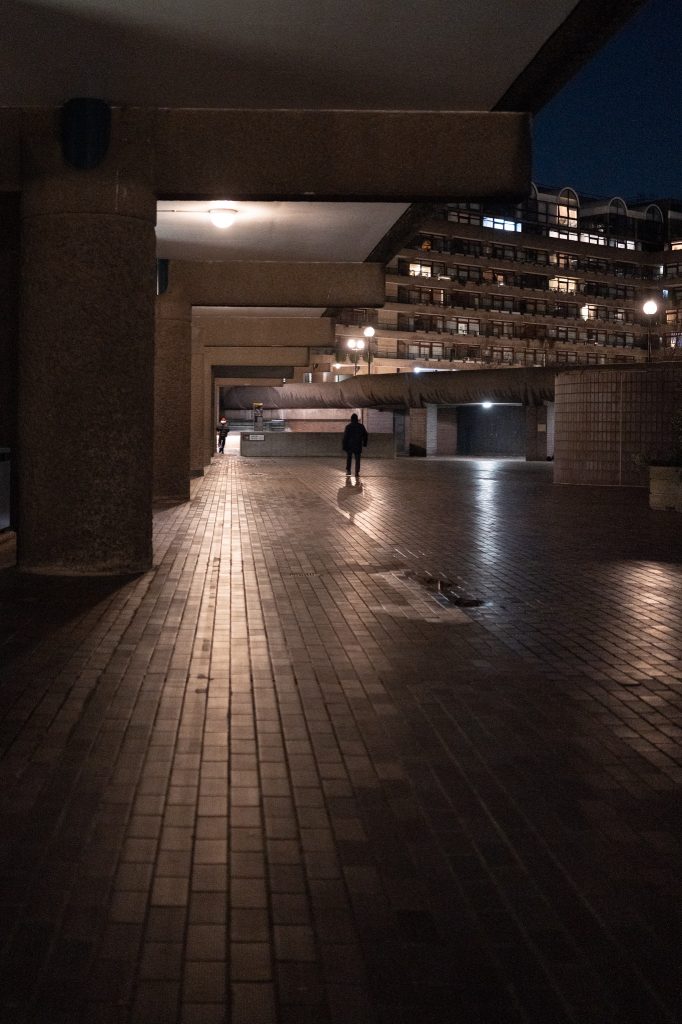
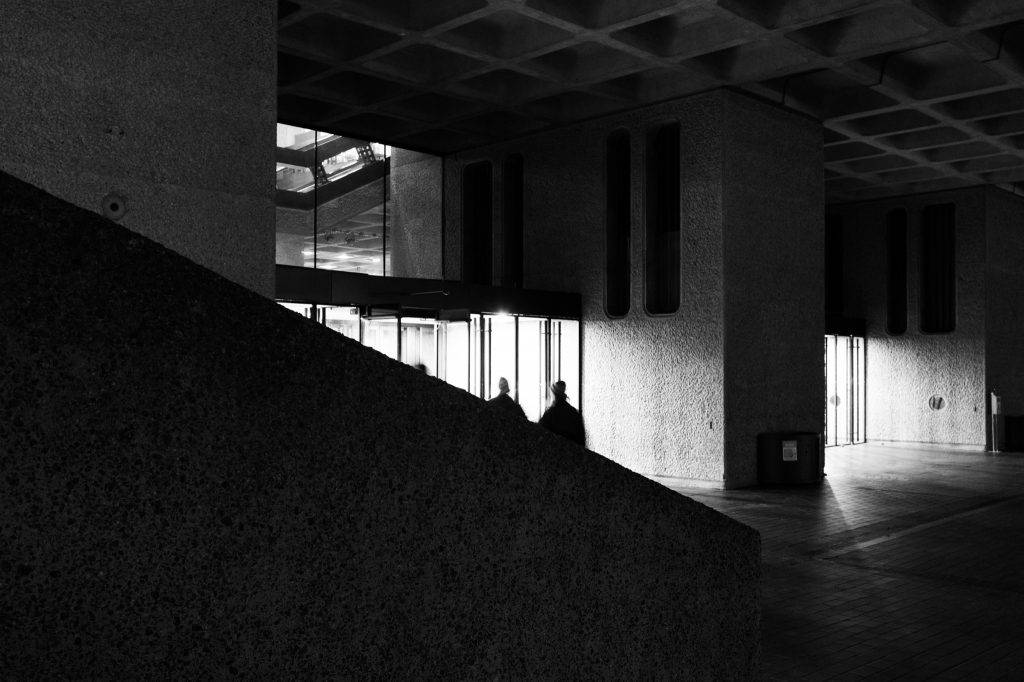
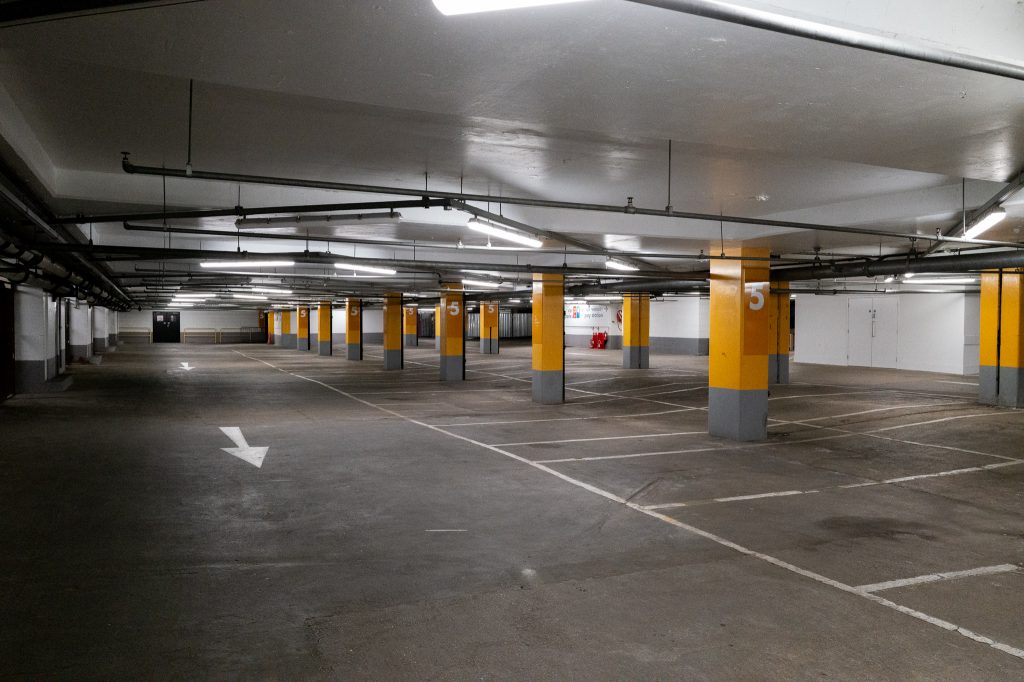
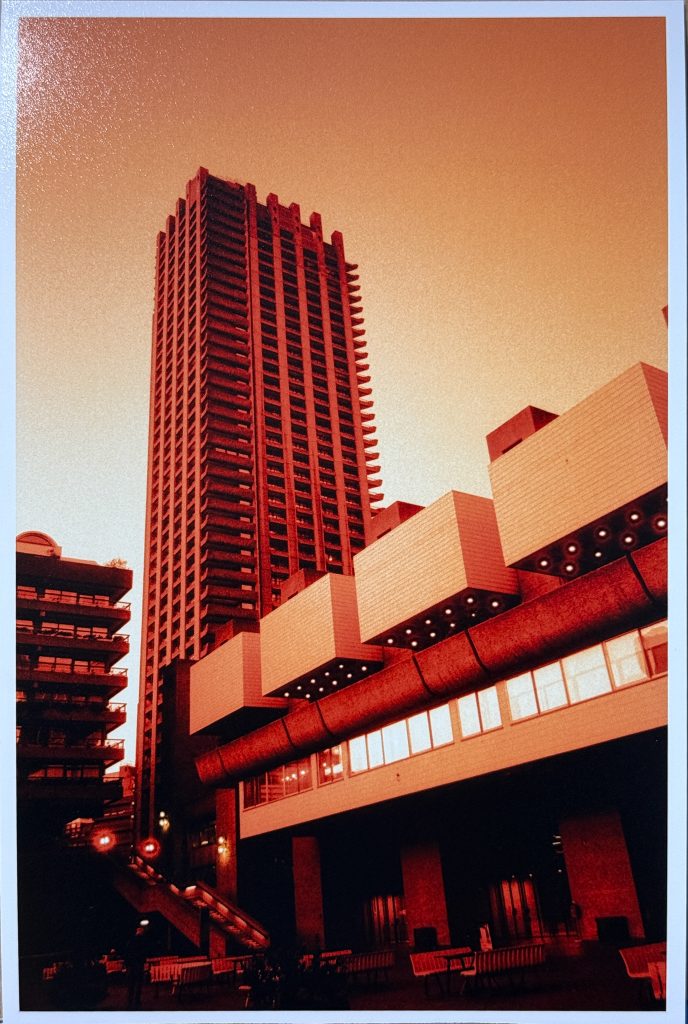
I shot multiple photos in the next couple of hours and found that I liked people walking in front of the illuminated doors with the digital camera and a long exposure, before moving off towards the tube station, all the while exploring nooks and crannies. I found an underground car park at one point too, which is normally in my wheelhouse. It was a bit bright and clean though to provide any really pleasing images. The redscale 35mm in my Leica M6 camera had 36 exposures on the reel and whilst I think I wasted about three frames through not holding the shutter release long enough I think that the rest would have come out ok. With my previous experiences of Redscale films needing a bit more light than usual films I chose to overexpose the frames by at least two stops on most occasions. I was using the light meter in the camera for some of the shots until the light dropped massively. I wanted to get a reasonably small aperture for a good depth of field in the middle of the hot spot for the lens. The lens being a 28mm Elmarit f/2.8 stuck on the front of the 35mm Leica M6. I wanted it at f/8 if possible for a good depth of image but didn’t want to go too far into f/11 or f/16 as it would be too many stops and Id be worried about reciprocity of the film if I was doing that long an exposure. I used the LUX app on my phone after the meter in the camera was just no longer useful and started using the Bulb mode and the camera shutter release cable to hold it open for around 4 seconds to 8 seconds. The app allows me to set the ISO of the film (125) and then the aperture of f/8 and it would tell me a suggested shutter speed. It was recommending 1 or 2 seconds so I’d hold the shutter open for two stops longer than it said. If it was a suggestion of 1 second I’d hold it for 4 seconds and if it said for 2 seconds then doubling it twice would take me to 8 seconds. I didn’t use a timer or watch or anything to count the 8 seconds, just a one Mississippi etc… we’ll see how these photos come out in another post. I did have a post of scanning them in when I started back at Uni in January here, but the scans failed to come across in the OneDrive sync for some reason. They came out ok in the prints I had back from AG Photographic though.
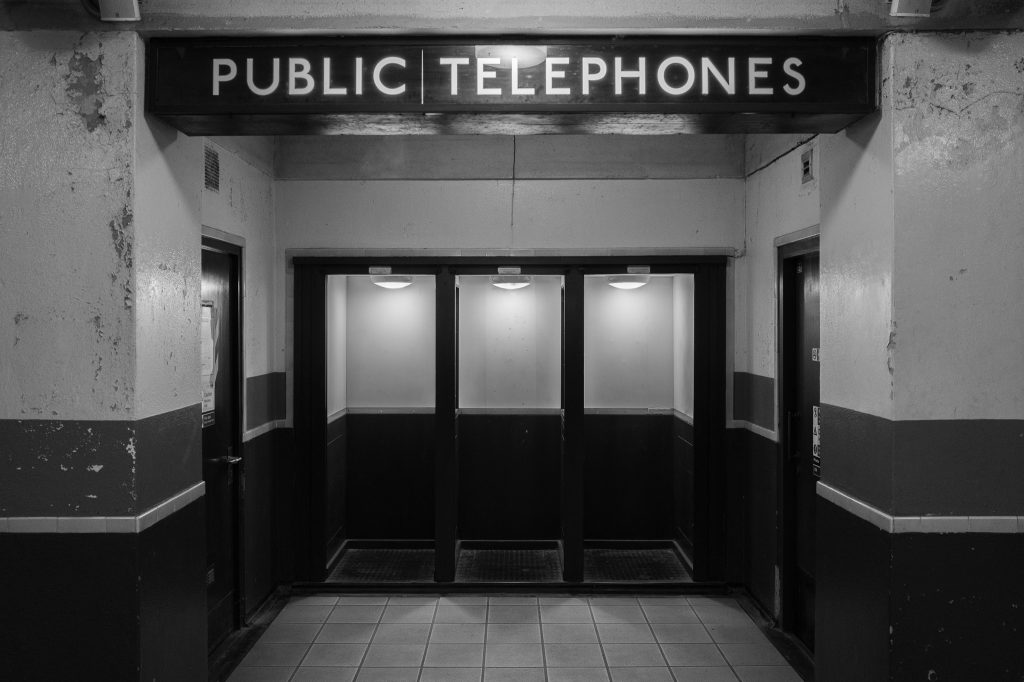
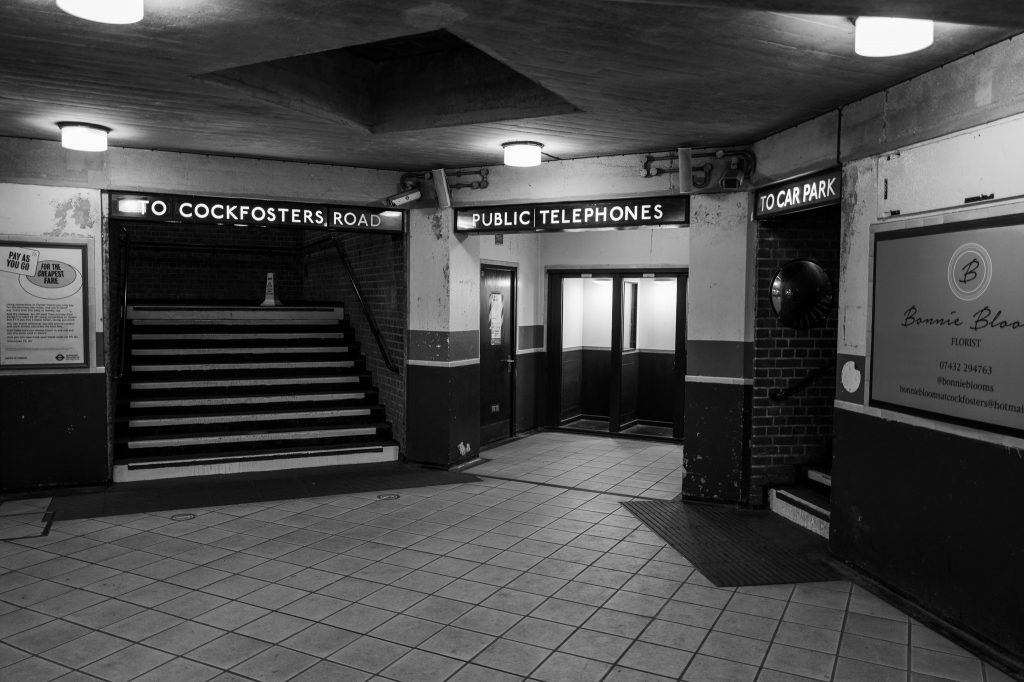
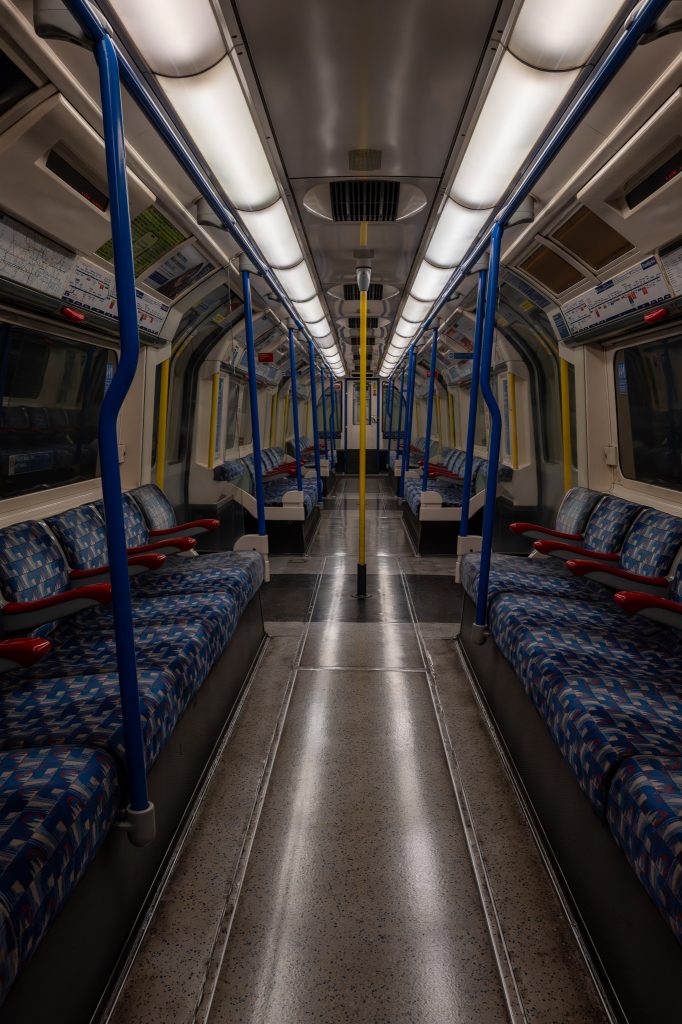
After getting to Barbican Station it was on the train to Kings Cross St Pancras again, before switching to the Piccadilly Line to head back to Cockfosters and the car parked there. There were a couple of points where the carriage emptied and I tried to capture some photos of an empty train and even a little video showing the lights flickering on and off as it moved towards its final destination. It was around 6pm when I arrived at Cockfosters and then got into a couple of podcasts on the way home, the first of which is Kermode & Mayo’s Take, (Hello To Jason Isaacs) followed by Inside Science and More Or Less.
Conclusion
Considering this trip was inspired by a couple of different sources, Slow Horses TV Show and the book Modern Buildings In Britain, I had an enjoyable day. The stopping at the multiple stations was an experience I don’t get to do, sure I stop and move around tube stations over the course of a day in London and love stations like Westminster and Embankment for concrete stuff and Baker Street for old school architecture but it was great to stick to a theme with the six stations I visited. Exploring the designs of Charles Holden and the way he fit the stations into the surrounding locations with buildings suitable for the infrastructure that was required. There is something also very aesthetically pleasing about the simple design with Frank Pick’s commissioned original text typeface by Edward Johnston. It was originally called Underground Railway Block in 1913 and is now known as simply Johnston. It appears on the signs around these stations and that along with the design of the red white and blue roundel provides a nostalgic flavour. The book Modern Buildings in Britain by Owen Hatherley was also responsible for my trip to see the colleges in Cambridge in this post.
The trip to the locations of the Slow Horses filming spots was also entertaining and great to see these places in the flesh. It’s good that the series of programmes can show London in all of its different forms without overly cleaning it up or dirtying. It’s also great to try and imagine the work that goes into the setting of the scenes for the filming and then how it all knits together. The filming is done in a realistic way without hyperbole or exaggeration in most cases when it comes to these locations and it fits right in with the Barbican estate that I love photographing.
The Barbican estate is a great place to wander around and make photographs of, I could spend days ambling around indoors and outdoors spotting the random design features that came from the desk of design agency Chamberlin, Powell and Bon. More info can be found on the Barbican Facts website, some of it really interesting too. I didn’t know until writing this that they dyed the water in the lake to maintain a sense of depth, as it is too shallow to dig down any deeper due to the Undergrounds Circle line being just beneath the surface.
It was also a good chance to go out with a film camera and capture some analogue photographs using long exposure of the amazing architecture on the site, seeing how it reacts in the darkness with streetlights. I have only used redscale film in the past during a brightly lit day at Shirehall, Dudley Zoo or University of East Anglia so the guesswork on needing two stops more light was helpful to prove previous lessons learnt. Also trying to use this little 35mm film camera in the dark with awkward positions to get to the viewfinder was challenging. With my digital I can flip out the screen or even wirelessly display EVF on my phone if absolutely necessary. Using the LUX app on my phone was ok but I think to do a proper job of choosing the correct exposure a spot lighting meter might be useful. I’ll not be buying one just yet as I don’t do enough of this film photography to justify spending the money on it yet. The in built metering and the phone app, maybe even using the digital camera alongside those, offer some methods of gaining the information required for correct exposure.
I’ll share the images in another post soon so keep an eye out for those, one or two of them may come in handy for the rest of the uni project work if I stray from photographing the Shirehall as my main subject.
Be First to Comment