Tuesday 27th October
Parked up in a good spot on the road next to the MK Building and headed inside for a bit of a tutorial catch up with Euripides before typing up some of my blog entry on Niagara Falls section of the US road trip.
Euripides asked how I was getting on and I shared a few more photos with him that I’ve captured since the last review and he suggested I concentrate less on the aerial photos for now and capture some images on a camera to fill out the portfolio a bit. I didn’t spend a long time talking to him as I had a stinking cold and I didn’t want to pass it on to him.
Library
I walked over to the library past an exhibition that my course mate Claire had some images in, of a sports charity that she photographs for. There were images of the people organising the clubs and then the people taking part in the activities at the clubs. It all seemed a very worthwhile enterprise and looked to be doing some good work for the community. The photos were great too, I couldn’t tell which were Claire’s because there were some of Kirsty’s work and another person whose name I didn’t recognise.
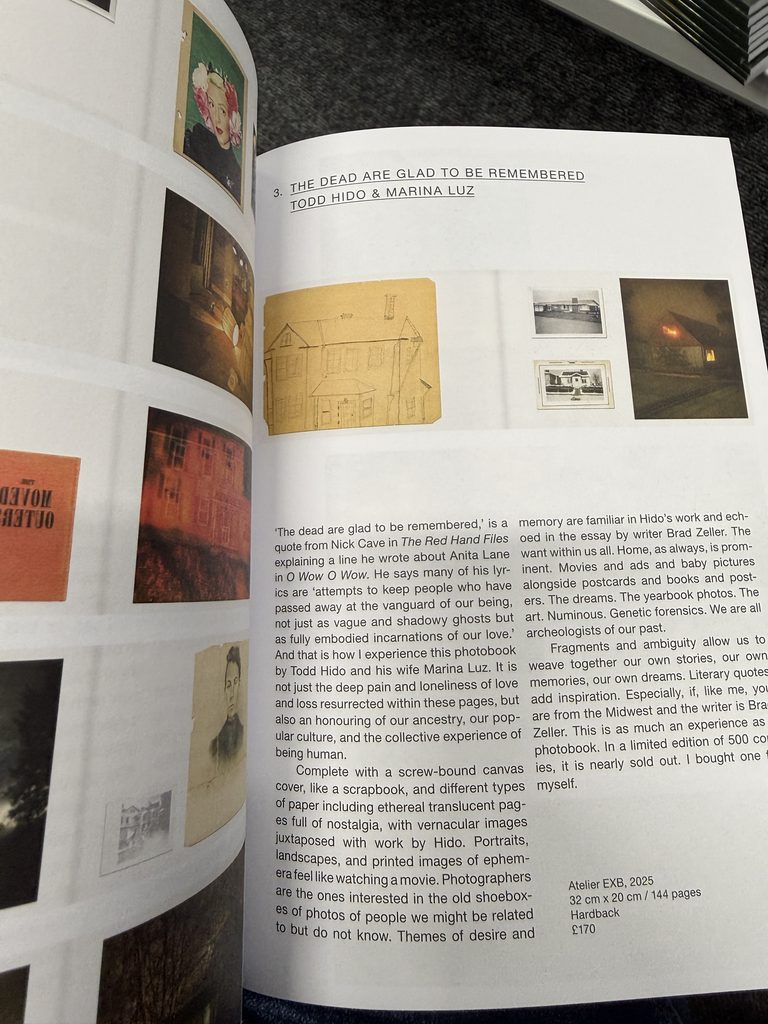
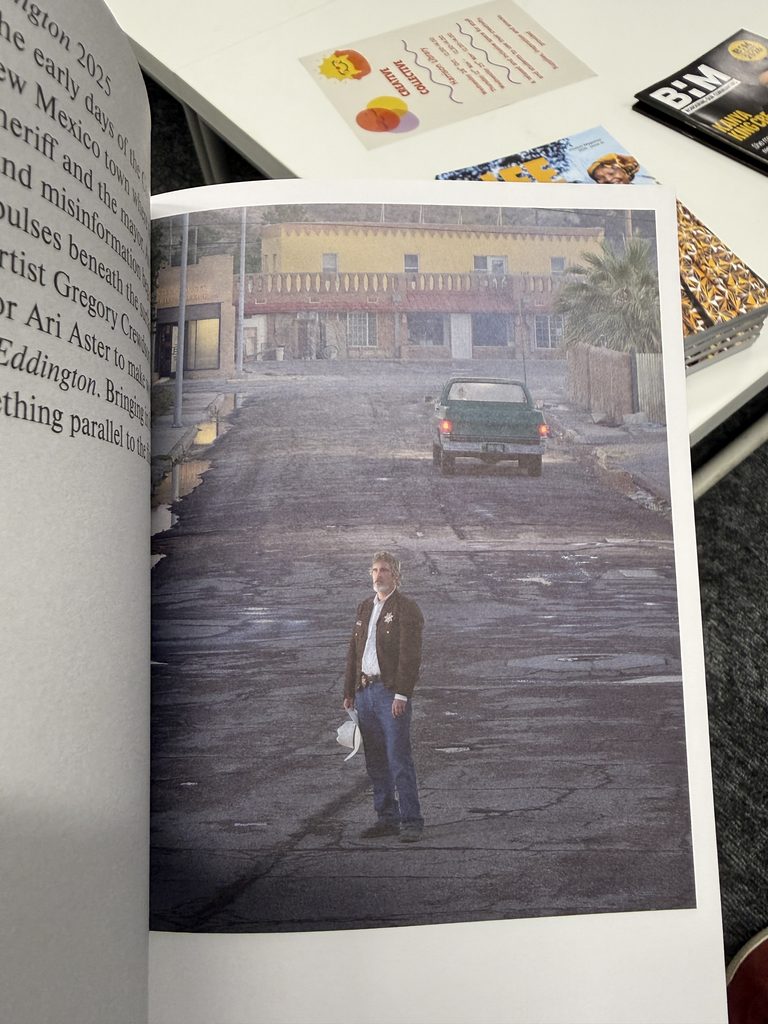
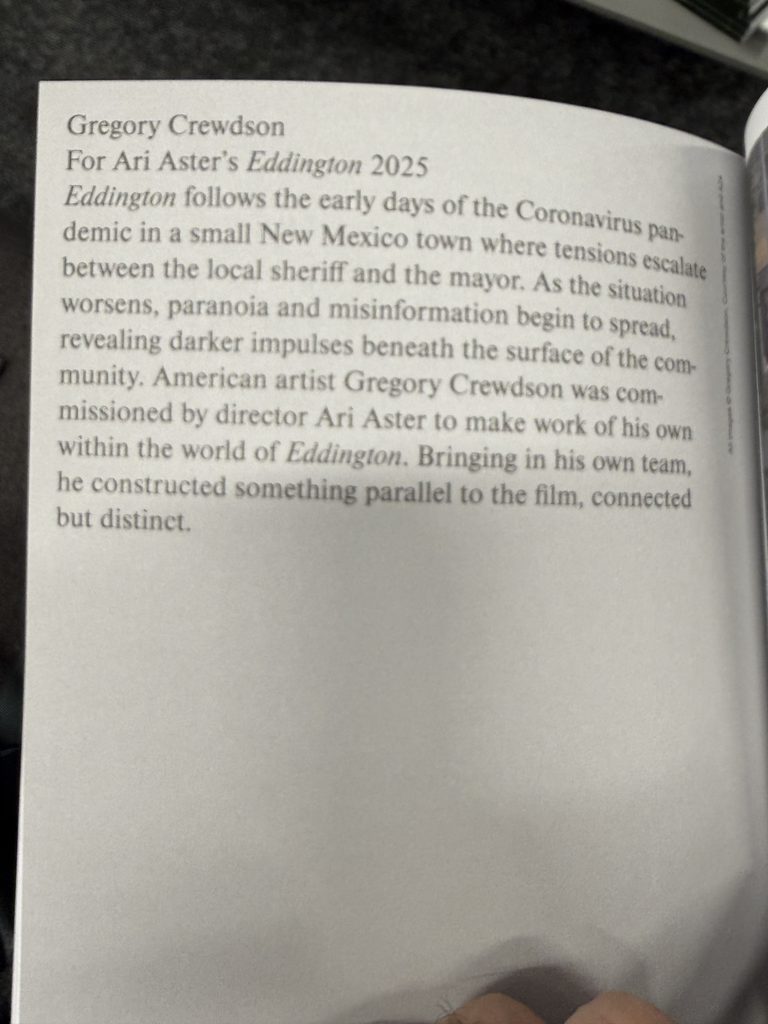
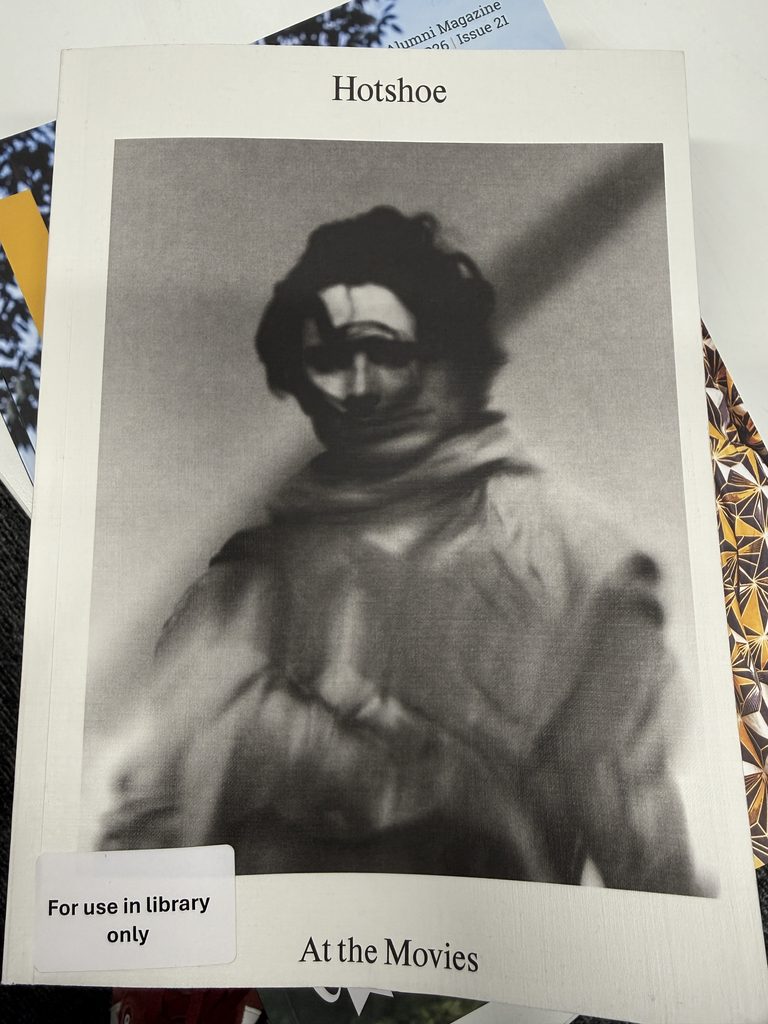
Once in the library I sat in the ground floor area where I read Hotshoe Issue 215: At The Movies. It was a magazine about photographers working around movie sets with the directors to capture some great photos of the actors and the surroundings.
Then up to the second floor to try and find some exhibition catalogues but not finding any.
Instead I picked up and read three books, the first of which was what I found whilst looking for exhibition catalogues.
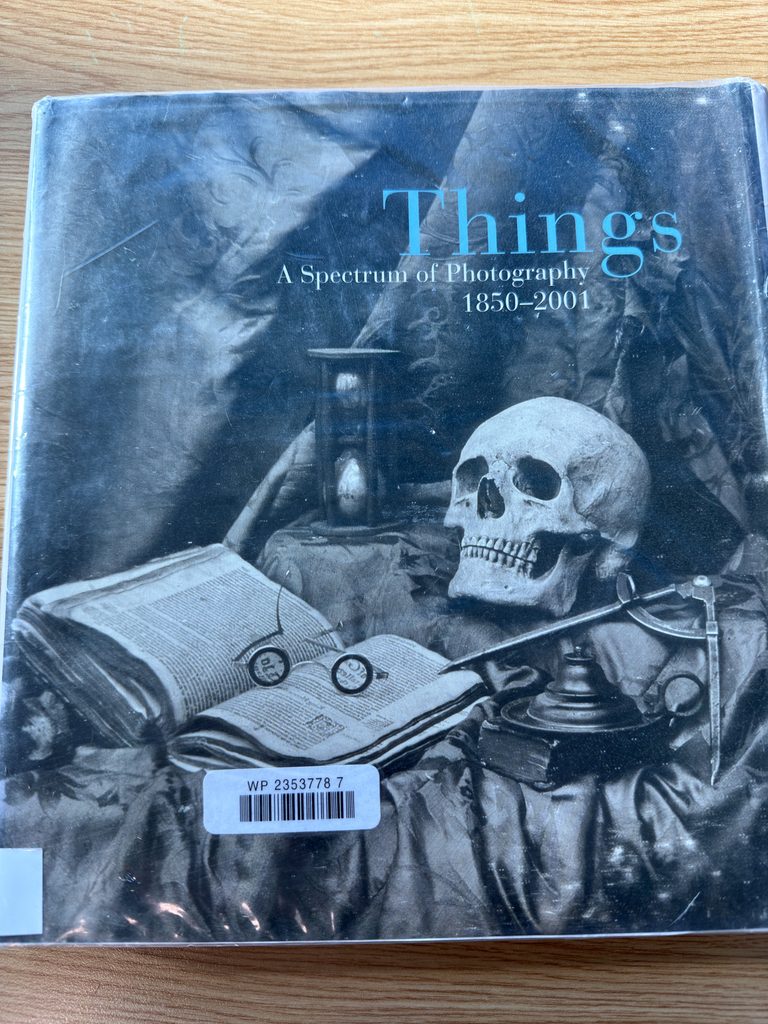
Things, A Spectrum Of Photography 1850-2001 by the V&A 779THI
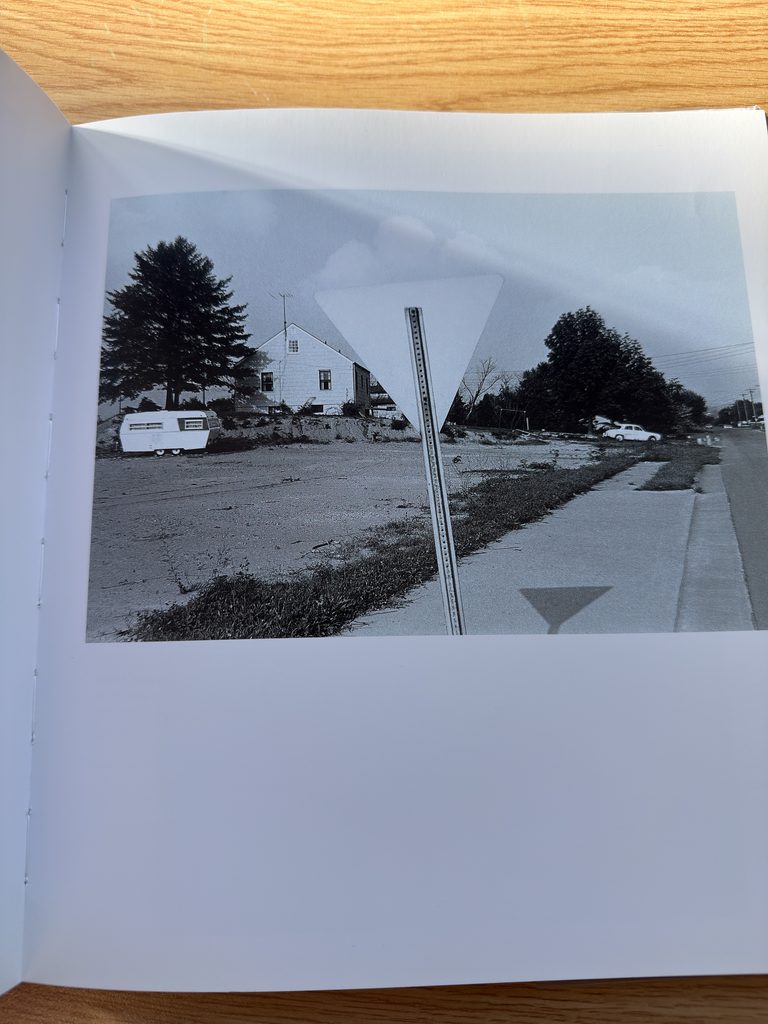
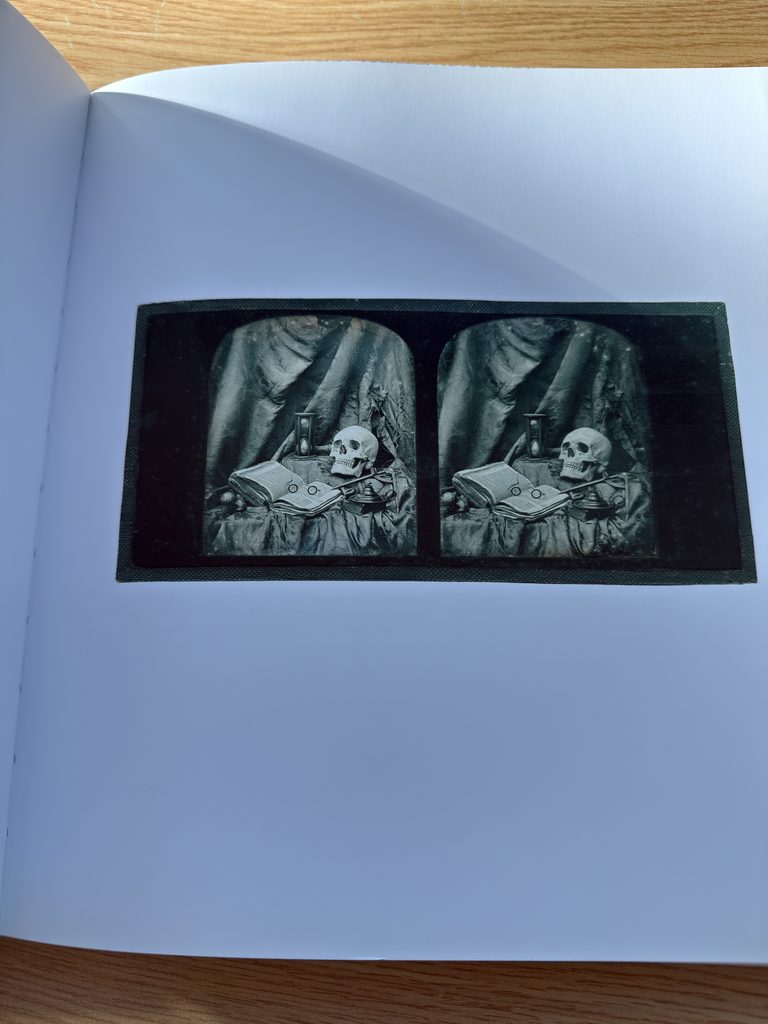
This book was interesting in the fact that it showed how objects, or things, can be considered as something else maybe even artistic. It shows that the many different objects that exist can be seen in different ways. Ordinary things become extraordinary things, one of the images in the book is by Lee Friedlander and the road sign in it appears to have clouds balanced atop it. It looks almost like a cocktail glass or even an ice cream cone etc. Also a T.R. Williams stereoscopic daguerreotype that is held in the Brian May collection of a still life showing a skull, a book, a pair of spectacles and many other items that feature in the image as a coded symbol in the way of semiotics. I can imagine that the exhibition would have been a superb one to see but unfortunately this book shows only the works on their own and never any of the installation photos.
Shaped By War by Don McCullin 779MAC
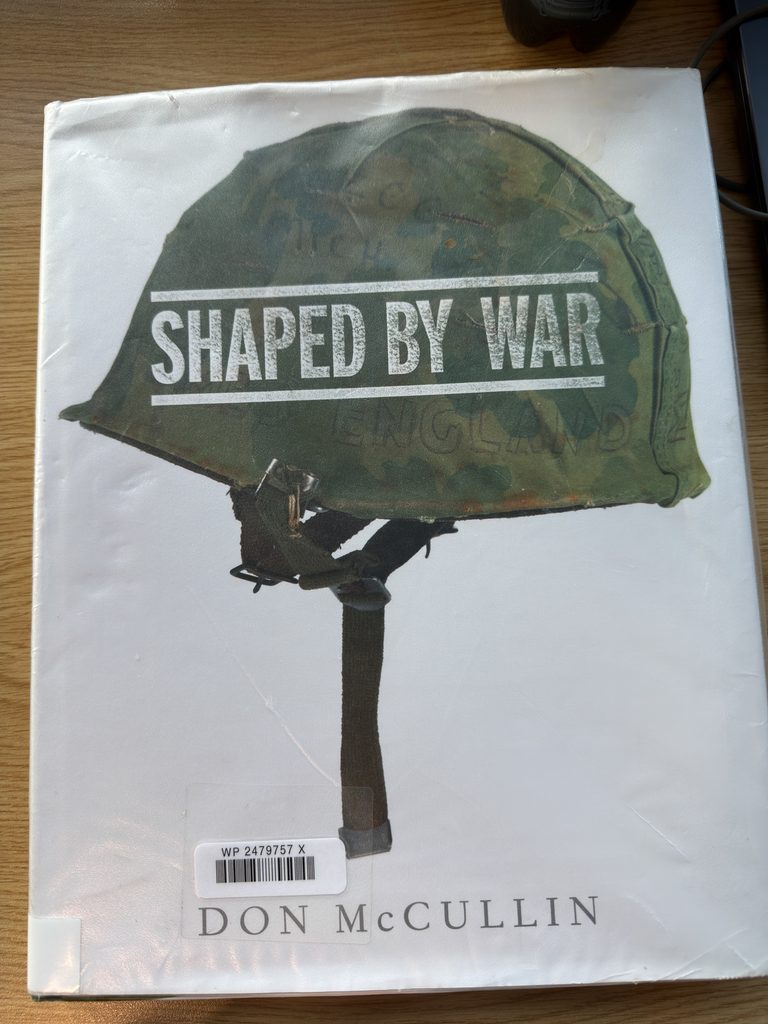
The next book I had picked up was a book about war photography and Don McCullin after reading his book “In England” a couple of weeks ago. It is the story of McCullin from his early years and his struggles as an evacuee during the world war. He explained how he began working and was first noticed for a photograph of the “Guvnors” in a war torn part of London. He explains how he found his way into conflict photography and then all of the places he had been including Vietnam, Cyprus, Beirut, Middle East and many other conflicts and he explains how the MoD stopped him (in his opinion) from going to cover the Falklands conflict. It was interesting that his Rolliecord 30 camera was pawned and then his mum bought it back for him etc. The photos in the book are shocking in some regards but reflective of actual events. It’s an impressive collection of photographs and I can see why he is considered a serious war correspondent.
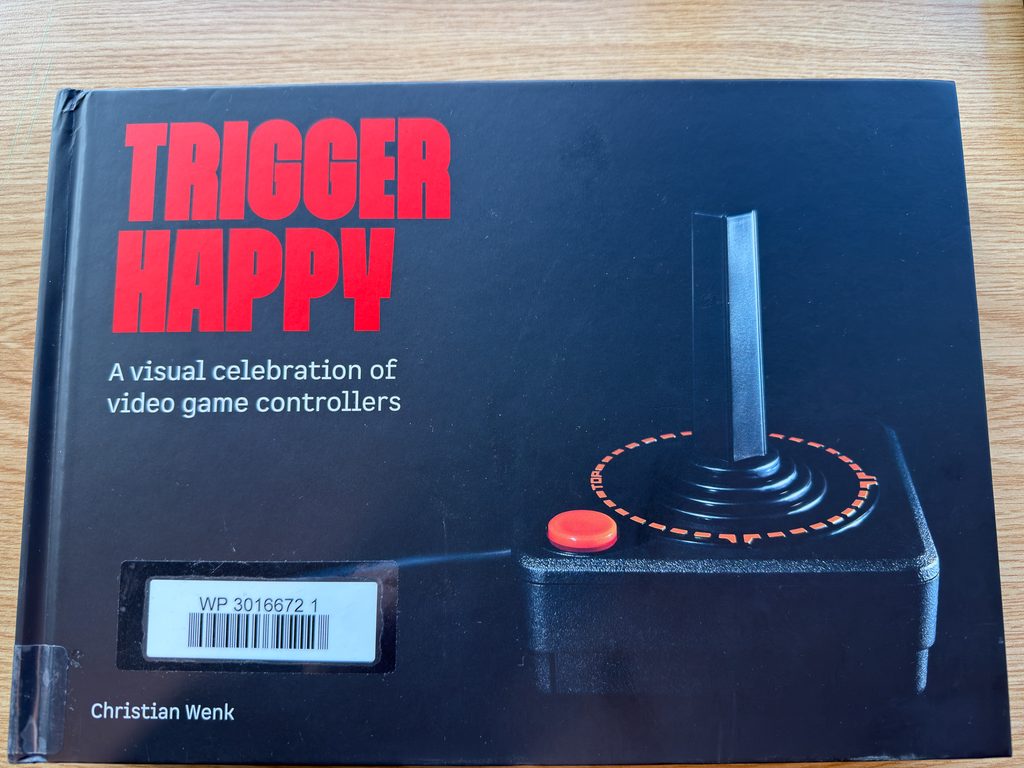
Trigger Happy, by Christian Wenk 794.802 84 WEN
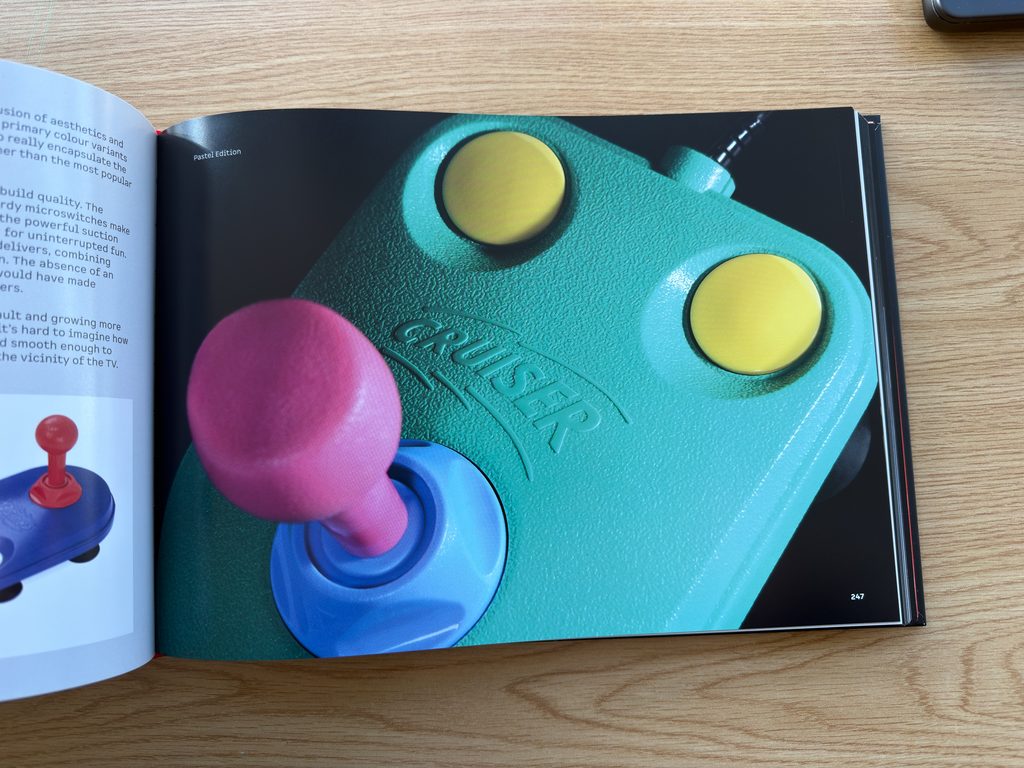
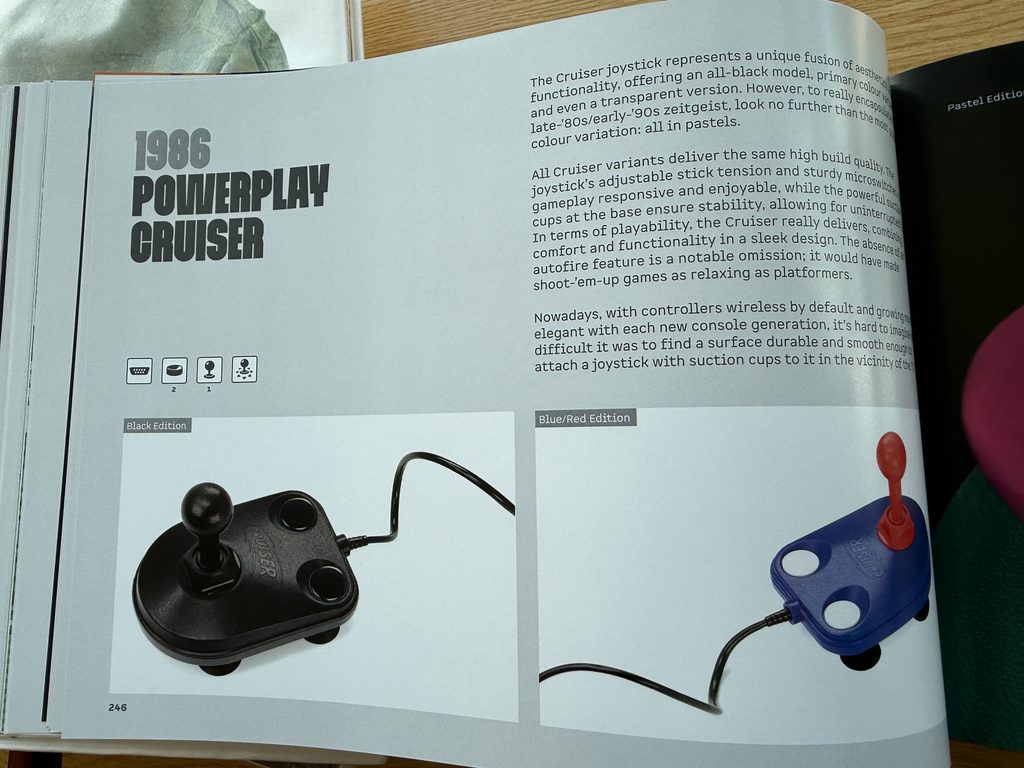
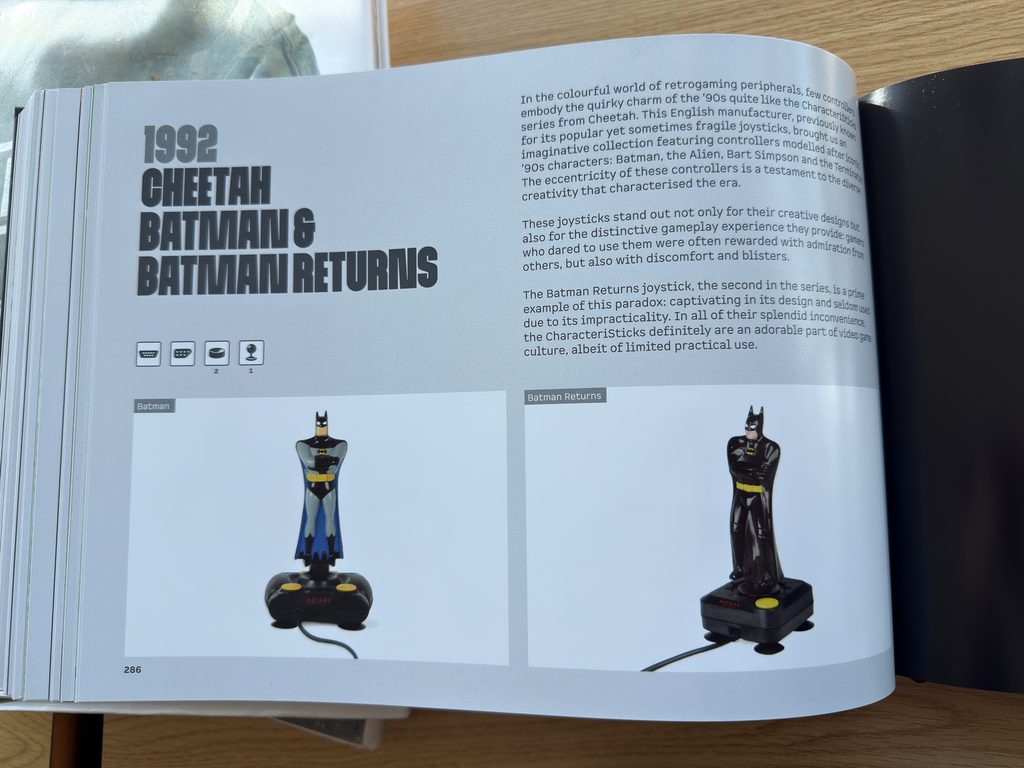
The last book I had picked up was one I’d seen a few weeks ago and wanted to take a look at. Completely unrelated to my course, i think, it shows a catalogue of games controllers, joysticks and pads etc that were used over the years for home computers, games consoles and home arcade equipment. It was amazing to see some of the joysticks that I used to have for my ZX Spectrum as a kid growing up. There was also other controllers that reminded me of my ZX Spectrums, my Amstrad CPC6128 and my Commodore Amiga 500Plus too. Then there were the Playstation controllers that I had from the first Playstation back in 1995 onwards all the way through to the Nintendo Switch controllers.
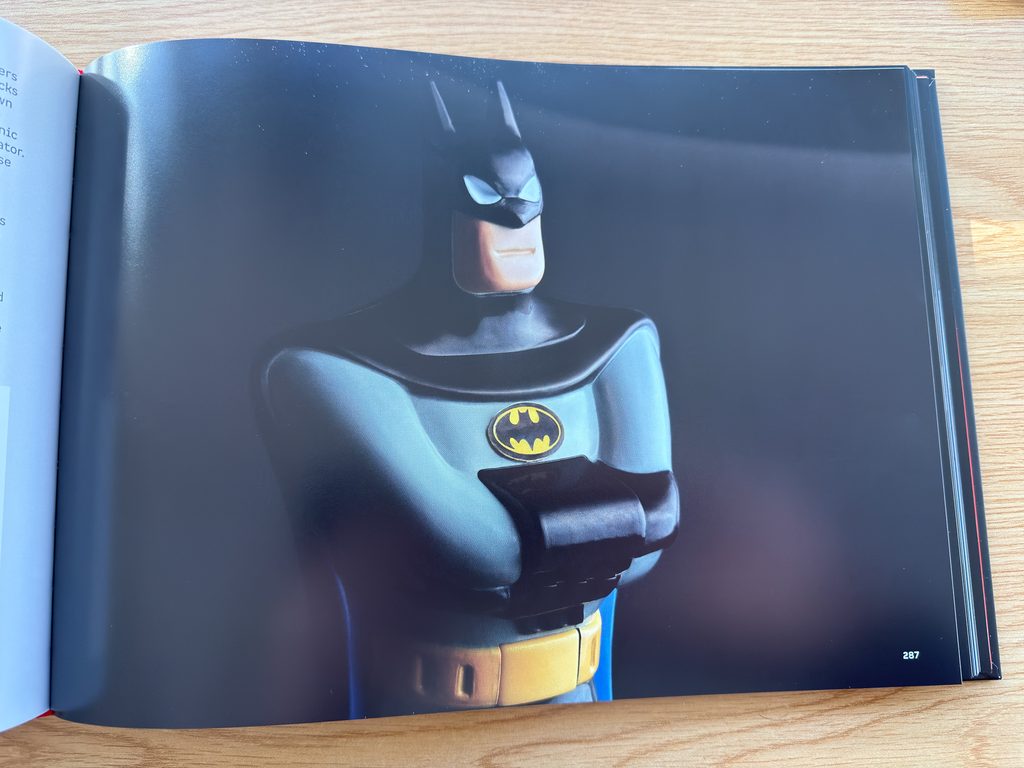
It was a great trip down memory lane and the photography of the controllers was top notch, even if it was factual archiving of the hardware. There was even a photo of the Batman joystick that I have in my collection also. The stories behind the different controllers were interesting and took me back to my younger years. There were not many facts about the controllers such as price when new but there were some icons to explain what port it used and what options were available when it was in use. The colours of the photos were also accurate as I remember the pieces of hardware.
Once I had put the replaced the books back on the correct shelves it was time to head over to the MK Building and the lecture theatre for the afternoon’s entertainment.
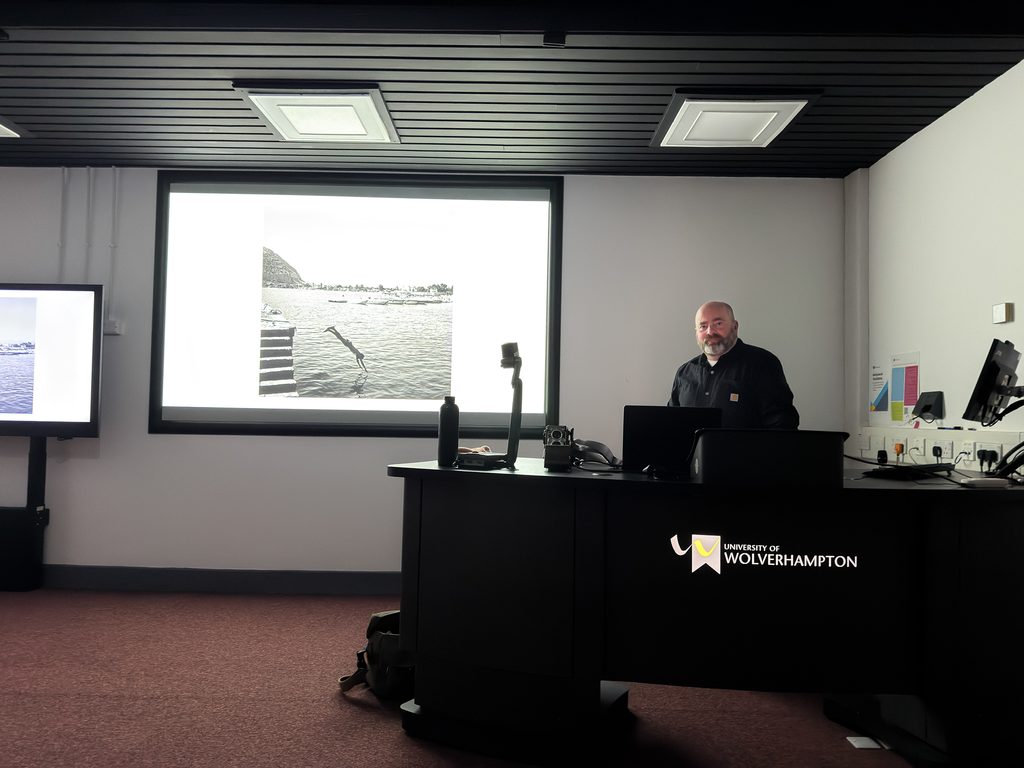
Guest Speaker – Matt J Peers, Photographer
Matt Peers is a professional photographer based in Birmingham.
He shoots with a Rollieflex, Medium Format camera and film and has been published with a couple of books also to his name.
Notes on his presentation:
Unis are good for what, where and how but often the why comes from talks like this.
Didn’t study photography at universitybut Social Psychology
He had three rules.
- 1. Nothing is real*
- 2. We are story making machines to make mmeaning
- 3. Our environment influences us as we influence our environment
The decisive moment – between two stages of existence (1932, Henri Cartier-Bresson) Mat linked it to the pre-war movements, the rise of Nazism and the far right in Europe.
Portraits of employees deceased, left, retired, 2014
One project was photographs of a factory that was near to where Matt worked at the time and he asjed the MD of the factory if he could do this project.
Between worlds, netherworld,, shadow play, lightplay.
Prior company was George Ellison
Interiors of a factory
Textures, grime, the insides of the body of a decrepit building
Nice project of pictures from within the factory
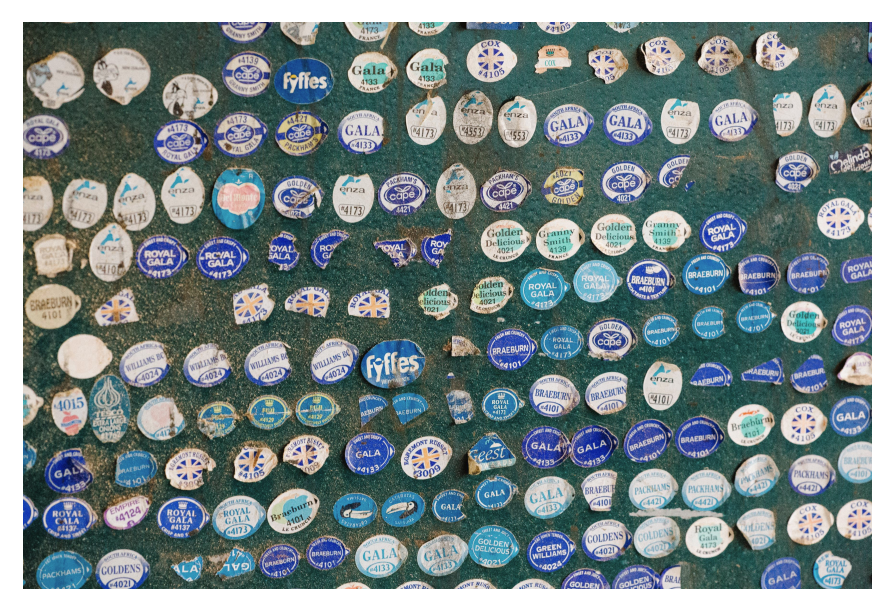
This project rang a bell with me as I work in a factory and I see these types of sights on a daily basis, even down to the grotty scenes that show people’s existence. There are many places in our factory where people eating an apple or banana a day stick their labels on a wall, desk, cabinet etc.
Bourke’s Regulars 2015
Photos of people who use a shop in Spark Brook
Bourke’s is a corner shop, bakery, butchers and many of the people who shop there have a line of credit as they are in a disadvantaged lifestyle, possibly with addictions and mental health issues. There were lists of people with credit, Cider Dave, Hostel Man, Tina, etc
Used a 16-35 mm lens to get in close and remove the safety net.
Photographing portraits and also scenes inside the shop
Picked up a Rolliflex Medium Format and wanted ot photograph people on the street without looking for the decisive moment.
Project called New Faces
Started looking more at the colour to make photos of.
New project – Normal service will be resumed: 2023
Black and White, lunchtime afternoon walk.
Pandemic project – we’ll get through this
Portmanteau 2025
Mentioned Lee Friedlander and how he started photographs into projects
Photos of Birmingham and Port Talbot
Tenby at the coast towards the inland
Blackpool
The name sounds like a Welsh Coastal Town and Euripides and Sam both thought that was what the work was representing.
Photo of a clairvoyant in Blackpool was an interestingf someone
Waiting for the train to come… a project in progress.
Photos and portraits of the construction works surrounding the HS2 works in Birmingham. Pictures of the people and places and Matt was asking if there was any feedback for him to help him continue this project. Nobody fed back anything to him as I guess people did not want to express an opinion on his work that might have sounded some criticsm
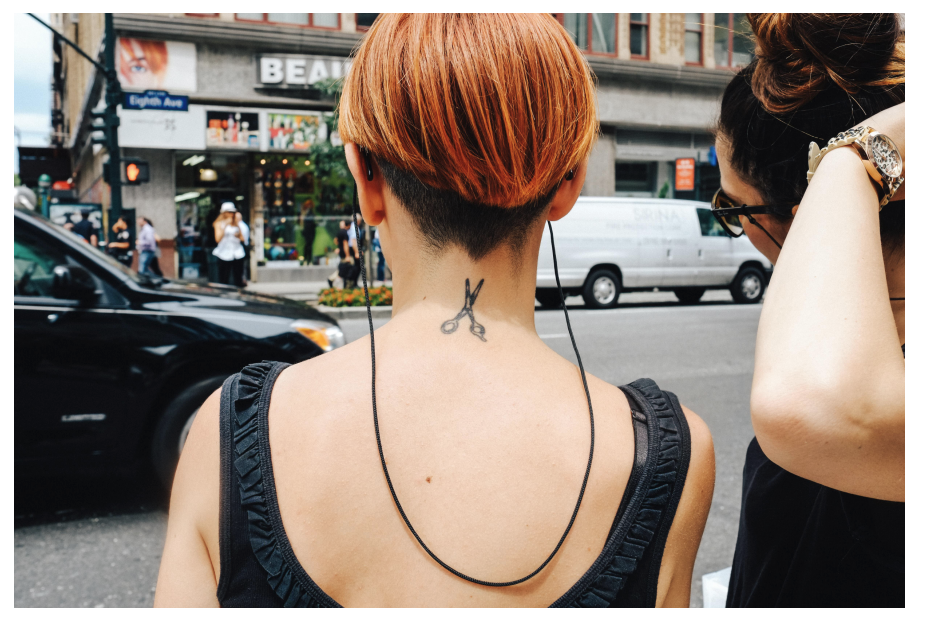
Matt showed us this image above and asked why he might have captured this photo. I thought that it was because of the black colour throughout the shot but it turned out that it was because of the woman’s red hair and the poster on the opposite side of the road with a woman’s face under a shock of red hair. He does like to capture these scenes and it is also very reminiscent of the style of Matt Stuart.
Reflection
Looking at Matt’s work I can see that he has a wonderful eye and I really connected with his project in the factory as it is so close to my life experience. He captures the stories and the views of ordinary people in the workplace. He has some amazing skills at street portraits too but I’m not as engaged by these so much, the Bourke’s Regulars which showed people who used a central shop were an interesting story and although they made some tough images they showed the true scale of the damage done by alcohol or drugs etc.
Out of the works that he showed us, my favourite was the factory one, but close second was the Portmanteau work where he uses the images of towns and seaside towns to construct an imaginary place and his image of a terrace of houses on one side of the road and a graveyard. The portraits and the environmental shots of the surroundings work together to create a solid body of work. This work kind of lines up with some of my current project about going back to my childhood and photographing places that made a difference to my life.
He explains a little about a couple of photographers who inspired him but there were not a huge number of inspirations that he brought up.
He came across to the group as a confident and skilled photographer who seemingly is self taught and his work is impressive. Thanks to Matt for coming in and spending his time discussing his work with us.
Be First to Comment